
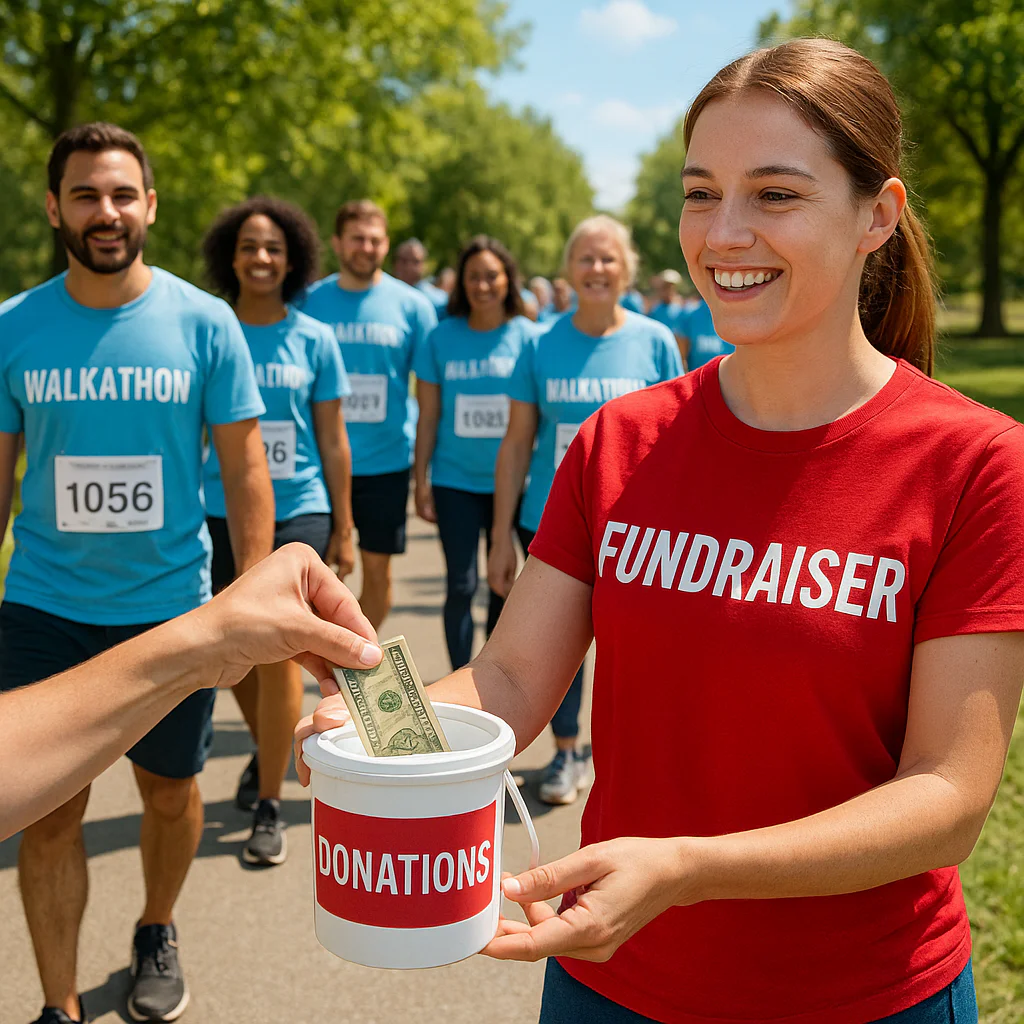
Ever watched a charity walkathon where the t-shirts cost more than the donations raised? It’s a nightmare scenario, but it happens more often than you think. At Walkathon Benefits™, we’ve seen well-meaning organizers pour their hearts into an event only to discover they barely broke even. The secret to avoiding this isn’t just about asking for money; it’s about mastering the five core revenue engines that separate profitable campaigns from financial disasters.
In this comprehensive guide, we’re pulling back the curtain on the entire fundraising ecosystem. From the ancient roots of communal giving to the modern digital gold rush of peer-to-peer platforms, we’ll show you exactly how the money flows. You’ll discover why major donors often fund 80% of a campaign, how to calculate your net vs. gross revenue without losing your mind, and which sector-specific strategies can turn a simple walk into a cash cow. We’ll even reveal the surprising truth about event economics that most organizers ignore until it’s too late.
Ready to stop guessing and start growing? Let’s dive into the mechanics of making money for a cause.
Key Takeaways
- Diversify Your Revenue: Relying on a single source like grants is risky; successful fundraisers blend direct giving, events, earned income, and sponsorships.
- Focus on Net, Not Gross: Always calculate your profit margins before celebrating; a high gross revenue with high overhead means little impact for your cause.
- Leverage Peer-to-Peer Power: Peer-to-peer fundraising can generate up to 5x more revenue than traditional methods by leveraging social trust and networks.
- Retention is King: It costs significantly less to keep an existing donor than to acquire a new one; prioritize recurring giving and relationship building.
- Data Drives Success: Use fundraising intelligence to identify high-capacity donors and tailor your ask for maximum conversion.
Table of Contents
- ⚡️ Quick Tips and Facts
- 📜 The Evolution of the Dollar: A Brief History of Fundraising Mechanics
- 💰 The Core Revenue Engines: How Fundraisers Actually Generate Income
- 1. The Art of the Ask: Mastering Direct Giving and Major Donors
- 2. Event Economics: Turning Galas, Walkathons, and Marathons into Cash
- 3. The Digital Gold Rush: Online Crowdfunding and Peer-to-Peer Strategies
- 4. Selling Stuff to Save the Cause: Merchandise, Auctions, and Product Sales
- 5. Recurring Revenue Streams: Grants, Sponsorships, and Membership Models
- 🧠 Decoding the Numbers: Understanding Net vs. Gross Revenue in Fundraising
- 🚀 Creative Fundraising Ideas for Nonprofits Across Every Sector
- Fundraising Ideas for Arts and Culture Nonprofit Organizations
- Fundraising Ideas for Community Foundations
- Fundraising Ideas for Education Nonprofit Organizations
- Fundraising Ideas for Faith-Based Nonprofit Organizations
- Fundraising Ideas for Healthcare Nonprofit Organizations
- 📊 Why Fundraising Intelligence is the Key to Sustainable Success
- 🛠️ Essential Tools and Platforms for Modern Fundraisers
- 🎓 Want to Learn More About Kindsight?
- 🌍 Who We Serve: Empowering Mission-Driven Organizations
- 📚 Resources for Aspiring Fundraisers
- 🏢 Company Overview
- 🔒 Privacy Preference Center
- 🏁 Conclusion
- 🔗 Recommended Links
- ❓ FAQ: Your Burning Questions About Fundraising Revenue Answered
- 📖 Reference Links
⚡️ Quick Tips and Facts
Before we dive into the nitty-gritty of how fundraisers actually turn passion into profit, let’s hit the brakes and drop some hard truths that might surprise you. We’ve seen too many well-meaning organizers burn out because they thought fundraising was just about “asking nicely.” It’s not. It’s a science, an art, and sometimes, a little bit of magic.
Here is the Walkathon Benefits™ cheat sheet to getting started:
- The 80/20 Rule is Real: Roughly 80% of your funds often come from just 20% of your donors. Identifying and nurturing those top supporters is more critical than casting a wide net for pennies.
- Retention > Acquisition: It costs 5 to 7 times more to acquire a new donor than to keep an existing one. If you aren’t thanking your donors, you’re losing money.
- The “Small Donor” Myth: While major donors get the headlines, the average donation is often under $50. However, the sheer volume of small donors makes them the lifeblood of most organizations.
- Walkathons are Powerhouses: Did you know that peer-to-peer fundraising (like walkathons) can raise up to 5x more than traditional direct mail? It’s because people trust their friends more than they trust a logo.
- Net vs. Gross: Never celebrate a “Gross” number without calculating the Net. If you raise $10,0 but spend $6,0 on t-shirts and venue fees, your actual impact is $4,0. Always track your margins!
If you are specifically wondering about the mechanics of our favorite event type, you’ll want to read our deep dive on How do walkathons make money? to see the numbers in action.
📜 The Evolution of the Dollar: A Brief History of Fundraising Mechanics

You might think fundraising is a modern invention born of the internet age, but the concept of pooling resources for a common good is as old as civilization itself. From the ancient Greek liturgies where wealthy citizens funded public works, to the medieval church indulgences (which, let’s be honest, were a bit controversial), the mechanics have evolved, but the psychology remains the same.
In the US, the modern nonprofit sector exploded after World War II. The 501(c)(3) status, established by the IRS, became the golden ticket. It allowed organizations to reinvest every dollar into their mission rather than distributing profits to shareholders.
Why does this history matter to you?
Because understanding the shift from “charity” to “social enterprise” is key. Today, the most successful fundraisers aren’t just begging; they are selling a vision. As noted in recent industry analyses, grants now make up less than 5% of total revenue for many nonprofits. The real money? It comes from program service fees, individual donations, and corporate partnerships.
“Raising funds is the highest form of selling.” — Insight from industry experts
We’ve seen organizations that relied solely on grants crumble when funding dried up, while those that diversified into earned income and community engagement thrived. The lesson? Don’t put all your eggs in the grant basket.
💰 The Core Revenue Engines: How Fundraisers Actually Generate Income
So, how do fundraisers make money? It’s not magic; it’s a combination of strategic engines. Let’s break down the five pillars that keep the lights on and the programs running.
1. The Art of the Ask: Mastering Direct Giving and Major Donors
This is the oldest engine in the book, but it’s still the most powerful. Direct giving involves asking individuals for money. But here’s the secret: it’s not about the ask; it’s about the relationship.
- Major Donors: These are the whales. A single major donor can fund a year’s worth of operations. To find them, you need prospect research. Tools like iWave or Bloomerang help identify who has the capacity and inclination to give.
- The “Ask” Strategy: Don’t just send a generic email. Personalize it. A handwritten note from a beneficiary often opens wallets faster than a glossy brochure.
- Recurring Giving: The holy grail. A donor giving $20 a month is worth 10x more over time than a one-time donor giving $240. Why? Because they are retained.
Pro Tip: Use the “Ask, Ask, Ask” method. Most people stop after one ask. The money is often in the second or third follow-up.
2. Event Economics: Turning Galas, Walkathons, and Marathons into Cash
Events are the face of fundraising. They build community, raise awareness, and yes, generate cash. But are they profitable? That depends on your cost-to-revenue ratio.
- Walkathons & Runathons: These are our specialty! They rely on sponsorships (corporate underwriting the event) and pledges (participants raising money from friends). The beauty of a walkathon is that the overhead is low compared to a black-tie gala.
- Galas: High risk, high reward. If you sell enough tickets and secure a few big auction items, you can make a fortune. If the food is cold and the band is bad, you lose money.
- The Math: If a gala costs $10,0 to run and brings in $15,0, that’s a $5,0 profit. If a walkathon costs $2,0 and brings in $10,0, that’s an $8,0 profit. Efficiency matters.
For more on the specific mechanics of these events, check out our guide on Event Registration Tips.
3. The Digital Gold Rush: Online Crowdfunding and Peer-to-Peer Strategies
The internet democratized fundraising. Suddenly, a kid in a basement could raise money for a cause just as easily as a giant foundation. This is the era of Peer-to-Peer (P2P) fundraising.
- How it Works: You create a campaign page. Supporters create their own pages and share them with their networks. They collect pledges, and the money flows to you.
- The Viral Effect: P2P leverages social proof. When your friend raises money for a cause, you are more likely to donate than if you just saw an ad.
- Platforms: Tools like GoFundMe, Classy, and Donorbox make this seamless. They handle the credit card processing, the tax receipts, and the data.
Did you know? According to recent data, online donations have surged, with mobile giving becoming the preferred method for donors under 40. If your donation page isn’t mobile-optimized, you are leaving money on the table.
4. Selling Stuff to Save the Cause: Merchandise, Auctions, and Product Sales
Sometimes, the best way to get money is to sell something. This is earned income, and it’s a fantastic way to diversify revenue.
- Merchandise: T-shirts, tote bags, mugs. It’s not just about the profit margin; it’s about brand awareness. Every time someone wears your shirt, they are a walking billboard.
- Auctions: Silent auctions are a staple. The key is donated goods. If you get a weekend getaway donated by a hotel, 10% of the sale price is profit (minus the auction platform fee).
- Product Sales: Think Krispy Kreme fundraisers. You buy the product at a discount and sell it at full price. The margin is your profit.
Real World Example: A local arts nonprofit sold “paint and sip” kits. They sourced the canvas and paint for $15 and sold the kit for $45. The profit funded their after-school programs. Simple, effective, and scalable.
5. Recurring Revenue Streams: Grants, Sponsorships, and Membership Models
Finally, the backbone of stability: Recurring Revenue.
- Grants: These are restricted funds from foundations or the government. They are great for specific projects but can be a headache to manage due to reporting requirements.
- Sponsorships: Unlike donations, sponsorships are exchanges. A company gives you money, and you give them visibility (logos on shirts, mentions in press releases).
- Memberships: Charge a fee for exclusive access. This could be a newsletter, a VIP event, or a discount on services. It creates a predictable cash flow.
Warning: Don’t rely on grants alone. As the video summary we reviewed pointed out, grants account for less than 5% of revenue for many successful organizations. Diversify!
🧠 Decoding the Numbers: Understanding Net vs. Gross Revenue in Fundraising
Here is where many organizers get tripped up. You raise $50,0 at a walkathon. Congratulations! But wait… how much of that actually goes to the cause?
Gross Revenue is the total amount collected.
Net Revenue is what’s left after expenses.
| Expense Category | Typical % of Gross | Example Cost (on $50k) |
|---|---|---|
| Venue & Permits | 10-15% | $6,0 |
| Marketing & Ads | 5-10% | $3,50 |
| Swag (T-shirts, Medals) | 15-20% | $8,0 |
| Food & Beverage | 10-15% | $6,0 |
| Platform Fees | 3-5% | $2,0 |
| Volunteer Support | 5% | $2,50 |
| Total Expenses | ~50-60% | $28,0 |
| Net to Cause | ~40-50% | $2,0 |
The Hard Truth: If you don’t track these costs, you might think you raised $50,0 when you actually raised $2,0. Transparency is key. Always tell your donors, “For every $10 raised, $45 goes directly to our programs.”
🚀 Creative Fundraising Ideas for Nonprofits Across Every Sector
One size does not fit all. A healthcare nonprofit needs a different strategy than an arts group. Let’s explore sector-specific ideas that work.
Fundraising Ideas for Arts and Culture Nonprofit Organizations
Arts organizations have a unique advantage: experiences. People will pay to be entertained or to learn.
- Exclusive Experiences: Raffle off a private tour of the museum, a meet-and-greet with a famous artist, or a “paint and sip” class.
- Digital Art & NFTs: Yes, really. Some museums are minting digital versions of their collections as NFTs to raise funds from crypto enthusiasts.
- Membership Tiers: Offer “Patron” levels that include free entry, exclusive workshops, and early access to ticket sales.
Success Story: A local theater group raised $30,0 by selling “backstage passes” for a single night. The cost to them was zero; the value to the donor was high.
Fundraising Ideas for Community Foundations
Community foundations are all about local impact.
- Matching Gifts: Partner with local businesses to match donations dollar-for-dollar. This doubles the impact and encourages small donors.
- Community Challenges: Organize a “clean-up day” where businesses sponsor teams. The more trash picked up, the more the business donates.
- Grant Writing Workshops: Charge a fee for workshops that teach other small nonprofits how to write grants. You help them, and you make money.
Fundraising Ideas for Education Nonprofit Organizations
Schools and educational nonprofits have a massive built-in network: parents.
- Sponsorship Tiers: Sell naming rights for playground equipment, library books, or classroom computers.
- Product Sales: The classic cookie dough or chocolate sale. It’s old school for a reason—it works.
- Discount Cards: Partner with local restaurants to create a “school discount card” sold to parents.
Fundraising Ideas for Faith-Based Nonprofit Organizations
Faith-based groups excel at community and storytelling.
- Virtual Giving: With 20% of services now online, ensure your donation platform is seamless for digital tithing.
- Memorial Giving: Create a page where people can donate “in lieu of flowers” for a loved one.
- Date Night Fundraisers: Offer childcare and a concert or dinner for parents. It’s a win-win: they get a night out, you get a donation.
Fundraising Ideas for Healthcare Nonprofit Organizations
Healthcare nonprofits must navigate HIPAA and sensitivity, but they have powerful emotional hooks.
- Baby Tiles: Sell engraved tiles for the neonatal ward. Parents love to leave a legacy.
- Challenge Months: Leverage national awareness months (like Movember or Breast Cancer Awareness) to drive P2P campaigns.
- Benefit Galas: Host high-end events for major donors, featuring patient stories that highlight the impact of their donations.
📊 Why Fundraising Intelligence is the Key to Sustainable Success
You can’t manage what you don’t measure. Fundraising Intelligence is the practice of using data to make smarter decisions.
- Donor Retention: If your retention rate is dropping, you need to know why. Is it the messaging? The frequency? The lack of impact reports?
- Segmentation: Don’t treat a $5 donor the same as a $5,0 donor. Segment your list and tailor your communications.
- Predictive Modeling: Use tools to predict which donors are likely to give again. Focus your energy there.
The Kindsight Approach: Tools like Kindsight (formerly iWave) use data to help you find the right donors. They analyze wealth, giving history, and interests to tell you who to ask and when.
“Raising funds is the lifeblood of any charitable organization.” — Kindsight
Without data, you are flying blind. With data, you are a sniper.
🛠️ Essential Tools and Platforms for Modern Fundraisers
You don’t need a massive budget to run a professional operation. Here are the tools we recommend:
| Tool Category | Top Recommendations | Best For |
|---|---|---|
| Donation Platforms | Donorbox, Classy, Givebutter | Easy online giving, recurring donations |
| P2P Fundraising | GoFundMe Charity, Fundraise Up | Walkathons, peer-to-peer campaigns |
| Event Management | Eventbrite, Bizzabo | Registration, ticketing, check-in |
| CRM & Data | Bloomerang, Salesforce NPSP | Donor management, retention tracking |
| Merchandise | Teespring, Printful | On-demand t-shirts, no inventory risk |
| Auctions | Auction Ninja, Handbid | Silent and live auction management |
Pro Tip: Don’t get overwhelmed. Start with one platform for donations and one for events. Integrate them so your data flows automatically.
🎓 Want to Learn More About Kindsight?
If you are serious about taking your fundraising to the next level, Kindsight is a name you should know. They specialize in fundraising intelligence, helping organizations identify high-capacity donors and optimize their strategies.
Their platform uses advanced data modeling to answer the question: “Who is most likely to give?” By leveraging this intelligence, nonprofits can stop guessing and start growing.
Check out their resources:
🌍 Who We Serve: Empowering Mission-Driven Organizations
At Walkathon Benefits™, we serve a wide range of organizations. From small local charities to large national nonprofits, we believe that every mission deserves a chance to thrive.
- Health & Wellness: Supporting hospitals, mental health clinics, and fitness initiatives.
- Education: Helping schools, scholarships, and literacy programs.
- Environment: Funding conservation efforts and sustainability projects.
- Arts & Culture: Keeping the arts alive in our communities.
No matter your cause, we are here to help you walk the talk and raise the funds you need.
📚 Resources for Aspiring Fundraisers
Ready to dive deeper? Here are some of our favorite resources:
- Books: The Art of Asking by Amanda Palmer, Nonprofit Marketing Guide by Kivi Leroux Miller.
- Websites: GuideStar for nonprofit transparency, Classy for fundraising trends.
- Internal Guides:
- Health Benefits of Walking
- Fundraising Strategies
- Community Engagement
- Kids Walkathons
🏢 Company Overview
Walkathon Benefits™ is a team of health professionals and fundraising experts dedicated to the belief that movement and giving go hand in hand. We don’t just organize events; we build communities. Our mission is to empower organizations to leverage the power of walking to raise funds, improve health, and connect people.
We believe in transparency, efficiency, and impact. Whether you are a first-time organizer or a seasoned pro, we have the tools and insights to help you succeed.
🔒 Privacy Preference Center
We value your privacy. At Walkathon Benefits™, we are committed to protecting your personal information. We use cookies to improve your experience and analyze our traffic. You can manage your cookie preferences at any time through our Privacy Preference Center.
For more details, please read our full Privacy Policy.
Conclusion

So, how do fundraisers make money? It’s a mix of strategy, storytelling, and sweat equity. From the ancient roots of communal giving to the digital gold rush of peer-to-peer campaigns, the core principle remains: people support people.
We’ve covered the five major revenue engines, the importance of net vs. gross revenue, and sector-specific ideas that work. We’ve also highlighted the tools and intelligence needed to succeed in a competitive landscape.
The big question we left you with earlier: Is your fundraising strategy sustainable? If you are relying one-off events or grants, the answer might be no. But if you are building a diverse portfolio of recurring donors, earned income, and strategic partnerships, you are on the right track.
Our Recommendation: Start small, track everything, and focus on retention. Don’t just ask for money; build a relationship. And remember, the most profitable fundraiser is one that makes your donors feel like heroes.
Ready to get started? Check out our Fundraising Strategies guide and let’s get moving!
🔗 Recommended Links
Here are some products and resources we trust for your fundraising journey:
- Fundraising Platforms:
Donorbox: Search on Amazon | Donorbox Official
Classy: Search on Amazon | Classy Official - Merchandise & Swag:
Teespring: Search on Amazon | Teespring Official
Custom T-Shirts: Search on Amazon | Vistaprint - Books:
The Art of Asking by Amanda Palmer: Buy on Amazon
Nonprofit Marketing Guide by Kivi Leroux Miller: Buy on Amazon - Tools:
Kindsight: Kindsight Official
iWave: iWave Official
❓ FAQ: Your Burning Questions About Fundraising Revenue Answered

How can I organize a successful charity walkathon to maximize fundraising efforts?
Organizing a successful walkathon requires planning, promotion, and participation. Start by setting a clear goal and a realistic budget. Recruit a team of passionate volunteers and secure corporate sponsors early. Use peer-to-peer fundraising tools to empower participants to raise money from their networks. Don’t forget to engage the community with fun activities, music, and post-event celebrations. For more detailed steps, check out our guide on Event Registration Tips.
Read more about “🚶 ♀️ How to Raise Money by Walking: 10 Proven Steps to Fundraise Big (2026)”
What are the most effective ways to raise money during a walkathon event?
The most effective ways include sponsorships (where companies pay for visibility), registration fees, and pledges (where participants get friends to donate per mile). On-site donations and merchandise sales (like t-shirts and water bottles) also add up. The key is to create multiple touchpoints for giving throughout the event.
Read more about “🏃 ♂️ 15 Proven Ways to Raise Money for Marathons (2026)”
How do charity walkathons make money for their organizations?
Charity walkathons make money through a combination of registration fees, corporate sponsorships, and individual pledges. Participants often create personal fundraising pages and ask their networks for donations. The event itself acts as a catalyst, bringing together a community to support a cause.
Read more about “🚀 7 Steps to Master SROI for Charity Walk Events (2026)”
What percentage of fundraiser money goes to the cause?
This varies widely, but a healthy nonprofit should aim for at least 60-70% of gross revenue to go directly to the cause. The rest covers administrative and fundraising costs. Transparency is crucial; always communicate this ratio to your donors.
Read more about “🏆 The Most Profitable Fundraising Event (2026): Walkathons vs. Galas”
How do organizers of charity walkathons use fundraising events to support their mission?
Organizers use events to raise awareness, build community, and generate funds. By telling compelling stories and showcasing the impact of donations, they turn a simple walk into a movement. The event serves as a tangible way for people to engage with the mission.
What are the most effective ways to raise money for a walkathon?
Peer-to-peer fundraising is the most effective method. Encourage participants to set personal goals and share their stories on social media. Matching gift campaigns from corporate sponsors can also double the impact. Don’t forget to leverage email marketing and local media to spread the word.
Read more about “🚀 15 Proven Ways to Engage Corporate Teams in Walkathons (2026)”
How do charity walks make money from sponsorships and donations?
Sponsorships are secured by offering brand visibility (logos on shirts, banners, etc.) in exchange for financial support. Donations come from participants, their networks, and on-site contributors. The key is to make the “ask” easy and the impact clear.
Read more about “🚶 ♀️ What Is a Walk-a-Thon? The Ultimate 2026 Guide to Fundraising & Fun”
What percentage of charity walkathon funds go to the cause?
Ideally, 60-70% of the funds raised should go directly to the cause. However, this depends on the event’s scale and overhead costs. Always be transparent with your donors about how the funds are used.
Read more about “🏆 What Fundraiser Makes the Most Money? (2026)”
How do fundraisers work?
Fundraisers work by identifying a need, creating a campaign, and engaging supporters to contribute. Whether it’s a walkathon, a gala, or an online campaign, the goal is to mobilize people to give money, time, or resources to a cause.
Can you make money by being a fundraiser?
Yes, fundraisers can earn a salary, but it must be reasonable and aligned with the organization’s mission. Nonprofits are not allowed to distribute profits to individuals, but they can pay fair wages for the work done.
Read more about “75+ Walkathon Fundraiser Ideas: The Ultimate 2026 Guide 🚀”
What is the most profitable fundraiser?
The most profitable fundraiser is often a peer-to-peer event like a walkathon or runathon, where the overhead is low and the participation is high. Auctions and galas can also be highly profitable if managed well, but they require more upfront investment.
Read more about “🏆 15 Best Walkathon Fundraiser Ideas for Schools (2026)”
What percentage do fundraisers take?
This depends on the organization’s efficiency. A well-run nonprofit should keep fundraising costs below 30% of total revenue. This includes marketing, event costs, and staff salaries. Always strive for transparency and efficiency.
📖 Reference Links
- Jitasa Nonprofit Blog: How Do Nonprofits Make Money? FAQ Guide to Nonprofit Revenue
- Kindsight: Fundraising Ideas & Strategies
- Krispy Kreme Fundraising: How Fundraisers Make Money with Krispy Kreme
- IRS: Tax-Exempt Organizations
- GuideStar: Nonprofit Transparency
- Classy: Fundraising Trends
- Donorbox: Fundraising Resources
- Bloomerang: Donor Retention Statistics