
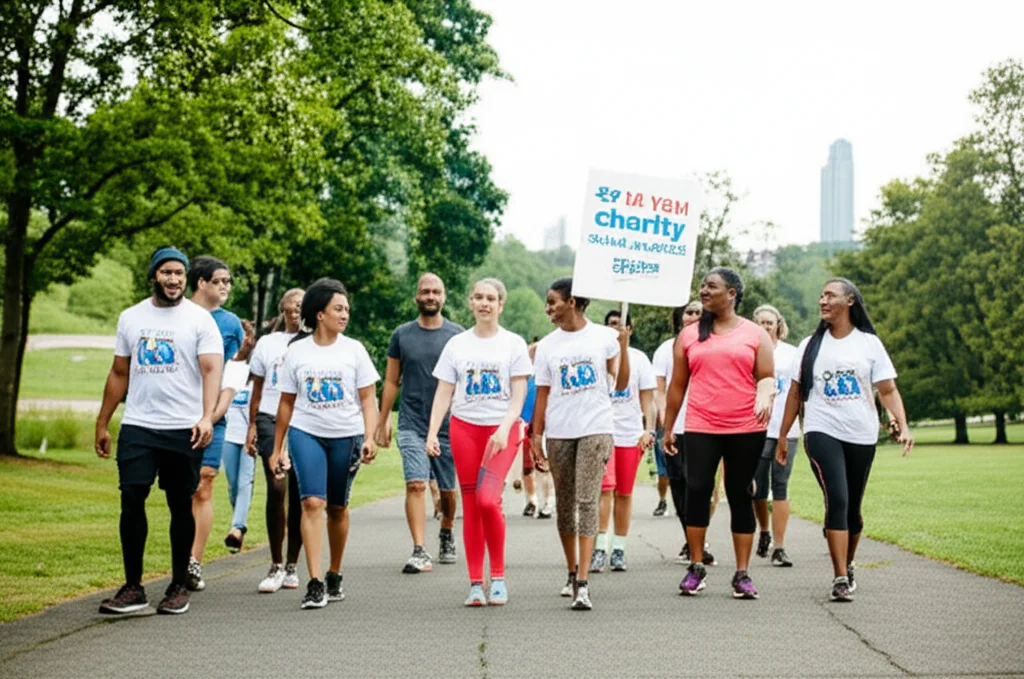
How do walkathons and charity walks contribute to community health and fundraising efforts? They bring people together to get active, raise money for a cause, and connect communities with health information and support. Their greatest impact comes when organizers make the event safe and inclusive, explain where donations go, and give participants ways to stay involved afterward.
We’ve seen how an ordinary neighborhood route can feel different when people walk it together: families chatting, volunteers cheering, and participants sharing why the cause matters to them. That sense of connection is part of the benefit—but a single event is only the beginning. The most effective walkathons turn one day of steps into ongoing movement, awareness, and community support.
Key Takeaways
- Walkathons pair physical activity with fundraising for causes such as research, patient services, education, and local programs.
- Community health benefits extend beyond the route: events can encourage walking, build social connections, and share reliable health information.
- Accessibility and safety need to be planned from the start, including route options, rest areas, clear event details, and weather precautions.
- Fundraising depends on trust: clearly identify the beneficiary, explain how donations will be used, and report results after the event.
- The strongest impact lasts beyond event day through continued walking opportunities, volunteering, advocacy, and community partnerships.
Table of Contents
- ⚡️ Quick Tips and Facts
- 🚶 What Are Walkathons and Charity Walks?
- How a community walkathon typically works
- Walkathon, fun run, pledge walk, or virtual walk: What’s the difference?
- 📜 The History and Evolution of Charity Walks
- 💚 How Walkathons Contribute to Community Health
- Physical activity and everyday walking habits
- Mental well-being, social connection, and belonging
- Health education, screening, and prevention
- Making events accessible and inclusive
- 💰 How Charity Walks Raise Funds and Support Causes
- Where donations go and how funds make an impact
- Fundraising models: Pledges, registration fees, and sponsorships
- Transparency, fees, and donor confidence
- 🌟 12 Community Benefits of Walkathons and Charity Walks
- 1. Encouraging regular physical activity
- 2. Supporting mental health and stress relief
- 3. Building social connections across generations
- 4. Raising money for local and national causes
- 5. Increasing awareness of health conditions
- 6. Connecting people with health and support services
- 7. Creating meaningful ways to honor and remember
- 8. Empowering patients, survivors, and caregivers
- 9. Bringing families and neighbors together
- 10. Supporting local businesses and community groups
- 11. Inspiring ongoing volunteering and advocacy
- 12. Making public spaces more welcoming for walking
- 🧭 Planning a Safe, Successful, and Inclusive Walkathon
- Choosing a cause, goal, date, and route
- Permits, insurance, risk management, and emergency plans
- Accessible routes, rest areas, and participant support
- Water, first aid, weather, and safety on event day
- Registration, schedules, maps, and travel information
- 🙋 Participant, Volunteer, and Fundraising Guide
- How to join as an individual, family, or team
- Volunteer roles before, during, and after the walk
- Setting a fundraising goal and asking for donations
- Online fundraising, social media, and donation tools
- Team challenges, recognition, and non-cash incentives
- 📣 Sponsors, Partners, and Local Business Involvement
- Finding sponsors and building community partnerships
- Recognizing sponsors without losing sight of the cause
- 🌐 In-Person, Virtual, and Hybrid Charity Walks
- Benefits and limitations of each event format
- Mobile fundraising and remote participation
- 📊 Measuring Health Outcomes and Fundraising Impact
- Useful event, health, and community metrics
- Following up with participants and reporting results
- ⚖️ Common Challenges, Risks, and Practical Solutions
- Preventing injuries, heat illness, and overexertion
- Reducing barriers to participation
- Avoiding fundraising fatigue and keeping trust
- ❓ Frequently Asked Questions About Walkathons and Charity Walks
- Do you need to be fit to join a charity walk?
- How long is a typical walkathon?
- How much money do charity walks raise?
- Are walkathon donations tax-deductible?
- How can a small community organize a walkathon?
- Can people with disabilities participate?
- ✅ Conclusion
- 🔗 Recommended Links
- 📚 Reference Links
⚡️ Quick Tips and Facts
- A walkathon can do two jobs at once: get people moving and raise funds for a cause. Its community-health impact is strongest when the event inspires people to keep walking after the finish line, not just collect a T-shirt and head for the snack table.
- Walking is accessible, adaptable physical activity. The CDC’s physical activity guidance recommends at least 150 minutes of moderate-intensity activity weekly for most adults; brisk walking can count toward that goal. People should adapt activity to their abilities and follow advice from their healthcare professional where needed.
- A charity walk is also a social event. Teams, survivor tributes, remembrance ceremonies, health information, and local partnerships can help participants feel connected to a cause and one another.
- Fundraising works best when people understand the impact. State what donations support, how the funds are handled, and how you will report results. Clear information builds trust.
- Make access part of the plan from day one: route surface, distance options, rest areas, accessible toilets, seating, shade, water, and an alternative participation option all matter.
- Start early. A planning window of roughly three months gives organizers time to confirm the route, permits, safety plan, volunteers, sponsor commitments, and promotion.
- A memorable event is not necessarily a huge one. A well-run neighborhood walk can build relationships and raise awareness even when the crowd and fundraising total are modest.
- For a quick primer on everyday walking, see our guide to 10 benefits of walking and more health benefits of walking.
| At a glance | What it can contribute | What makes it work |
|---|---|---|
| Community health | Physical activity, health education, social connection | Inclusive route, safe event, links to ongoing activity |
| Fundraising | Donations for research, services, advocacy, or local programs | Clear purpose, easy giving, transparent reporting |
| Community engagement | Shared participation among families, schools, workplaces, and neighbors | Welcoming atmosphere and meaningful roles |
| Awareness | Visibility for a health issue or community need | Accurate information and respectful storytelling |
🚶 What Are Walkathons and Charity Walks?
A walkathon is an organized walking event that commonly raises money through donations, pledges, registration, sponsorship, or a combination of these. A charity walk is a broader term for a walk organized to support a charitable cause. The names overlap; the format matters more than the label.
Participants may walk a marked route, complete a set distance, or walk for a chosen length of time. Some events include a run option, a virtual route, or shorter distances for children and people who prefer a gentler pace. Many are organized by nonprofits, schools, hospitals, workplaces, neighborhood groups, or people personally affected by the cause.
A useful example is the National Brain Tumor Society’s Virginia Brain Tumor Walk & Race, which brings together walkers, runners, families, and supporters for awareness and fundraising. Its event description emphasizes community participation alongside recognition of survivors and remembrance of loved ones. That combination helps explain why a charity walk can feel less like a donation drive and more like a gathering with a purpose.
How a community walkathon typically works
Most walkathons follow a familiar pattern, though details vary by organizer:
- A cause is selected. Organizers identify who or what the event supports and confirm the beneficiary organization.
- A route and date are chosen. The route should match the event’s purpose, participant needs, local conditions, and safety requirements.
- Participants register. People may join individually, create teams, volunteer, or participate virtually.
- Fundraising begins. Participants invite donors to contribute through personal fundraising pages, pledge forms, workplace networks, or event-day giving.
- The event brings people together. Opening remarks, educational booths, survivor recognition, remembrance activities, music, and family-friendly features can build a sense of shared purpose.
- Organizers report back. Afterward, they thank supporters and explain what was raised and how proceeds will be used.
The National Brain Tumor Society, for example, describes using personal fundraising pages, social media, and its Good Move mobile fundraising app to help participants raise support. The practical lesson is simple: make donating as easy as showing up. You can find more ideas in our fundraising strategies and event registration tips.
Walkathon, fun run, pledge walk, or virtual walk: What’s the difference?
| Format | Typical emphasis | Who it may suit | Planning consideration |
|---|---|---|---|
| Walkathon | Walking and fundraising, sometimes with distance or time goals | Families, schools, workplaces, and mixed-ability groups | Offer realistic route choices and clear donation options |
| Charity walk | Awareness, community gathering, and charitable support | Cause communities, nonprofits, and local groups | Build in space for learning, recognition, and connection |
| Fun run or walk/run | Timed or untimed running alongside walking | Participants seeking a more athletic event | Separate routes or start times may improve safety |
| Pledge walk | Donors pledge per lap, mile, or other completed goal | Schools, clubs, and groups with a defined course | Explain pledge limits and how totals will be collected |
| Virtual walk | Participants walk in their own location and report participation | People who are remote, mobility-limited, or schedule-constrained | Provide clear guidelines, online giving, and a shared event moment |
| Hybrid event | In-person gathering plus remote participation | Organizers aiming to broaden reach | Avoid making remote participants feel like an afterthought |
A virtual option can extend participation beyond one park or town. The Pulmonary Fibrosis Foundation’s Community Walk explains how friends and family can walk locally while joining a shared fundraising effort. That flexibility can widen the circle, but it does not replace the community feel of an in-person gathering for everyone. A thoughtful hybrid event gives both groups a meaningful way to participate.
📜 The History and Evolution of Charity Walks

Organized charity walks grew from a straightforward idea: bring people together around a shared journey, then use that gathering to raise money and attention for a cause. Over time, the format expanded from local walks and pledge events into large nonprofit campaigns, school fundraisers, disease-awareness events, workplace challenges, and virtual participation.
Today’s walkathon may combine a physical route with online fundraising pages, QR-code donations, team leaderboards, live event updates, and post-event impact reports. Yet the basic ingredients remain familiar: a reason to walk, people willing to join, and a clear explanation of what their effort supports.
Different organizations emphasize different parts of the experience. A disease-focused event may center patients, caregivers, research, and remembrance. A school walkathon may prioritize children’s activity and classroom fundraising. A neighborhood event may focus on local services or bringing residents together. These are not competing definitions; they reflect different communities and goals.
The Immune Deficiency Foundation’s Walk & Community Days illustrate how a national organization can invite local participation around a shared cause. Its event page says participation helps create impact for people with primary immunodeficiency and their families. Organizers should still look for specific information about local event details, fundraising use, and access arrangements, because national campaigns and local event pages may provide different levels of detail.
💚 How Walkathons Contribute to Community Health
Walkathons can support community health through movement, education, social connection, and access to resources. They are not a substitute for healthcare, nor does one event guarantee lasting changes in activity or well-being. Their value comes from making health-related action visible and social—and from connecting an enjoyable event to habits or services participants can use afterward.
Physical activity and everyday walking habits
A charity walk gives people a reason to move at a pace and distance that may feel more approachable than a competitive race. Walking can be adapted: participants may choose a shorter loop, use an assistive device, take breaks, or join a virtual route that fits their needs.
The CDC’s adult activity guidelines recommend at least 150 minutes of moderate-intensity aerobic activity per week for most adults, along with muscle-strengthening activity on two days. A walkathon may contribute to physical activity, but it is the regular pattern of movement that matters most. Encourage participants to treat the event as a starting point for walking with a friend, joining a local walking group, or building short walks into daily routines.
Organizers can extend the health benefit by:
- Offering multiple route distances or laps.
- Giving participants a pace-friendly schedule rather than emphasizing speed.
- Sharing safe walking routes and local walking-group information.
- Encouraging gradual preparation, suitable footwear, and breaks.
- Providing accessible options for people who cannot complete the full course.
For practical ideas, browse our guides to health benefits of walking and kids walkathons.
Mental well-being, social connection, and belonging
The health experience of a walkathon is not only about steps. Participants may walk beside family members, colleagues, neighbors, survivors, caregivers, or people with similar experiences. That shared activity can create opportunities for conversation and mutual support, particularly at events organized around an illness or community need.
A walk can also make a difficult subject easier to discuss. A remembrance activity or survivor tribute may help participants honor personal experiences; an information table may make it easier to ask questions privately. These elements should be voluntary and thoughtfully facilitated. Never assume every participant wants to share a personal story or be photographed.
The National Institute of Mental Health recommends taking care of mental health through strategies that can include physical activity and connection with others. A charity walk can offer both, but organizers should avoid presenting it as treatment or promising a specific mental-health outcome.
Health education, screening, and prevention
A walkathon can connect people with trustworthy health information. Depending on the cause and partnerships, this might include educational materials, local support groups, prevention resources, disease-management information, or referrals to relevant services.
If the event includes health screenings, organizers should coordinate with qualified providers and clearly explain what a screening can—and cannot—tell participants. Screening is not a diagnosis, and anyone with a concerning result should receive clear directions for follow-up care. The U.S. Preventive Services Task Force offers evidence-based recommendations on preventive services; health information at an event should be accurate, current, and suited to its audience.
Good practice includes:
- Using materials from reputable health agencies or the beneficiary organization.
- Having trained professionals answer clinical questions.
- Separating educational information from fundraising appeals.
- Protecting participant privacy at screening or support stations.
- Providing accessible translations or formats where feasible.
Making events accessible and inclusive
Accessibility is not a decorative extra. It determines who can participate comfortably and safely. The U.S. Access Board provides accessibility standards for facilities and the built environment; local requirements may also apply to event routes and venues.
Before opening registration, review:
- Route: surface, slope, width, curb cuts, crossings, and distance.
- Facilities: accessible toilets, parking or drop-off, seating, and quiet space.
- Communication: readable event information, clear directions, and accommodation contact details.
- Participation: shorter loops, rest points, companion options, and virtual alternatives.
- Sensory needs: sound levels, crowd density, and options to step away.
- Cost and access: fee waivers, donation-free participation options, transit access, and family-friendly scheduling.
Ask people with disabilities and local disability organizations to review the plan before event day. A route that appears easy on a map may feel very different on wheels, with a stroller, or in hot weather.
💰 How Charity Walks Raise Funds and Support Causes
Walkathons raise money through several channels at once. Participants may ask friends and family to donate, teams may set shared goals, businesses may sponsor the event, and organizers may invite donations during registration or on event day.
Fundraising totals can vary substantially with the cause, event size, donor network, local economy, promotion, and the organization’s follow-up. There is no universal amount a charity walk “should” raise. A smaller event can still deliver meaningful local support, recruit volunteers, or reach people who were unfamiliar with the cause.
Where donations go and how funds make an impact
Depending on the beneficiary, proceeds may support research, patient and family services, advocacy, community programs, education, or nonprofit operating needs. Before fundraising begins, organizers should confirm the beneficiary and explain the intended use of funds in plain language.
Participants should be able to answer:
- Which organization receives the proceeds?
- Are donations restricted to a particular program or used for general support?
- Does the event deduct processing, production, or operating costs?
- When and where will the organization publish results?
- Who can donors contact with questions?
The Virginia Brain Tumor Walk & Race describes a combination of support for people affected by brain tumors, awareness, and research. The exact use of funds should always be confirmed on the event’s current official materials, because programs and policies can change. For community-level ideas, see our community engagement resources.
Fundraising models: Pledges, registration fees, and sponsorships
| Fundraising method | How it works | Strength | Watch-out |
|---|---|---|---|
| Individual donations | Participants share a personal fundraising page or donation link | Easy to personalize and share | Give supporters a clear purpose and deadline |
| Pledges by distance or lap | Donors contribute based on how far a participant walks | Connects giving to participation | Set a clear cap or collection method |
| Team fundraising | A group pools donations toward a shared goal | Builds friendly collaboration | Make sure every team member can participate comfortably |
| Registration contribution | A fee or optional donation is collected during sign-up | Convenient for participants | Explain whether the fee is a donation and how it is used |
| Corporate sponsorship | A business provides money or in-kind support | Can fund event needs and broaden reach | Agree on recognition and mission-aligned conduct |
| Event-day giving | Donations are accepted at the venue through cards, cash, or QR codes | Captures support from attendees | Provide clear receipts and secure payment handling |
| Matching gifts | Employers match eligible employee donations | Can increase a donor’s impact | Participants should check employer rules and deadlines |
Our fundraising strategies cover practical planning; for a walkathon, combine methods rather than relying one fundraising channel.
Transparency, fees, and donor confidence
Trust is earned through clear information, timely communication, and responsible handling of donations. Before a campaign launches, publish the beneficiary’s name, fundraising purpose, donation process, and any known costs or restrictions. After the event, share the amount raised and explain what happens next.
For U.S. charitable giving, the IRS guidance on charitable contributions explains recordkeeping and substantiation rules. Whether a donation is deductible depends on the recipient and the donor’s circumstances; organizers should not promise deductibility without confirming the organization’s status and applicable rules.
✅ Do: provide receipts through the authorized nonprofit or fundraising platform.
❌ Don’t: imply that a registration fee is tax-deductible if it includes goods or benefits, or if the fee goes to an entity that cannot issue charitable receipts.
✅ Do: disclose whether merchandise, food, or event expenses are paid from proceeds.
❌ Don’t: use vague claims such as “all proceeds go to the cause” unless that statement is accurate and documented.
🌟 12 Community Benefits of Walkathons and Charity Walks
The strongest walkathons create benefits beyond the fundraising page. Here are 12 ways a thoughtfully planned event can serve participants and the wider community.
1. Encouraging regular physical activity
A scheduled event provides a motivating target for participants who want to start walking or return to activity. Multiple distances and inclusive pacing make it easier for people with different fitness levels to take part.
2. Supporting mental health and stress relief
A group walk offers movement and social contact in a low-pressure setting. It can support well-being without claiming to treat mental-health conditions. Organizers should share appropriate support resources when a cause or event may bring up difficult emotions.
3. Building social connections across generations
Children, parents, older adults, coworkers, and neighbors can often participate in the same event, especially when the route includes different options. A family-friendly program can turn a walk into a shared community ritual rather than a race only for seasoned athletes.
4. Raising money for local and national causes
Donations can support local services or larger organizations working on research, advocacy, education, and care. The best fundraising message links the contribution to a specific, verifiable purpose.
5. Increasing awareness of health conditions
A visible event can introduce a condition or community need to people who might otherwise never encounter it. The National Brain Tumor Society’s event messaging, for example, combines fundraising with opportunities to honor, learn, and support people affected by brain tumors.
6. Connecting people with health and support services
An event can point participants toward support organizations, local clinics, educational resources, or peer networks. Keep referrals current and make clear that educational booths are not a substitute for individualized medical advice.
7. Creating meaningful ways to honor and remember
Rembrance ceremonies and tribute areas can give participants a respectful way to honor loved ones. Offer a range of ways to take part—from a quiet moment to a shared display—and let people choose what feels right.
8. Empowering patients, survivors, and caregivers
When people affected by a cause help shape the event, they can make the program more relevant and welcoming. Invite their input without making anyone responsible for representing every person with the same condition.
9. Bringing families and neighbors together
The walk creates a shared activity with an easy entry point: join a team, volunteer, donate, or walk a short route. For family-focused ideas, visit our kids walkathons section.
10. Supporting local businesses and community groups
Local businesses may provide supplies, refreshments, services, or sponsorship, while schools and clubs may contribute volunteers. Partnerships work best when roles and expectations are agreed upon in advance.
11. Inspiring ongoing volunteering and advocacy
A participant’s first event can lead to repeat volunteering, peer fundraising, or advocacy. Give people a clear next step after the walk, such as a local group, volunteer opportunity, or newsletter signup.
12. Making public spaces more welcoming for walking
Using a local park or route can highlight its value and identify barriers such as unsafe crossings, uneven surfaces, or a lack of seating. Share observations with the relevant local authority, and frame them as practical community feedback rather than assuming one event can solve infrastructure challenges.
🧭 Planning a Safe, Successful, and Inclusive Walkathon
A good walkathon is built before anyone pins on a bib. The event should have a clear purpose, a workable budget, a realistic route, defined responsibilities, and a safety plan. The step-by-step guide in the featured video also stresses setting the purpose and goal first, choosing an accessible site, recruiting volunteers, using technology thoughtfully, and reporting results afterward.
Choosing a cause, goal, date, and route
Use this sequence to turn an idea into a plan:
- Confirm the cause and beneficiary. Get written permission or a formal agreement where required.
- Set a specific goal. Decide whether the priority is funds raised, participants reached, health education, volunteer recruitment, or a mix.
- Choose an event format. In-person, virtual, and hybrid formats have different costs, access needs, and staffing requirements.
- Check the local calendar. Avoid major community events, school conflicts, severe weather seasons, and religious or cultural dates that may exclude potential participants.
- Assess possible routes. Walk the route in person, check surfaces and crossings, consider accessible options, and confirm permissions.
- Build a planning calendar. Allow enough time for permits, insurance, sponsors, promotion, volunteers, and participant communication.
- Set a realistic budget. Include route management, permits, first aid, sanitation, accessibility, communication, and contingency needs.
The Pulmonary Fibrosis Foundation offers a Community Walk Guide and planning resources for prospective organizers. Its approach reinforces an important point: local events can be part of a wider network while still reflecting the needs of their own communities.
Permits, insurance, risk management, and emergency plans
Rules vary by location, route, and event size. Contact the relevant local authority, park operator, venue, and insurer early to confirm permits, traffic control, liability coverage, food-service requirements, and rules for signs or amplified sound.
A practical risk plan should identify:
- Route hazards and crossing points.
- Who can stop or change the event if conditions become unsafe.
- Emergency access and the location of first-aid support.
- Communication methods for staff and volunteers.
- Weather monitoring and cancellation or delay criteria.
- Participant incident reporting and contact procedures.
- Responsibilities for children and vulnerable participants.
For emergency preparedness, organizers can consult the Federal Emergency Management Agency and local emergency services. Do not rely on an informal “everyone knows what to do” plan. Write it down, brief the team, and make key contacts easy to find.
Accessible routes, rest areas, and participant support
Walk the route with people who understand different mobility needs. A route can be short and still be inaccessible if it includes loose gravel, steep slopes, narrow passages, or a missing curb ramp. Where feasible, provide a shorter loop, seating, rest points, accessible toilets, and a way to return to the event area.
Communicate the route surface, distance, slope, available facilities, and accommodation contact before registration. Participants should not have to discover a major access barrier at the start line. Our event registration tips include ways to make essential information easier to find.
Water, first aid, weather, and safety on event day
The right safety setup depends on route length, weather, participant profile, and local requirements. Plan for water access, shade where possible, first aid, clear signage, safe road crossings, and a process for assisting someone who feels unwell. Participants should bring weather-appropriate clothing and follow their own healthcare guidance.
The CDC’s heat and health resources explain risks associated with hot weather. In heat, organizers should monitor conditions, provide shade and water access, communicate changes promptly, and be prepared to adjust or cancel activities. Do not encourage anyone to push through dizziness, confusion, chest pain, severe shortness of breath, or other concerning symptoms; direct them to appropriate medical help.
Registration, schedules, maps, and travel information
Registration details should answer practical questions before participants ask them:
- What time do check-in and the opening program begin?
- What are the route distances and estimated completion windows?
- Where are parking, accessible drop-off, public transit, toilets, and first aid?
- Are dogs, strollers, or mobility devices allowed?
- What happens in poor weather?
- Is there a virtual option, and how do participants record completion?
- Are registration fees donations, event costs, or a combination?
Publish a clear schedule and map on the event page, then repeat essential details in confirmation emails and event-day signage. For timely help, provide a contact channel that someone will actually monitor.
🙋 Participant, Volunteer, and Fundraising Guide
Participants are not just feet moving along a route; they are the event’s ambassadors, fundraisers, and community connectors. Organizers can support them with simple tools, realistic goals, and clear instructions.
How to join as an individual, family, or team
- Choose a participation option that fits your time, mobility, and comfort.
- Read the event details for route, accessibility, weather, registration, and fundraising requirements.
- Decide whether to walk, volunteer, donate, or support remotely.
- If fundraising, personalize your page. Explain why the cause matters to you and what donations support.
- Invite people without pressure. Share a link, explain the event, and let supporters decide how to participate.
- Prepare at a comfortable pace. Walk regularly if appropriate for you, and avoid abruptly increasing distance or intensity.
- Celebrate participation, not only totals. A first walk, a team showing up, or a volunteer shift can all be meaningful contributions.
Families should check whether children need adult supervision, whether the route suits strollers, and whether the event offers child-friendly facilities. Our kids walkathons section has more ideas for age-appropriate participation.
Volunteer roles before, during, and after the walk
Volunteers help turn a route and a cause into a functioning event. Roles may include:
| Stage | Example volunteer tasks |
|---|---|
| Before event day | Registration support, outreach, sponsor coordination, route checks, assembling materials |
| During the event | Check-in, wayfinding, water stations, accessibility support, first-aid coordination, cleanup |
| After the event | Donation follow-up, thank-you messages, results reporting, supply return, feedback collection |
The National Brain Tumor Society describes volunteers as essential to its Virginia event and welcomes participation from groups, schools, organizations, families, and individuals. For safety and clarity, assign a lead for each role, provide a briefing, and share an emergency contact procedure.
Setting a fundraising goal and asking for donations
A useful fundraising appeal tells a short, honest story and makes a clear request. Participants do not need a dramatic personal history; they can explain why the cause matters to them, what the event supports, and how to donate.
Try this process:
- Set a goal you can explain and revise if needed.
- Write a brief personal message with the cause and donation link.
- Ask a small group of close contacts first, then share more widely.
- Follow up politely—people may miss the first message.
- Thank donors promptly and share the event outcome afterward.
The Virginia Brain Tumor Walk & Race fundraising guidance advises participants to start early, explain their reason for taking part, thank donors publicly, and ask more than once. Its event page notes that people may need repeated reminders; the key is to follow up respectfully, not to turn friends into an unpaid collections department.
Online fundraising, social media, and donation tools
Personal fundraising pages and mobile tools make it easier to share a direct donation link and track progress. Some cause-specific events use branded apps—for example, the National Brain Tumor Society promotes its Good Move app. Verify that any app or fundraising platform is linked from the charity’s official site before entering personal or payment information.
Helpful practices:
- Use the nonprofit’s official donation or fundraising platform.
- Check that the page clearly names the beneficiary.
- Add a secure, scannable QR code only after testing it on multiple phones.
- Keep social posts accurate and respectful of the people featured.
- Get permission before sharing another person’s health story or photo.
- Avoid claiming a donation will fund a particular service unless the organization confirms it.
Team challenges, recognition, and non-cash incentives
Friendly incentives can encourage participation, but prizes should not overshadow the cause or create pressure to overexert. Options include team recognition, digital badges, thank-you notes, event shirts, donated goods, or a symbolic milestone. The National Brain Tumor Society’s event summary describes fundraising recognition such as milestone clubs, team signs, and individual awards.
Keep incentives fair and transparent:
- Publish criteria and deadlines.
- Avoid rewarding only the highest fundraiser if that discourages new participants.
- Recognize volunteers, first-time walkers, and teams as well as large donors.
- Do not make essential participation depend on reaching a fundraising threshold.
- Consider noncompetitive recognition for effort and community contribution.
📣 Sponsors, Partners, and Local Business Involvement
Sponsors can contribute funding, supplies, expertise, services, or promotion. Local businesses may help with refreshments, printing, transport, first aid, or event-day logistics; community groups may bring volunteers and local knowledge.
Finding sponsors and building community partnerships
Start by listing organizations that share a genuine connection to the event’s purpose or community. Then make a specific request: what support is needed, what it will fund, and what recognition the sponsor will receive.
A simple partnership proposal should include:
- The cause and beneficiary.
- Expected participants and community audience, stated honestly.
- The event date, format, route, and accessibility plan.
- A clear list of financial or in-kind needs.
- Sponsor recognition options.
- Any restrictions on branding, data, or participant contact.
The Immune Deficiency Foundation’s Walk & Community Days acknowledges national partners, showing how sponsorship can support a broader event program. The sponsor list and event details should be checked on the organization’s current page rather than inferred from old materials.
Recognizing sponsors without losing sight of the cause
Sponsor recognition may include event-page listings, signs, acknowledgments during the program, or volunteer support. Keep it proportionate and consistent with the organization’s values. Avoid letting commercial messages crowd out health information or participant tributes.
For added trust, publish sponsor criteria and confirm that sponsor practices are compatible with the beneficiary’s mission. Participants should also know whether a business is a donor, a service provider, or an official partner.
🌐 In-Person, Virtual, and Hybrid Charity Walks
The best format depends on who you want to reach and what the event needs to accomplish. An in-person walk can create a strong shared experience; a virtual walk can make participation more flexible; a hybrid event can combine both, but requires additional communication and coordination.
Benefits and limitations of each event format
| Format | Benefits | Limitations |
|---|---|---|
| In-person | Face-to-face support, shared atmosphere, visible community presence | Route, permits, weather, travel, and accessibility logistics |
| Virtual | Flexible location and timing; may reach people farther away | Less spontaneous connection; requires clear participation and reporting instructions |
| Hybrid | Broader participation and both in-person and remote options | More complex staffing, communication, and event-day technology |
Virtual does not automatically mean accessible, and in-person does not automatically mean inclusive. Ask potential participants what barriers they face, then choose a format that addresses them.
Mobile fundraising and remote participation
Remote walkers can participate from a safe, familiar route, a treadmill, or another suitable location, depending on event rules and personal circumstances. Give them a specific shared moment—a livestream welcome, synchronized start time, online tribute wall, or team check-in—so virtual participants feel included.
Digital tools can support:
- Fundraising pages and donation tracking.
- Event updates and safety notifications.
- GPS or step tracking, if participants choose to use it.
- QR-code donations and team pages.
- Online recognition and post-event reporting.
Technology should make the event easier, not create a new barrier. Offer a non-digital way to get essential information or donate where feasible.
📊 Measuring Health Outcomes and Fundraising Impact
Counting registrations and donations is useful, but it does not tell the whole story. An event may also reach new people, provide health education, recruit volunteers, or help participants find support.
Useful event, health, and community metrics
| Area | Possible measure | Interpretation |
|---|---|---|
| Participation | Registrants, attendees, returning participants | Shows reach, not necessarily lasting benefit |
| Fundraising | Gross donations, net proceeds, donor count, average gift | Report definitions clearly and explain costs |
| Health activity | Routes completed, optional activity follow-up | Avoid equating one event with long-term behavior change |
| Awareness | Resource downloads, booth conversations, information requests | Counts engagement, not necessarily changes in knowledge |
| Inclusion | Accommodation requests met, format participation, feedback | Use privacy-respecting methods and avoid invasive data |
| Community | Volunteers, partners, local organizations involved | Can reveal relationship-building beyond the event |
| Trust | Thank-you delivery, results published, participant feedback | Helps improve future events |
If collecting health or demographic information, minimize what you collect, explain how it will be used, and protect it. Do not gather sensitive data merely because a registration form can.
Following up with participants and reporting results
Within a reasonable period after the event:
- Thank participants, volunteers, sponsors, and donors.
- Share the verified amount raised and explain whether it is gross or net.
- State how funds will be transferred or used.
- Share photos only with appropriate permission.
- Provide a short summary of participation, resources shared, and lessons learned.
- Invite feedback and tell people how they can stay involved.
The featured video’s advice to share results and say thank you is more than good manners: it closes the trust loop. Participants should not have to wonder whether their effort made it past the finish banner.
⚖️ Common Challenges, Risks, and Practical Solutions
Even a cheerful community walk has logistics. Planning for common problems helps organizers respond calmly rather than improvising while someone is looking for the toilets, the start line, and the missing water station at once.
Preventing injuries, heat illness, and overexertion
Participants should choose a comfortable pace, wear appropriate footwear, and take breaks as needed. Organizers can reduce risk with route checks, clear signage, water access, shaded rest stops where feasible, and a plan for weather changes. The CDC’s heat-health information is a useful reference for understanding heat-related risks.
Do not frame pain, dizziness, or illness as a test of commitment. A safe event makes it easy to stop, rest, or leave the route.
Reducing barriers to participation
Common barriers include inaccessible routes, registration complexity, transportation, cost, language, schedule, lack of childcare, and uncertainty about whether beginners are welcome. Improve access by publishing practical details early, offering shorter or virtual options, providing fee support where possible, and inviting feedback from communities that are often left out.
Make the event welcoming in practice, not just in its slogan: accessible registration, clear directions, respectful volunteers, and a visible point of contact matter.
Avoiding fundraising fatigue and keeping trust
Donors may receive many requests, and participants may feel uncomfortable asking repeatedly. Reduce fatigue by sharing a clear story, coordinating team messages, thanking supporters, and providing an update after the event. Do not shame people who cannot give or imply that donation size measures how much someone cares.
Trust also depends on accurate claims. Use the charity’s official description of its programs, distinguish donations from fees, and explain any fundraising costs. For more practical ideas, see our fundraising strategies.
❓ Frequently Asked Questions About Walkathons and Charity Walks
Do you need to be fit to join a charity walk?
Usually, no. Many charity walks welcome people with a wide range of abilities and fitness levels, but check the route and event rules before registering. Ask whether there are shorter distances, rest areas, accessible surfaces, or virtual options. Choose a comfortable level of activity, and seek medical advice if you have health concerns or are unsure what is appropriate for you.
How long is a typical walkathon?
There is no standard distance. Some events offer a short community loop, while others feature a 5K route, multiple laps, or a virtual distance chosen by participants. The Virginia Brain Tumor Walk & Race, for example, is described as a 5K walk/run at Bryan Park in Richmond. Always confirm the current event details with the organizer.
How much money do charity walks raise?
Fundraising results vary widely by event size, audience, cause, sponsorship, promotion, and the number of participants who fundraise. Rather than comparing every walk to a large national campaign, set a realistic target based on likely participation and event costs. Report the verified result and clarify whether it represents gross donations or net proceeds.
Are walkathon donations tax-deductible?
They may be, depending on the recipient organization, the donor’s circumstances, and whether the donor receives goods or services in return. Registration fees are not automatically deductible. Check the nonprofit’s donation receipt and consult the IRS charitable contribution guidance or a qualified tax professional for individual questions.
How can a small community organize a walkathon?
Begin with one cause, one beneficiary, a manageable route, and a small planning team. Confirm local permissions, basic insurance and safety requirements, accessibility, volunteer roles, and donation handling. Keep the first event simple, then publish the results and participant feedback to guide the next one. The Pulmonary Fibrosis Foundation’s Community Walk resources offer an example of a nonprofit providing planning guidance to local organizers.
Can people with disabilities participate?
Many can, but the event’s actual access depends on the route, facilities, communication, and available accommodations. Ask the organizer about surface, slope, curb cuts, accessible toilets, rest areas, and alternate routes. Organizers should consult participants and relevant disability groups during planning, not wait until event day to discover a barrier.
How can local organizations maximize fundraising through charity walks?
Start with a clear purpose and a beneficiary who can explain how funds will be used. Build a simple fundraising page, give teams shareable messages, invite local businesses to sponsor specific event needs, and follow up with donors. Make giving convenient but not pressured: offer online, mobile, and event-day options where practical.
Results improve when participants understand the story behind the ask. The National Brain Tumor Society’s event guidance recommends starting early, sharing a personal reason, thanking donors, and following up. Use that approach with respectful language and accurate claims, then report the outcome so supporters know what their contribution helped make possible.
What role do walkathons play in promoting community engagement and wellness?
Walkathons combine a shared activity with a public cause. They can encourage people to walk, bring neighbors into contact, create volunteer roles, and connect participants with health information or support organizations. The lasting wellness contribution depends on what happens afterward: ongoing walking opportunities, accessible public spaces, and connections to relevant services matter more than a single event-day total.
Here are 4 new search terms related to “How do walkathons and charity walks contribute to community health and fundraising efforts?”:
Four closely related searches readers may find useful are:
- Community benefits of charity walks and walkathons
- How to organize an accessible charity walk
- Walkathon fundraising ideas for local nonprofits
- Health and social benefits of community walking events
These phrases cover the same topic from practical planning, fundraising, access, and community-health angles.
How can organizations maximize fundraising outcomes through charity walks?
Use a clear beneficiary statement, a realistic campaign timeline, and several ways to give. Equip participants with personal fundraising pages and ready-to-share messages, recruit teams early, and approach sponsors with specific requests. Track donation totals carefully and thank donors promptly.
Avoid treating prizes as the main reason to participate. Recognition can help, but people are more likely to stay engaged when they understand the cause and feel respected. Publish results and the next steps for donated funds.
In what ways do walkathons foster community engagement and support?
They create useful roles for walkers, volunteers, schools, businesses, health organizations, and people personally affected by a cause. An event can also provide an approachable setting for meeting others, remembering loved ones, celebrating survivors, and learning about services. The strongest engagement comes when community members help shape the event rather than simply being invited to attend.
How do charity walks help raise awareness for important causes?
A visible gathering can bring a cause into public conversation, while participant stories, information booths, and nonprofit resources help explain the issue. Awareness work should be accurate, respectful, and consent-based. Ask before sharing someone’s personal story, and ensure health claims are supported by reputable sources.
What are some creative ways to incentivize participants and donors to contribute to walkathon and charity walk fundraising goals?
Try team milestones, donated local experiences, symbolic badges, sponsor-matched gifts, community shout-outs, or a shared goal that unlocks an additional activity. Offer ways to recognize effort that do not depend only on fundraising totals. Any incentive should have clear rules, avoid pressure, and remain consistent with the beneficiary’s mission.
What role do corporate sponsorships play in supporting walkathons and charity walks, and how can they be secured?
Sponsors can provide funding, supplies, expertise, and reach. To secure support, approach businesses whose values and audience fit the cause, explain the event’s needs, and offer appropriate recognition. Be specific about whether you are requesting money, services, or donated goods. Confirm expectations in writing and disclose sponsorships to participants.
How can walkathons and charity walks raise awareness for specific health issues and promote community engagement?
Pair movement with reliable information, patient and caregiver perspectives shared with consent, and links to established support organizations. The Pulmonary Fibrosis Foundation’s Community Walk describes local and virtual participation as ways to raise awareness, unite people affected, and support a shared cause. That example also shows why local organizers benefit from using a national organization’s current guidelines and resources.
What are the most effective ways to organize a successful charity walk or walkathon in my local community?
Define the purpose, confirm the beneficiary, choose an accessible route, check local permit and insurance requirements, recruit a planning team, and build a written safety plan. Promote the event early with clear registration and travel details. Assign volunteer leads, make donations easy, and report results afterward. The featured video’s step-by-step approach reinforces these basics while adding practical touches such as music, family activities, social recognition, and a recap.
How do walkathons improve physical and mental health in a community?
They can provide an occasion for physical activity and social connection, and they may introduce participants to health resources. These are potential contributions, not guaranteed clinical outcomes. A single walk does not establish a lasting exercise habit or treat a health condition; recurring walking groups, accessible routes, and ongoing community support can help extend the benefit.
How do charity walks raise money for local causes?
Participants collect individual donations or pledges, teams set shared goals, businesses sponsor event needs, and organizers may invite donations during registration or on event day. The beneficiary should be named clearly, and organizers should explain whether funds support a specific program or general operations. Share verified totals and the organization’s follow-up after the event.
How can businesses and community groups support a walkathon?
They can sponsor, donate supplies or services, share event information, recruit volunteers, host a team, or provide local expertise. Businesses should agree on recognition and mission alignment; community groups can help identify access needs and reach residents who may not see standard advertising. Small, practical contributions can be valuable when they address a genuine event need.
What makes charity walks effective at building community connections?
A shared purpose gives people a natural reason to meet, but the event’s design determines whether the welcome feels genuine. Team options, accessible routes, volunteer roles, respectful tributes, and opportunities to continue connecting afterward all help. People are more likely to return when the event treats them as neighbors and contributors—not just registration numbers.
How should organizers choose between an in-person, virtual, or hybrid walk?
Choose based on the needs of the people you want to reach, the route and venue available, local rules, budget, staffing, and access requirements. In-person walks offer face-to-face connection; virtual walks offer flexibility; hybrid events can broaden reach but require stronger communication and coordination. Ask participants about barriers before deciding.
What should organizers share after the event?
Publish a thank-you, the verified fundraising result, a clear description of how funds will be handled, and a brief account of participation and impact. Share photos only with permission and offer a way to give feedback. A timely report turns a one-day event into a trustworthy relationship with the community.