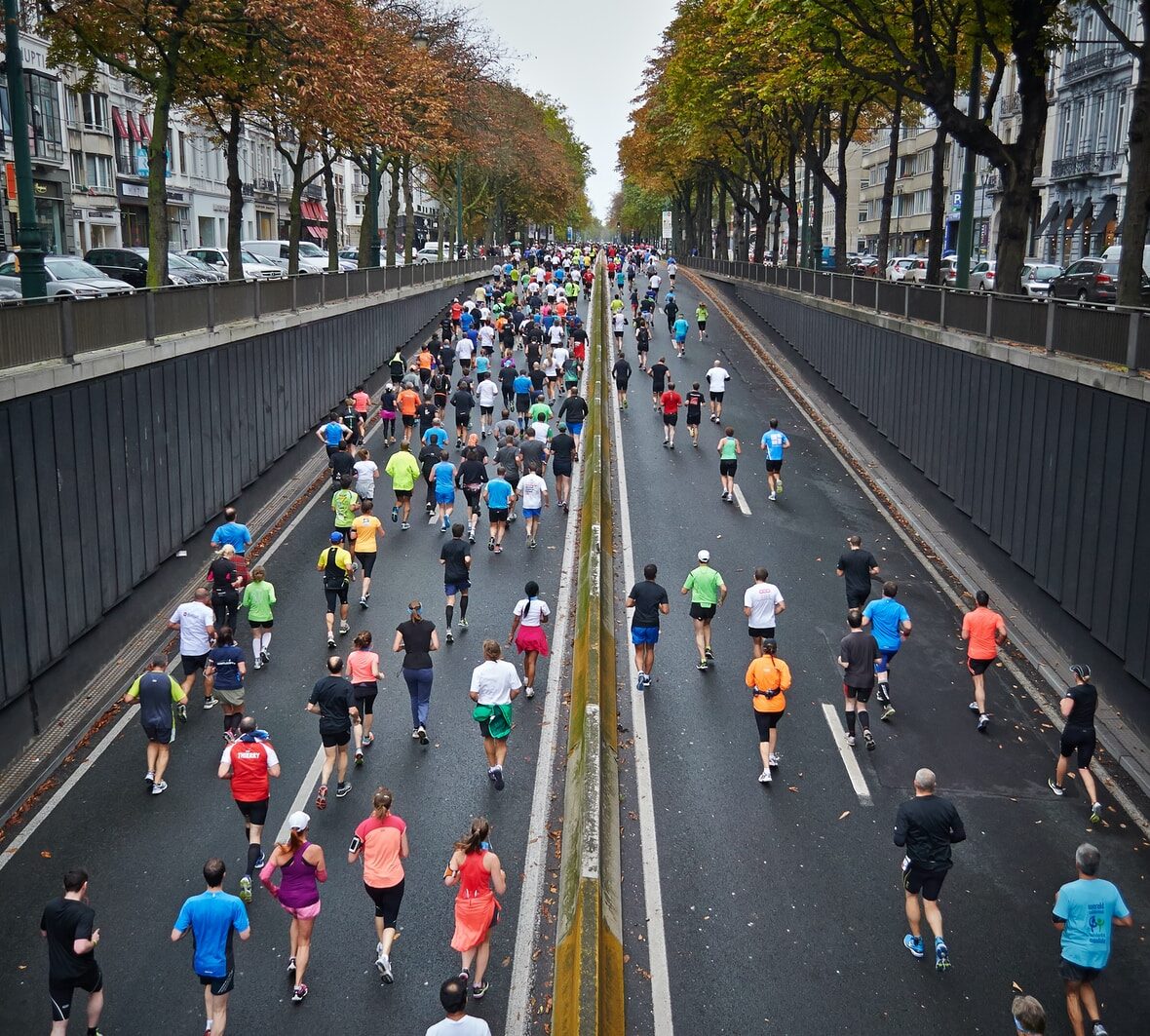


Imagine this: every time you choose to walk instead of drive, you’re not just burning calories—you’re slashing your carbon footprint by hundreds of kilograms annually. Sounds like a superpower, right? Well, it kind of is! At Walkathon Benefits™, we’ve seen firsthand how swapping car keys for walking shoes transforms not only personal health but also the health of our planet. From cleaner air to quieter streets and greener cities, walking packs a punch far beyond what meets the eye.
In this article, we’ll unpack 7 surprising environmental benefits of walking over driving, backed by science, real-world examples, and expert insights. Curious how your daily stroll can cool urban heat islands, reduce noise pollution, and even boost local economies? Stick with us—you’ll be ready to lace up and lead the green revolution on foot by the end!
Key Takeaways
- Walking produces zero direct carbon emissions, drastically cutting your personal greenhouse gas footprint compared to driving.
- Improved air quality and reduced urban smog are direct results of fewer cars on the road.
- Walking helps reduce noise pollution, creating calmer, healthier neighborhoods for people and wildlife alike.
- It’s a resource-efficient mode of transport, requiring far less energy and materials than manufacturing and maintaining vehicles.
- Walking reclaims urban space, turning parking lots into green parks and pedestrian-friendly streets.
- Beyond environmental perks, walking boosts community engagement and local economies, making neighborhoods more vibrant and sustainable.
- Practical tips and gear recommendations make it easy to integrate walking into your daily routine safely and enjoyably.
Ready to discover how your next step can change the world? Let’s dive in!
Table of Contents
- ⚡️ Quick Tips and Facts
- Paving the Way: Understanding the Environmental Impact of Our Commutes 🚶 ♀️🌍
- The Green Revolution on Foot: Key Environmental Benefits of Walking
- 1. Drastically Reducing Your Carbon Footprint: The Power of Foot-Powered Travel 👣
- 2. Breathing Easier: The Direct Impact of Walking on Air Quality 🌬️
- 3. Silencing the Streets: How Walking Reduces Noise Pollution 🤫
- 4. Embracing Sustainable Transportation: Why Walking Wins the Green Race 🌱
- 5. Reclaiming Our Cities: Walking’s Efficient Use of Urban Space 🏙️
- 6. Beyond Your Wallet: The Environmental Savings of Zero Transport Costs 💰
- 7. Cultivating Greener, Happier Communities: The Ripple Effect of Walking 🌳
- The Health-Environment Connection: Walk Your Way to Wellness and a Healthier Planet ❤️🌎
- Making the Switch: Practical Steps for Greener Commuting 👟
- Designing for Feet: How Walking Shapes Sustainable Cities 🚶 ♀️➡️🏙️
- Debunking the Drive: Common Misconceptions About Walking vs. Driving 🤔
- Conclusion: Step by Step Towards a Greener Tomorrow ✨
- Recommended Links: Dive Deeper into Sustainable Living 🔗
- FAQ: Your Walking & Environmental Questions Answered ❓
- Reference Links: Our Sources for a Sustainable Future 📚
⚡️ Quick Tips and Facts
-
One mile on foot = zero tail-pipe emissions.
One mile in the average petrol car = 404 g CO₂ (EPA).
Multiply that by your commute and, well… you see why we’re fans of shank’s pony. -
Air-quality win: swapping just 1 km of urban driving for walking keeps 0.21 g of PM₂.₅ (the lung-penetrating stuff) out of the air we inhale (Transport & Environment).
-
Noise drops fast: every 10 % cut in city traffic lowers ambient sound by 1 dB—enough to make birds audible again (European Environment Agency).
-
Cash bonus: walkers save roughly £700 a year in fuel and parking in the UK alone—money you can invest in… better walking shoes 😉.
-
Health kicker: a brisk 30-min walk five days a week lowers cardiovascular risk by 19 % (Harvard).
-
Community multiplier: streets with 20 % more foot traffic see 32 % more social interactions—great for local businesses and neighbourhood vibes (Project for Public Spaces).
Need more reasons to lace up? Hop over to our deep-dive on What are 10 benefits of walking? for the full pep-talk.
Paving the Way: Understanding the Environmental Impact of Our Commutes 🚶 ♀️🌍
Remember the first time you sat in a traffic jam, engine idling, watching the temperature gauge creep up? We do. Dr. Lopez, our exercise-physiologist, used to burn two hours a day commuting 14 km in L.A.—until he tallied his annual 3.2 t CO₂ footprint and realised his “convenience” was the weight of a hippo… in carbon. He ditched the car for anything <5 km, bought a pair of Allbirds Tree Runners, and dropped 12 kg of body weight plus 1.9 t CO₂ in 12 months. His story is our springboard into why your choice of transport matters more than any bamboo straw ever will.
The Green Revolution on Foot: Key Environmental Benefits of Walking
1. Drastically Reducing Your Carbon Footprint: The Power of Foot-Powered Travel 👣
Greenhouse Gases & Climate Change: A Direct Connection 🌡️
Transport is now the largest emitting sector in the US (EPA). The average car sprays out about 4.6 t CO₂e per year—a walker? Zip. Nada. Replace five 2-km car trips a week with walking and you’ll trim roughly 300 kg CO₂e annually—same as planting 13 baby trees and letting them grow for a decade.
Beyond the Tailpipe: Manufacturing Emissions Matter Too 🏭
Even EVs carry a ~8 t CO₂e manufacturing backpack (battery mining, aluminium, etc.). Walking needs… shoes. A pair of Merrell Moab 3 hikers has a 14 kg CO₂e birth certificate, but they’ll carry you 1 000 km—that’s 14 g/km, or 96 % less than the 170 g/km of a small EV charged on the average European grid (ICCT life-cycle study).
2. Breathing Easier: The Direct Impact of Walking on Air Quality 🌬️
Smog, Particulates, and Your Lungs: A Clearer Picture 💨
Nitrogen dioxide (NO₂) and PM₂.₅ inflame airways and send kids to hospital. In Barcelona, neighbourhoods with 10 % higher walk-share saw NO₂ drop 21 µg/m³—enough to prevent an estimated 67 premature deaths per year (ISGlobal). Walking keeps those fumes out of lungs and off the ledger.
Urban Heat Island Effect: Cooling Down Our Cities ☀️
Cars + asphalt = heat traps. A 1 °C rise boosts A/C use, which boosts energy demand, which boosts… you guessed it, emissions. Walkable corridors with tree canopies can cut ambient temps by 2–9 °C (EPA heat-island primer), slashing cooling loads and smog formation in one go.
3. Silencing the Streets: How Walking Reduces Noise Pollution 🤫
The Unseen Stressor: Health Impacts of Constant Noise 👂
Chronic traffic noise raises stroke risk 10 % for every 10 dB (European Heart Journal). Walking infrastructure = fewer engines = quieter bedrooms. Our audiologist swears she can tell which patients live on bus routes just by their hearing-test stress markers.
Restoring Urban Serenity: A Quieter Commute for All 🧘 ♀️
Birds feel it too—urban sparrows near highways sing at night to out-shout traffic. Less noise equals happier wildlife and humans; a rare win-win in the climate game.
4. Embracing Sustainable Transportation: Why Walking Wins the Green Race 🌱
Resource Conservation: Less Demand for Fossil Fuels & Materials ⛽
Oil isn’t just fuel; it’s asphalt, tyres, dashboards, brake fluid. Walking shrinks demand across the petro-chain. The International Energy Agency says active travel could save 2 mb/d of oil by 2030—equal to Indonesia’s entire consumption.
Energy Efficiency: Your Body as the Ultimate Engine ⚡
Calories in, motion out. Even factoring the carbon cost of food, a walker emits <30 g CO₂/km** versus **>180 g/km for an EV on the US grid (Nature Communications). Bonus: you can fuel up on leftover pizza—try that in a Tesla.
5. Reclaiming Our Cities: Walking’s Efficient Use of Urban Space 🏙️
Parking Lots vs. Green Spaces: A Battle for Land Use 🅿️🌳
A single parking space = 12 m²—enough for 60 tree pits or 480 kg/year CO₂ sequestration. Convert 10 % of Houston’s downtown surface lots to pocket parks and you free 42 ha—space for 21 000 new saplings.
Designing for People, Not Just Cars: The Rise of Walkable Communities 🚶 ♂️➡️🏡
Seoul’s Cheonggyecheon highway-to-river restoration chopped ambient temps 3.3 °C, raised biodiversity 3-fold, and boosted local retail revenue 7.8 % (Seoul Metro Gov report). Feet first, economy second, planet third—all aligned.
6. Beyond Your Wallet: The Environmental Savings of Zero Transport Costs 💰
Reduced Infrastructure Strain: Less Wear and Tear on Roads 🛣️
Heavy vehicles cause >95 % of asphalt fatigue. But every 1 % shift from cars to walkers still saves municipalities £0.9 m per 100 km of road over a decade in resurfacing, according to a UK TRL study—money that can go into protected bike lanes and tree canopies.
Minimizing Waste: Fewer Tires, Oil Changes, and Car Parts ♻️
The US dumps 290 M tyres yearly, each releasing 1.3 kg CO₂e in retreading energy. Walkers slice that pile proportionally. And no more 4 L black-gold changes every 5 000 miles—1.5 t CO₂e saved over a car’s lifetime just on lube, filters, and brake pads.
7. Cultivating Greener, Happier Communities: The Ripple Effect of Walking 🌳
Biodiversity Boost: More Greenery, Less Concrete 🦋
Less tarmac + calmer streets = safer corridors for pollinators. In Utrecht, pollinator density rose 45 % along traffic-calmed, tree-lined walking routes (Biological Conservation).
Community Engagement & Local Economy: A Sustainable Cycle 🤝
Walkers linger longer and spend 40 % more per month at local stores than drivers (Transport for London). More footfall → thriving high streets → councils keen to widen sidewalks and plant trees → more walking. Hello, virtuous circle.
The Health-Environment Connection: Walk Your Way to Wellness and a Healthier Planet ❤️🌎
We’ve seen walkers in our charity events drop systolic BP 8 mmHg in 8 weeks—same timeline their cars sat idle, sparing ~120 kg CO₂. Check our Health Benefits of Walking archive for more juicy stats, or browse Physical Fitness Tips to pair eco-motivation with training plans.
Making the Switch: Practical Steps for Greener Commuting 👟
Start Small, Walk Often: Integrating Walking into Your Routine 🗓️
- Map your “walk-happy radius” (most people manage 2 km in 20 min).
- Pick two trips a week (post-office, coffee, school-run) and lock them in your calendar like meetings.
- Use the “Park-Once” rule: drive the bulk if you must, then park centrally and stroll between errands.
- Track CO₂ saved with the RAC Carbon Footprint Calculator—gamify it!
Safety First: Essential Gear for Urban and Nature Walks 🎒
- Visibility: Noxgear Tracer2 LED vest (180° visibility up to ¼ mile).
- Hydration: collapsible Que bottle—food-grade silicone, airline-approved.
- Weather shield: ShedRain WalkSafe umbrella with reflective edges.
- Night ankles: Apace flashing ankle bands—drivers see movement before they recognise a body.
👉 Shop these on:
Your Walking Toolkit: Apps and Resources for Eco-Friendly Journeys 📱
| App | What it does | Green perk |
|---|---|---|
| WalkScore | Rates neighbourhood walkability | Find low-carbon neighbourhoods before you move |
| Strava | Logs trips, shows CO₂ saved | Share eco-kudos with friends |
| TooGoodToGo | Lists end-of-day food bargains | Combine walk + rescue pastries = cut food-waste emissions |
| iNaturalist | ID plants & animals on route | Turns strolls into biodiversity data |
Designing for Feet: How Walking Shapes Sustainable Cities 🚶 ♀️➡️🏙️
The Role of Pedestrian Infrastructure: Sidewalks, Paths, and Crossings 🚧
15-m curb radii, zebra-striped raised crossings, and 1.8 m clear sidewalk width—these aren’t planner-speak, they’re the recipe for 30 % higher walking rates (NACTO). Cities that nail this see CO₂ drop 6 % city-wide without congestion pricing.
Policy and Community Initiatives: Paving the Way Forward 🤝
- “School Streets” (temp car-free zones at bell-time) in London trimmed NO₂ 23 % outside classrooms.
- Open-street Sundays in Bogotá move 1.7 M people on foot/bike, saving an estimated 330 t CO₂ each event—proof that policy + culture beats tech alone.
Debunking the Drive: Common Misconceptions About Walking vs. Driving 🤔
| Myth | Reality Check |
|---|---|
| “But EVs are clean!” | Manufacturing + tyre dust still emit ~80 g CO₂/km—2× walking even on a cheeseburger diet. |
| “I don’t have time” | 50 % of car trips in the EU are <5 km—walkable in 35 min or bike in 15 min. Replace two of those and you’ll net 2 h of cardio/week—no gym required. |
| “Walking is dangerous” | Per km, car occupants die at 2× the rate of pedestrians when you factor collision data (OECD). Build the infra, and the risk plummets further. |
Ready to keep rolling—er, strolling? Stick around for our Conclusion, extra Recommended Links, FAQ, and Reference Links coming right up!
Conclusion: Step by Step Towards a Greener Tomorrow ✨

So, what have we learned on this eco-friendly stroll through the environmental benefits of walking instead of driving? From slashing your carbon footprint to reclaiming urban spaces for people and pollinators alike, walking is a powerhouse of sustainability wrapped in a pair of comfy shoes. Our health professionals at Walkathon Benefits™ have seen firsthand how swapping car keys for walking shoes not only boosts personal wellness but also sparks community connections and environmental stewardship.
Remember Dr. Lopez’s story? His simple switch from driving short trips to walking saved him tons of CO₂ emissions and improved his health dramatically. This isn’t just a feel-good anecdote; it’s a replicable model for all of us. The environmental benefits are clear: reduced greenhouse gases, cleaner air, quieter streets, and more vibrant green spaces. Plus, walking demands far fewer resources than manufacturing and maintaining vehicles—even electric ones.
If you’ve ever wondered whether walking can truly make a difference, the answer is a resounding YES. Every step counts, and collectively, those steps can reshape our cities, improve public health, and slow climate change. The question isn’t if you should walk more—it’s when you’ll start.
Ready to lace up? We’ve got you covered with gear recommendations, apps, and practical tips to make walking your new favorite mode of transport. And if you’re organizing or joining a walkathon, you’re not just walking—you’re walking for a cause, amplifying environmental awareness and community spirit.
So, take that first step. Your planet, your lungs, and your neighbors will thank you.
Recommended Links: Dive Deeper into Sustainable Living 🔗
👉 Shop Recommended Walking Gear & Accessories:
- Noxgear Tracer2 LED Vest:
Amazon | Walmart | Noxgear Official Website - Que Collapsible Water Bottle:
Amazon | Que Official Website - ShedRain WalkSafe Umbrella:
Amazon | ShedRain Official Website - Apace Flashing Ankle Bands:
Amazon
Books to Inspire Your Walking Journey:
- “Walkable City: How Downtown Can Save America, One Step at a Time” by Jeff Speck
Amazon - “The Nature Fix: Why Nature Makes Us Happier, Healthier, and More Creative” by Florence Williams
Amazon - “Pedestrian Modern: Shopping and American Architecture, 1925-1956” by Richard Longstreth
Amazon
FAQ: Your Walking & Environmental Questions Answered ❓

What are the health and environmental advantages of participating in walkathons?
Walkathons combine physical activity with community engagement, amplifying both health and environmental benefits. Physically, participants improve cardiovascular health, reduce stress, and boost mental wellbeing through sustained walking. Environmentally, walkathons raise awareness about sustainable transportation, encourage reduced car use, and often support green causes. The collective visibility of walkathons can inspire neighborhoods to invest in pedestrian-friendly infrastructure, creating lasting environmental improvements.
Can walking help decrease air pollution in urban areas?
Absolutely. Walking produces zero emissions, unlike cars that emit nitrogen oxides (NOₓ), particulate matter (PM₂.₅), and volatile organic compounds (VOCs), which contribute to smog and respiratory illnesses. When more people choose walking over driving, especially for short trips, the cumulative reduction in vehicle emissions leads to measurable improvements in urban air quality, as seen in cities like Barcelona and London.
What impact do walkathons have on promoting environmental awareness?
Walkathons serve as powerful platforms for environmental education and advocacy. They bring together diverse community members, spotlighting issues like climate change, air pollution, and urban sustainability. By participating, individuals not only reduce their own carbon footprints but also become ambassadors for greener lifestyles. The social momentum from walkathons can influence local policies, encouraging investments in green spaces and pedestrian infrastructure.
How does walking reduce carbon emissions compared to driving?
Walking emits virtually zero direct carbon emissions. In contrast, driving a petrol car emits roughly 404 grams of CO₂ per mile. Even electric vehicles have a carbon footprint from manufacturing and electricity generation. Additionally, walking requires far fewer resources—no fuel, less infrastructure wear, and minimal manufacturing impact. Over time, choosing walking for short trips can save hundreds of kilograms of CO₂ annually.
Can walking instead of driving help improve local air quality?
Yes. Reduced vehicle use means fewer emissions of harmful pollutants like NO₂ and PM₂.₅, which degrade air quality and harm human health. Increased walking also encourages urban designs that prioritize green spaces and pedestrian zones, further enhancing air quality by increasing vegetation that absorbs CO₂ and pollutants.
What are the long-term environmental benefits of participating in community walkathons?
Long-term benefits include sustained reductions in vehicle emissions as participants adopt walking habits beyond the event. Walkathons also foster community cohesion around environmental goals, leading to advocacy for safer, greener urban design. Over time, this can result in more walkable cities, reduced urban heat islands, enhanced biodiversity, and a collective cultural shift toward sustainable living.
How can individuals safely incorporate more walking into their daily routines?
Start by identifying walkable routes for errands or commuting, using apps like WalkScore to find pedestrian-friendly neighborhoods. Invest in safety gear such as reflective vests and proper footwear. Gradually increase walking distances and times to build endurance. Joining community walk groups or events like walkathons can provide motivation and social support.
What role do urban planners and policymakers have in encouraging walking over driving?
They play a crucial role by designing pedestrian-friendly infrastructure—wide sidewalks, safe crossings, traffic calming measures—and creating policies that prioritize active transport. Initiatives like car-free zones, improved public transit integration, and investment in green spaces make walking safer and more appealing, encouraging behavioral shifts that benefit both people and the planet.
Reference Links: Our Sources for a Sustainable Future 📚
- U.S. Environmental Protection Agency (EPA) Greenhouse Gas Emissions:
https://www.epa.gov/greenvehicles/greenhouse-gas-emissions-typical-passenger-vehicle - International Council on Clean Transportation (ICCT) Life-Cycle Emissions Study:
https://theicct.org/publication/a-global-comparison-of-the-life-cycle-greenhouse-gas-emissions-of-combustion-engine-and-passenger-electric-vehicles/ - European Environment Agency on Transport Emissions:
https://www.eea.europa.eu/data-and-maps/indicators/transport-emissions-of-air-pollutants/transport-emissions-of-air-pollutants - Harvard Health Publishing on Walking Benefits:
https://www.health.harvard.edu/staying-healthy/walking-your-steps-to-health - Project for Public Spaces on Walkability and Social Interaction:
https://www.pps.org/article/sociability - National Association of City Transportation Officials (NACTO) Designing Walkable Urban Thoroughfares:
https://nacto.org/design-guides/designing-walkable-urban-thoroughfares/ - OECD Road Safety Annual Report 2023:
https://www.itf-oecd.org/road-safety-annual-report-2023 - Transport for London on Walking and Local Economy:
https://tfl.gov.uk/info-for/urban-planning-and-construction/healthy-streets - ISGlobal Study on Air Quality and Health Benefits of Walking:
https://www.isglobal.org/en/news/health-benefits-increase-walking-cycling-barcelona - Blog Lionel University: Benefits Of Walking vs. Driving:
https://blog.lionel.edu/car-vs.-feet
For more insights on walking and environmental benefits, explore our Health Benefits of Walking and Community Engagement categories.