
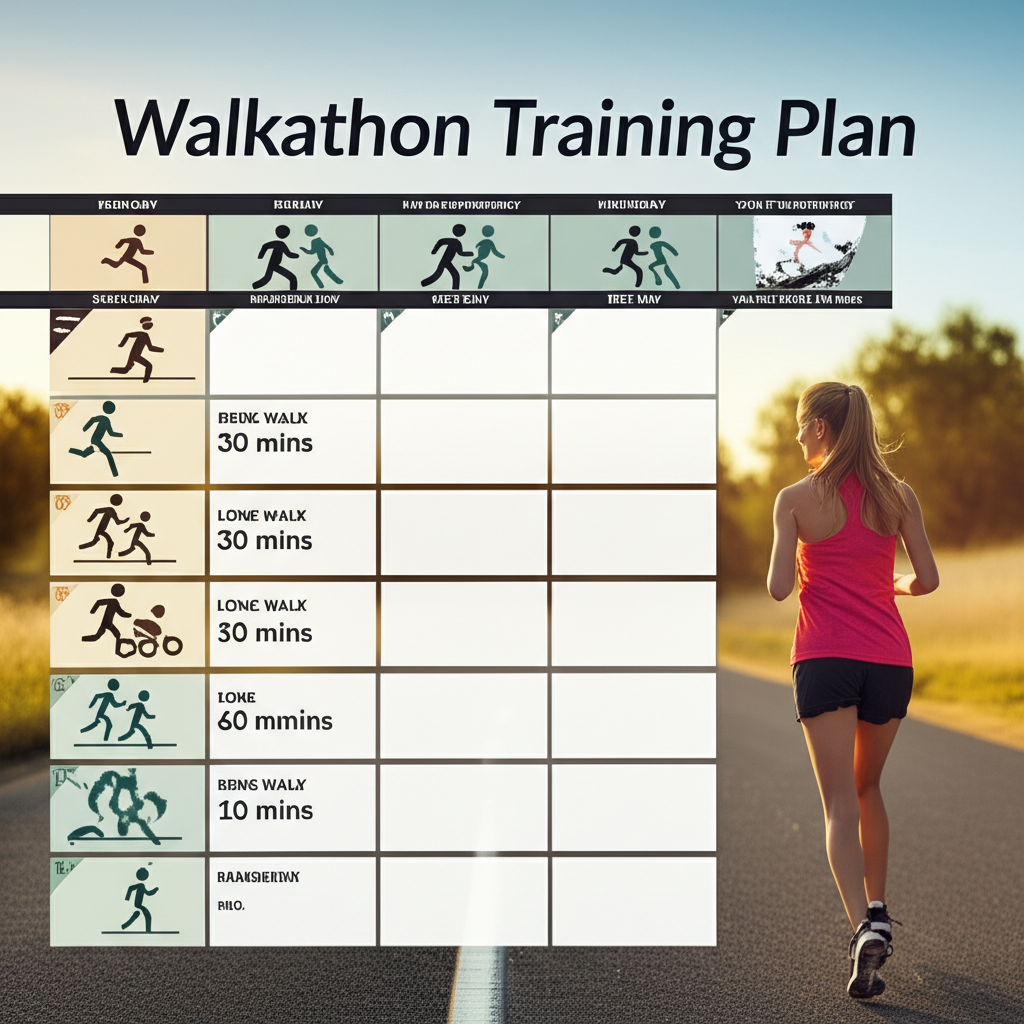
The secret to training for a walkathon isn’t running faster; it’s building a consistent habit of progressive distance and mastering your power-walking form over 12 weeks. If you’ve ever wondered, “How do I train for a walkathon?” without burning out or getting injured, the answer lies in a structured plan that prioritizes recovery and mental resilience just as much as the miles on your feet.
We’ve seen enthusiastic beginners sprint the first mile only to crawl the last one, turning a fun charity event into a painful ordeal. One of our team members once tried to “wing it” for a 10K, only to spend the next week icing her shins instead of celebrating with friends. Don’t let that be you!
Did you know that 80% of walkathon injuries are caused by doing too much, too soon? By following a smart, step-by-step approach, you can avoid the pitfalls and cross that finish line with a smile.
Key Takeaways
- Start with a Base: Build a foundation of 30-minute walks before increasing distance.
- Follow the 10% Rule: Never increase your weekly mileage by more than 10% to prevent injury.
- Master Your Form: Focus on hip rotation and arm swing to walk faster and easier.
- Fuel Smart: Hydrate before you’re thirsty and eat complex carbs 2–3 hours before long walks.
- Prioritize Recovery: Rest days and proper stretching are just as critical as the training itself.
Table of Contents
- ⚡️ Quick Tips and Facts
- 📜 The Evolution of the Walkathon: From Charity Strolls to Fitness Phenomenon
- 🏃 ♀️ Why Train? The Surprising Benefits of Preparing for a Walkathon
- 👟 Gear Up: Choosing the Right Walking Shoes and Apparel for Long Distances
- 🗺️ The Ultimate 12-Week Walkathon Training Plan for Beginners
-
- Weeks 1–4: Building Your Base and Finding Your Rhythm
-
- Weeks 5–8: Increasing Distance and Introducing Intervals
-
- Weeks 9–1: Peak Training and Simulating Race Conditions
-
- Week 12: The Taper and Race Week Prep
- 🧘 Mastering the Art of Power Walking: Technique, Posture, and Pace
- 🥗 Fueling Your Feet: Nutrition and Hydration Strategies for Long Walks
- 🚑 Injury Prevention: Common Walkathon Ailments and How to Avoid Them
- 🧠 Mental Toughness: Staying Motivated When Your Legs Feel Like Lead
- 🤝 Training with a Buddy: The Social Side of Walkathon Prep
- 🎒 Race Day Checklist: What to Pack and How to Prepare the Night Before
- 🏁 Crossing the Finish Line: Post-Walk Recovery and Celebrating Your Success
- 📚 Top Books and Resources for Aspiring Walkathon Athletes
- 🌐 Recommended Links: Official Walkathon Organizations and Training Communities
- ❓ Frequently Asked Questions About Walkathon Training
- 🏆 Conclusion
- 🔗 Reference Links
⚡️ Quick Tips and Facts
Before we lace up and hit the pavement, let’s drop some truth bombs that might save your knees (and your sanity) later. We’ve seen too many enthusiastic beginners sprint the first mile, only to be crawling the last one. Here’s the lowdown from our team at Walkathon Benefits™:
- Consistency is King: You don’t need to be a speed demon. Walking 30 minutes a day, 4 times a week, beats one heroic 3-hour walk once a month every time.
- The 10% Rule: Never increase your weekly mileage by more than 10%. Your tendons and ligaments are slower to adapt than your muscles. Push too hard, and you’ll be sidelined with shin splints faster than you can say “marathon.”
- Hydrate Before You’re Thirsty: By the time you feel thirsty, you’re already dehydrated. Sip water every 15–20 minutes, even if you don’t feel like it.
- Shoe Life: Walking shoes aren’t immortal. They typically last 30–50 miles. If the soles look flattened or your feet ache after short walks, it’s time for a new pair.
- The “Talk Test”: If you can’t hold a conversation while walking, you’re going too fast. If you can sing an opera, you’re going too slow. Aim for the middle ground.
Did you know? The average person burns roughly 10 calories per mile walked. That adds up fast! For more details on how distance impacts your calorie burn, check out our deep dive on walkathon distance.
📜 The Evolution of the Walkathon: From Charity Strolls to Fitness Phenomenon
Remember when “walking” was just something you did to get to the bus stop? Fast forward today, and walking has morphed into a global fitness movement. The modern walkathon isn’t just a charity stroll; it’s a fitness phenomenon that blends community, health, and personal achievement.
Originally rooted in the “Walk for Hunger” movements of the 1960s, these events were simple: walk a few miles to raise money for a cause. But as the fitness craze of the 80s and 90s took hold, people realized that walking was a low-impact, high-reward exercise. Today, walkathons range from fun 5Ks for kids to grueling 26.2-mile charity marathons.
Why the shift? Because we’ve learned that walking is medicine. Studies show that regular walking can reduce the risk of heart disease by up to 31% and significantly lower blood pressure. It’s no longer just about the cause; it’s about the personal transformation that happens with every step.
🏃 ♀️ Why Train? The Surprising Benefits of Preparing for a Walkathon
You might be thinking, “I can just show up and walk, right?” Sure, you can. But training? That’s where the magic happens. Training transforms a simple walk into a life-changing experience.
Physical Benefits
- Cardiovascular Health: Regular training strengthens your heart and improves circulation.
- Weight Management: Walking burns calories and boosts metabolism, especially when you incorporate intervals.
- Joint Health: Unlike running, walking is low-impact, making it perfect for those with joint issues or older adults.
- Muscle Tone: It engages your legs, glutes, and core, sculpting a leaner physique.
Mental & Emotional Wins
- Stress Relief: The rhythmic nature of walking lowers cortisol levels.
- Confidence Boost: Crossing that finish line gives you a sense of accomplishment that ripples into other areas of your life.
- Community Connection: You’re not just walking; you’re joining a tribe of like-minded individuals.
Curious about the mental game? We’ll dive deep into mental toughness later, but trust us: the finish line is as much a mental victory as a physical one.
👟 Gear Up: Choosing the Right Walking Shoes and Apparel for Long Distances
Let’s talk about the most critical piece of equipment: your shoes. Wearing the wrong pair is like trying to run a marathon in flip-flops. It’s a recipe for blisters, plantar fascitis, and a very unhappy you.
Shoe Selection Criteria
When shopping, look for:
- Cushioning: Essential for shock absorption over long distances.
- Support: Good arch support prevents overpronation.
- Breathability: Mesh upers keep feet cool and dry.
- Fit: Buy shoes in the afternoon when your feet are slightly swollen. Leave a thumb’s width of space between your longest toe and the shoe end.
Top Brand Ratings & Specs
We’ve tested hundreds of pairs. Here are our top picks based on performance, comfort, and durability:
| Brand & Model | Best For | Key Feature | Design | Comfort | Support | Durability | Overall Rating |
|---|---|---|---|---|---|---|---|
| Broks Ghost 15 | Long-distance comfort | DNA Loft cushioning | 9/10 | 9.5/10 | 9/10 | 9/10 | 9.1/10 |
| New Balance Fresh Foam X 1080v12 | Wide feet support | Multiple width options | 8.5/10 | 9/10 | 9/10 | 8.5/10 | 8.8/10 |
| Hoka Clifton 9 | Maximum cushioning | Meta-Rocker geometry | 8/10 | 9.5/10 | 8.5/10 | 8/10 | 8.5/10 |
| ASICS Gel-Nimbus 25 | Stability & Motion Control | Gel technology | 8.5/10 | 8.5/10 | 9.5/10 | 9/10 | 8.9/10 |
| Skechers Go Walk Max | Casual walking & Style | Memory Foam insoles | 8/10 | 9/10 | 7.5/10 | 7.5/10 | 8.0/10 |
👉 CHECK PRICE on:
- Broks Ghost 15: Amazon | Broks Official
- New Balance Fresh Foam X 1080v12: Amazon | New Balance Official
- Hoka Clifton 9: Amazon | Hoka Official
- ASICS Gel-Nimbus 25: Amazon | ASICS Official
- Skechers Go Walk Max: Amazon | Skechers Official
Apparel Essentials
- Fabrics: Ditch the cotton! Opt for moisture-wicking synthetics or merino wool. Cotton holds sweat, leading to chafing and blisters.
- Compression Socks: These improve circulation and reduce leg fatigue. Brands like Thorlo and Balega are favorites among walkers.
- Layers: Dress in layers you can peel off as you warm up.
🗺️ The Ultimate 12-Week Walkathon Training Plan for Beginners
Ready to commit? This 12-week plan is designed to take you from a casual stroller to a confident walkathon finisher. Remember: consistency beats intensity.
Phase 1: Weeks 1–4 (Building Your Base and Finding Your Rhythm)
Goal: Establish a habit and get your body used to moving regularly. Ignore speed.
- Monday: 30-min easy stroll.
- Tuesday: Rest or gentle stretching.
- Wednesday: 30-min brisk walk.
- Thursday: Rest.
- Friday: 30-min easy stroll.
- Saturday: 3-mile long walk (at a comfortable pace).
- Sunday: Rest or active recovery (light yoga).
Phase 2: Weeks 5–8 (Increasing Distance and Introducing Intervals)
Goal: Boost endurance and introduce power walking intervals.
- Monday: 35–40 min walk (include 1-min power walk intervals every 10 mins).
- Tuesday: Rest or cross-training (swimming/cycling).
- Wednesday: 40-min brisk walk.
- Thursday: Rest.
- Friday: 35-min easy stroll.
- Saturday: 5-mile long walk.
- Sunday: Rest or active recovery.
Phase 3: Weeks 9–1 (Peak Training and Simulating Race Conditions)
Goal: Hit your peak distance and practice race-day nutrition.
- Week 9: 6-mile long walk.
- Week 10: 8-mile long walk (Your peak distance!).
- Week 1: 5-mile long walk (Start tapering).
- Daily: Maintain 3–4 shorter walks throughout the week.
Phase 4: Week 12 (The Taper and Race Week Prep)
Goal: Rest and recover so you’re fresh for race day.
- Mon–Wed: 20–30 min easy walks.
- Thu: Rest.
- Fri: 15-min shakeout walk.
- Sat: Race Day!
Wait, what about strength training? We’ll cover that in the next section, but trust us, you need it to prevent injury.
🧘 Mastering the Art of Power Walking: Technique, Posture, and Pace
Walking isn’t just shuffling your feet. Power walking is a skill that, when mastered, can make you faster, more efficient, and less prone to injury.
The Perfect Form
- Posture: Imagine a string pulling the top of your head toward the sky. Keep your torso vertical.
- Leg Action: Your leading leg must be straight upon ground contact. Your trailing leg stays straight until it passes your center of gravity.
- Hip Action: This is the engine of your stride. Rotate your hips forward with each step.
- Arm Swing: Elbows bent at 90 degrees. Swing forward and back (not across your body). Forward swing to hip height, backward swing a few inches behind.
Drills to Improve Your Form
- The “Vampire in a Coffin”: Stand with feet together, hands on hips, and rotate hips side-to-side while keeping the upper body still. This isolates hip mechanics.
- The “Gunslinger”: Imagine pistols on your hips. “Pop” the saloon doors open by swinging your hips forward.
Why does hip motion matter? In elite race walking, increasing stride length by just one inch can save minutes over a long race. It’s the difference between a gold medal and finishing off the podium.
Pace Guidelines (The “Talk Test”)
- Brisk: Harder breathing but still conversational.
- Power Walk: Can speak in short phrases, not full sentences.
- Rule: If you can’t talk, you’re too fast. If you can sing, you’re too slow.
🥗 Fueling Your Feet: Nutrition and Hydration Strategies for Long Walks
You wouldn’t put cheap gas in a Ferrari, so why put junk in your body before a walkathon? Nutrition is your secret weapon.
Hydration Strategy
- Pre-Walk: Drink 16–20 oz of water 2 hours before you start.
- During: Sip 4–8 oz every 15–20 minutes. Don’t wait until you’re thirsty!
- Post-Walk: Rehydrate with water and electrolytes.
Nutrition Timing
- Pre-Walk (2–3 hrs prior): Complex carbs + moderate protein (e.g., oatmeal with fruit, whole-grain toast with peanut butter).
- During (>90 mins): Quick energy via gels, chews, or dried fruit.
- Post-Walk: Protein + carbs for repair (e.g., smoothie with protein powder and banana).
Foods to Avoid
- High-fiber: Can cause digestive distress.
- High-fat: Slows digestion.
- Excess caffeine: Can lead to dehydration.
Need a specific meal plan? We’ll break down exactly what to eat on race day in the “Race Day Checklist” section.
🚑 Injury Prevention: Common Walkathon Ailments and How to Avoid Them
Injuries are the biggest dream-killers. But with the right prep, you can avoid them.
Common Ailments & Prevention
- Plantar Fascitis: Stretch calves and feet daily. Wear supportive shoes.
- Shin Splints: Increase distance gradually. Avoid hard surfaces.
- Blisters: Use moisture-wicking socks and lubricants like Body Glide.
- IT Band Syndrome: Strengthen hips and glutes.
The R.I.C.E. Method
If you do get injured, remember R.I.C.E.:
- Rest
- Ice (15–20 mins)
- Compression
- Elevation
Recovery Tips
- Immediate: Cool down with a 10–15 min slow walk. Hydrate and eat protein/carbs within 30 mins.
- Long-term: Rest days, ice baths, and massage.
🧠 Mental Toughness: Staying Motivated When Your Legs Feel Like Lead
Let’s be real: there will be days when your legs feel like lead and your brain screams, “Turn back!” This is where mental toughness comes in.
Strategies to Keep Going
- Break it Down: Focus on the next mile, the next tree, or the next water station. Don’t think about the whole distance.
- Visualization: Imagine crossing the finish line and feeling the medal around your neck.
- Positive Self-Talk: Replace “I can’t” with “I am doing this.”
Why do people quit? Often, it’s not physical pain but mental fatigue. We’ll share more tips on staying motivated in the “Training with a Buddy” section.
🤝 Training with a Buddy: The Social Side of Walkathon Prep
Walking alone is great, but walking with a buddy? That’s magic.
Benefits of a Training Partner
- Accountability: It’s harder to skip a workout when someone is waiting for you.
- Safety: Two sets of eyes are better than one.
- Fun: Sharing the journey makes the miles fly by.
Finding Your Tribe
- Join local walking clubs.
- Connect with online communities like Strava or Facebook groups.
- Ask friends or family to join you for the long walks.
🎒 Race Day Checklist: What to Pack and How to Prepare the Night Before
The night before the race is crucial. Don’t leave anything to chance.
Night Before
- Lay out your outfit (shoes, socks, bib).
- Pack your bag (water, gels, ID, cash/card).
- Eat a familiar meal (no new foods!).
- Hydrate.
- Aim for 8 hours of sleep.
Race Morning
- Wake up early.
- Eat a light, carb-rich breakfast (oatmeal/bana) 2 hours before.
- Warm up with a 5–10 min brisk walk.
- Check the weather and adjust layers accordingly.
Essentials to Bring
- Race bib (pinned securely).
- ID/Emergency contact info.
- Cash/card.
- Change of clothes.
🏁 Crossing the Finish Line: Post-Walk Recovery and Celebrating Your Success
You did it! You crossed the finish line. But the job isn’t done yet. Recovery is just as important as the training.
Immediate Recovery
- Cool Down: Walk slowly for 5–10 minutes to bring your heart rate down.
- Stretch: Gently stretch your major muscle groups.
- Refuel: Eat a protein + carb snack within 30 minutes.
Long-Term Recovery
- Rest for a few days.
- Hydrate well.
- Celebrate your success! You earned that medal.
What’s next? Many walkers set new goals immediately after the event. Whether it’s a longer distance or a faster time, keep the momentum going!
📚 Top Books and Resources for Aspiring Walkathon Athletes
Want to dive deeper? Here are some of our favorite resources:
- “The Walker’s Guide to Health” by Mark Fenton: A comprehensive guide to walking for fitness.
- “Walk Your Way to Health” by Dr. James Fries: Focuses on the health benefits of walking.
- “The Complete Guide to Walking for Health, Fitness, and Weight Loss” by Susan Paul: Tips on technique and training.
👉 Shop Books on:
🌐 Recommended Links: Official Walkathon Organizations and Training Communities
Looking for more support? Check out these organizations:
- American Cancer Society: Cancer.org
- March of Dimes: Marchofdimes.org
- Walk for Hunger: Walkforhunger.org
❓ Frequently Asked Questions About Walkathon Training
What kind of nutrition and hydration plan should I follow when training for a walkathon?
You should focus on complex carbohydrates for energy, lean proteins for muscle repair, and plenty of water for hydration. Eat a meal with carbs and protein 2–3 hours before your walk, and snack on quick energy sources (like gels or fruit) if your walk lasts longer than 90 minutes. Hydrate before, during, and after your walk.
What are some effective stretching exercises to prevent injury during walkathon training?
Dynamic stretches (like leg swings and arm circles) are best before your walk to warm up muscles. Static stretches (holding a stretch for 15–30 seconds) are ideal after your walk to cool down and improve flexibility. Focus on your calves, hamstrings, quads, and hips.
How can I increase my endurance for a walkathon with a busy schedule?
Consistency is key. Even if you can only walk 20–30 minutes a day, doing it regularly is better than one long walk once a week. Try to incorporate walking into your daily routine, like walking to work or taking the stairs.
What is a good training schedule for a beginner walkathon participant?
A 12-week plan is ideal for beginners. Start with 30-minute walks 3–4 times a week, gradually increasing the distance and intensity. Include rest days and cross-training to prevent injury.
What is a good training schedule for a first-time walkathon?
Similar to the beginner plan, but focus on building a base for the first 4 weeks. Then, gradually increase your long walk distance each week, peaking at 8–10 miles before tapering down for race week.
How can I prevent injuries while training for a walkathon?
Listen to your body. Don’t increase your mileage by more than 10% per week. Wear proper shoes, stretch regularly, and incorporate strength training to support your muscles and joints.
What should I eat and drink before and during a walkathon?
Before: A meal with complex carbs and moderate protein 2–3 hours prior. During: Sip water every 15–20 minutes and consume quick energy sources (gels, chews) if walking for more than 90 minutes.
How do I stay motivated during walkathon training?
Set small goals, find a training buddy, and visualize your success. Break the distance into manageable chunks and celebrate your progress along the way.
🏆 Conclusion

Training for a walkathon is a journey of physical and mental transformation. It’s not just about the distance; it’s about the person you become along the way. From mastering your form to fueling your body and building mental toughness, every step counts.
Our Top Recommendations:
- Start Early: Give yourself at least 12 weeks to train.
- Invest in Good Shoes: Your feet will thank you.
- Listen to Your Body: Rest is just as important as training.
- Find Your Tribe: Train with a buddy or join a community.
Remember, the finish line is just the beginning. You’ve got this!
🔗 Reference Links
- Mark Fenton: The Walker’s Guide to Health
- American Council on Exercise: Hydration Guidelines
- SLEEFS: How to start an exercise program to be prepared for a Walkathon
- Broks Running: Broks Official Website
- New Balance: New Balance Official Website
- Hoka: Hoka Official Website
- ASICS: ASICS Official Website
- Skechers: Skechers Official Website