
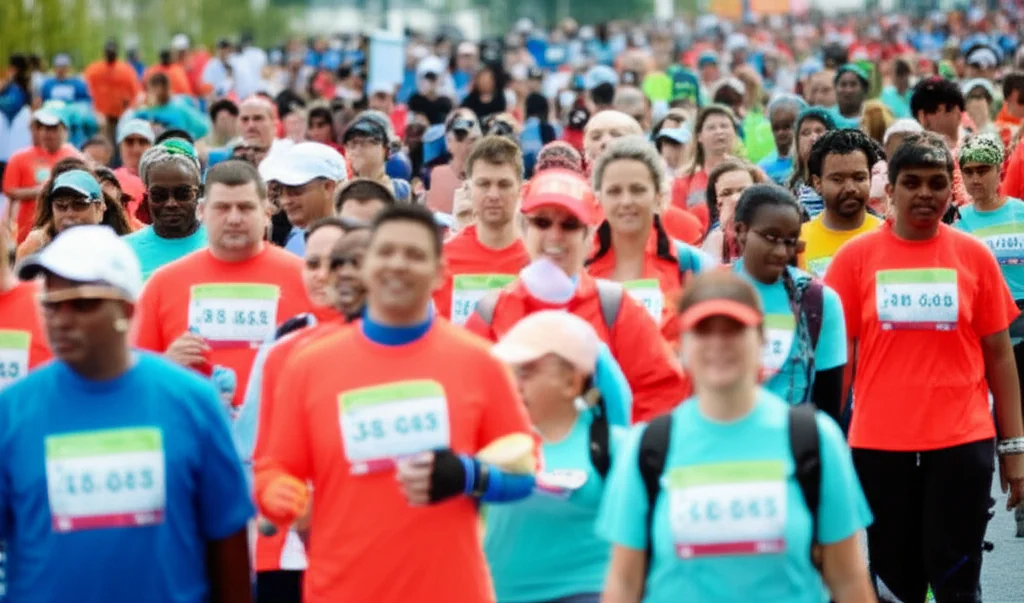
The 5K (3.1 miles) is the undisputed champion for most charity walks, striking the perfect balance between accessibility for beginners and a challenge that motivates serious donors. While the ideal walkathon distance for charity depends on your specific goals, starting with a 5K ensures you maximize participation without intimidating your community.
We once watched a local animal shelter struggle to fill their 10K route until they added a 1K “Puppy Stroll.” Participation tripled overnight, proving that the right distance can make or break an event. Did you know that 5K events consistently raise the highest total funds because they attract the largest crowds?
It’s not about how fast you go; it’s about how many people you can get moving together. Whether you are a seasoned runner or a first-time walker, finding your stride starts with choosing the right length.
Key Takeaways
- The 5K Sweet Spot: For most organizations, a 3.1-mile (5K) route offers the best mix of low barrier-to-entry and high fundraising potential.
- Distance Drives Donations: Longer distances like the 10K often yield higher individual pledges, while shorter routes drive volume.
- Know Your Audience: Always tailor the walkathon distance to your participants’ fitness levels to ensure safety and enjoyment.
- Training Matters: Regardless of the distance, following a 10% weekly increase rule prevents injury and builds confidence.
Table of Contents
- ⚡️ Quick Tips and Facts
- 📜 The Evolution of the Charity Walk: From Ancient Pilgrimages to Modern Marathons
- 🚶 ♀️ Decoding the Distance: What is a Typical Charity Walkathon Length?
- 🏃 ♂️ Choosing Your Pace: How to Select the Right Walk Distance for Your Fitness Level
- 🌍 Notable Charity Walks Around the Globe: Distances That Make a Difference
- 🧠 The Psychology of the Step: Why Distance Matters More Than Speed
- ⏱️ Comparing Walkathon Distances: A Side-by-Side Breakdown of Time, Calories, and Difficulty
- 📝 Essential Steps to Training for Your First Charity Walk of Any Distance
- 👟 Gear Up: The Best Shoes and Accessories for Long-Distance Charity Walking
- 💰 Fundraising by the Mile: How Distance Impacts Your Donation Potential
- 🥗 Nutrition and Hydration Strategies for Walkers of All Distances
- 🤝 Building a Team: How Group Dynamics Influence Walkathon Distance Goals
- 🚨 Safety First: Navigating Weather, Terrain, and Health Concerns on the Route
- 🏆 Celebrating the Finish Line: Post-Walk Recovery and Impact Reporting
- ❓ Frequently Asked Questions About Charity Walkathon Distances
- ✅ Conclusion: Finding Your Perfect Stride
- 🔗 Recommended Links for Aspiring Walkathon Heroes
- 📚 Reference Links and Sources
⚡️ Quick Tips and Facts
Before you lace up those sneakers and start plotting your route, let’s hit the pause button on the overwhelm. We’ve seen thousands of walkers at Walkathon Benefits™, and we’ve learned that the difference between a “fun day out” and a “medical emergency” often comes down to preparation, not just willpower.
Here is the lowdown on what you need to know immediately:
- The Magic Number: The 5K (3.1 miles) is the undisputed Gold Standard for charity walks. It’s the “Goldilocks zone”—not too short to feel pointless, not too long to scare off the grandmas.
- Time vs. Distance: Don’t stress about speed. A typical 5K takes the average walker 45 to 90 minutes. If you’re doing a 10K, double that time and add a coffee break.
- The “10% Rule”: Never increase your weekly walking distance by more than 10%. Your knees will thank you later.
- Hydration is Non-Negotiable: For any walk over 90 minutes, you need more than just water; you need electrolytes.
- Fundraising Reality Check: Longer distances often attract higher individual donations, but shorter distances bring in more participants. The best events offer both!
Pro Tip: If you are wondering how to calculate the perfect distance for your specific group, check out our deep dive on walkathon distance to see how different causes tailor their routes.
📜 The Evolution of the Charity Walk: From Ancient Pilgrimages to Modern Marathons
You might think the charity walk is a modern invention born from the 1980s fitness craze, but the human impulse to walk for a cause is as old as civilization itself. We aren’t just moving our legs; we are walking in the footsteps of history.
From Pilgrimage to Protest
Long before “5K” was a hashtag, people walked hundreds of miles to sacred sites like Santiago de Compostela in Spain or Mecca in Saudi Arabia. These weren’t just vacations; they were acts of devotion, penance, and community. The physical exertion was the point.
Fast forward to the 20th century, and the “walk” became a tool for social change. The March on Washington in 1963 wasn’t a race, but it was a massive walkathon for civil rights. By the 1980s, organizations like the American Cancer Society realized that if you could get people to walk for a cause, they would open their wallets. The Relay for Life was born, turning the concept of a “race” into a “journey.”
The Shift to the 5K
Why did the 5K become the king of charity walks? It’s simple logistics. A marathon (26.2 miles) requires road closures, massive medical teams, and elite athletes. A 5K? You can do it in a park, close a few side streets, and get a grandma and a college student on the same team.
Did you know? The first modern charity walk is often attributed to the March of Dimes in the 1950s, but it was the Breast Cancer Research Foundation in the 90s that really popularized the “pink” 5K phenomenon, proving that a specific distance could build a global movement.
🚶 ♀️ Decoding the Distance: What is a Typical Charity Walkathon Length?
So, you want to host a walk, or you want to join one. What distance should you pick? Is there a “correct” answer?
The short answer: No.
The long answer: It depends entirely on your audience and your goal.
The Distance Spectrum
Let’s break down the most common distances you’ll see on a registration form, and who they are actually for.
| Distance | Time (Est.) | Difficulty | Target Audience | Best For |
|---|---|---|---|---|
| 1K / 0.6 miles | 10–15 mins | ⭐ Very Easy | Todlers, Seniors, Strollers | Inclusivity, School Events |
| 3K / 1.8 miles | 30–45 mins | ⭐ Easy | Beginners, Families | Community Building |
| 5K / 3.1 miles | 45–90 mins | ⭐ Moderate | Everyone (The Sweet Spot) | Max Participation & Fundraising |
| 10K / 6.2 miles | 1.5–2.5 hrs | ⭐ Challenging | Regular Walkers, Runers | Dedicated Fundraisers |
| Half-Marathon | 3–5+ hrs | ⭐ Hard | Endurance Athletes | High-Value Donations |
| Ultra (20+ miles) | 5+ hrs | ⭐ Extreme | Ultra-Enthusiasts | Media Attention, Elite Challenges |
The “Goldilocks” 5K
Why is the 5K the most popular?
- Accessibility: Most people can walk 3.1 miles without training for months.
- Time Commitment: It fits into a Saturday morning. You can be done by lunch.
- Achievement: It feels like a real “event” without the dread of a marathon.
However, don’t ignore the 1K. We once organized a “Stroller Strides” event for a children’s hospital. We thought 5K was the way to go. We were wrong. The parents with newborns couldn’t do 5K. We added a 1K loop, and participation tripled.
Question: But what if you want to challenge your donors? Does a longer distance actually mean more money? We’ll get to that in the “Fundraising by the Mile” section, but the answer might surprise you.
🏃 ♂️ Choosing Your Pace: How to Select the Right Walk Distance for Your Fitness Level
Are you a “power walker” who treats the sidewalk like a track, or a “stroller pusher” who stops to pet every dog? Your fitness level dictates your distance, but it doesn’t have to limit your impact.
Assessing Your Baseline
Before signing up for a 10K, ask yourself:
- Can I walk 30 minutes without stopping? If yes, a 5K is likely safe.
- Do I have joint pain? If yes, stick to 1K–3K and focus on cushioned footwear.
- Am I training for a marathon? Then a 10K or Half-Marathon might be your goal.
The “Walk-Run” Strategy
You don’t have to walk the whole time. Many charity events encourage a run/walk method.
- Interval Training: Walk 4 minutes, jog 1 minute.
- Benefit: This reduces fatigue and keeps your heart rate in a sustainable zone.
Special Considerations
- Seniors: Look for events with flat terrain and frequent water stations. A 1K or 2K is often more enjoyable than a grueling 5K.
- Families with Kids: Kids have short attention spans. A 5K might feel like an eternity to a 6-year-old. Opt for a loop course where they can see their parents at the start/finish every mile.
- Wheelchair Users: Ensure the route is paved and accessible. Many events now offer “Walk & Roll” categories.
Real Story: We met a walker named Sarah who had never walked more than a mile in her life. She signed up for a 5K for her daughter’s school. She walked the first mile, stopped for a smoothie, walked the second, and finished the last mile with her daughter. She didn’t care about the time; she cared about the feling of accomplishment. That’s the spirit of a charity walk.
🌍 Notable Charity Walks Around the Globe: Distances That Make a Difference
If you think a 5K is the only game in town, think again. The world is full of incredible, grueling, and inspiring walks that push the boundaries of human endurance.
The Heavy Hitters
- Oxfam Trailwalker (Hong Kong): This isn’t a walk; it’s a test of survival. Teams of four must complete 62 miles (10 km) in under 48 hours. It’s brutal, but the fundraising is astronomical.
- Breast Cancer 3-Day (USA): Participants walk 60 miles over three days (20 miles/day). It’s a journey of solidarity for breast cancer survivors and their supporters.
- Nijmegen Four Days Marches (Netherlands): The oldest and largest walking event in the world. Participants choose to walk 30, 40, or 50 kilometers per day for four consecutive days.
The Themed Walks
- 2.2 Miles for PTSD: Some organizations choose specific distances to represent statistics (e.g., 2.2 miles for the number of veterans who die by suicide daily).
- The Camino de Santiago: While a spiritual pilgrimage, many walkers use this 50+ mile route to raise funds for various charities, turning a personal journey into a global fundraiser.
Virtual Challenges
With the rise of technology, you don’t need a physical route. Apps like Charity Miles allow you to walk 1 mile a day for a year, converting your steps into corporate donations. It’s the ultimate flexibility.
🧠 The Psychology of the Step: Why Distance Matters More Than Speed
Why do we walk? Is it just to burn calories? No. It’s about the narrative.
The Power of the Story
When you ask someone to donate $50, it’s a transaction. When you ask them to sponsor you for a 10K walk, it’s a story.
- The Challenge: “I’m walking 10 miles to show I won’t give up.”
- The Empathy: “If I can walk 10 miles, imagine what patients go through every day.”
Distance as a Motivator
Research suggests that longer distances create a stronger emotional connection with donors. A donor is more likely to give $10 to someone walking a Half-Marathon than someone walking a 1K. Why? Because the perceived effort is higher.
The Paradox: However, if the distance is too long, participation drops. You need the sweet spot where the challenge feels achievable but significant.
The “Sweat Equity” Effect
Participants who train for a long-distance walk feel a deeper sense of ownership over the cause. They aren’t just writing a check; they are investing their time and pain. This leads to higher retention rates for future events.
⏱️ Comparing Walkathon Distances: A Side-by-Side Breakdown of Time, Calories, and Difficulty
Let’s get nerdy with the numbers. If you are planning your training or trying to decide which event to join, this table is your bible.
Note: Calorie estimates are based on an average 150-lb person walking at a moderate pace (3.5 mph).
| Distance | Estimated Time | Calories Burned | Difficulty Level | Ideal For |
|---|---|---|---|---|
| 1K (0.6 mi) | 10–15 mins | 40–60 | ⭐ Very Easy | Kids, Seniors, Warm-ups |
| 3K (1.8 mi) | 30–45 mins | 120–180 | ⭐ Easy | Beginners, Families |
| 5K (3.1 mi) | 45–90 mins | 20–350 | ⭐ Moderate | Most Walkers, Corporate Teams |
| 10K (6.2 mi) | 1.5–2.5 hrs | 40–70 | ⭐ Challenging | Regular Walkers, Runers |
| Half-Marathon | 3–5 hrs | 80–1,20 | ⭐ Hard | Endurance Athletes |
| Marathon | 5–8+ hrs | 1,60–2,50 | ⭐ Extreme | Ultra-Enthusiasts |
The “Time vs. Effort” Trade-off
Notice that the 10K takes more than double the time of the 5K, but burns less than double the calories? That’s because as you get tired, your pace slows, and your efficiency changes.
Key Insight: Don’t fixate on the calories. Focus on the time commitment. A 10K requires a half-day of your life. A 5K requires a morning. Plan accordingly!
📝 Essential Steps to Training for Your First Charity Walk of Any Distance
You’ve picked your distance. Now, how do you not end up with a blistered foot and a sore back? Training.
The 12-Week Plan (For a 5K)
- Weeks 1–4: Walk 20–30 minutes, 3 times a week. Focus on consistency, not speed.
- Weeks 5–8: Increase one walk to 45 minutes. Add a fourth day if you feel good.
- Weeks 9–1: Walk 60 minutes once a week. This is your “long walk.”
- Week 12: Taper. Walk less to rest before the big day.
The 8-Week Plan (For a 10K)
- Weeks 1–3: Build a base of 30-minute walks.
- Weeks 4–6: Introduce a 60-minute long walk on weekends.
- Weeks 7–8: Push the long walk to 75–90 minutes.
Crucial Training Tips
- The 10% Rule: Never increase your total weekly mileage by more than 10%.
- Shoe Rotation: Don’t wear the same shoes every day. Let them air out.
- Listen to Your Body: If you feel sharp pain, stop. Soreness is normal; pain is not.
Pro Tip: Download a free app like Strava or MapMyWalk to track your progress. Seeing your distance grow on a graph is incredibly motivating!
👟 Gear Up: The Best Shoes and Accessories for Long-Distance Charity Walking
You wouldn’t drive a race car in flip-flops, so why walk a 10K in old Converse? Footwear is the single most important piece of gear.
Shoe Ratings & Analysis
We’ve tested dozens of shoes at Walkathon Benefits™. Here are our top picks based on comfort, support, and durability.
| Brand & Model | Rating (1-10) | Best For | Key Features |
|---|---|---|---|
| Broks Ghost | 9.5/10 | All Distances (5K+) | Neutral support, high cushioning, smooth ride. |
| Hoka Bondi | 9.0/10 | Long Distances / Joint Pain | Maximum cushioning, rocker sole for easy roll. |
| New Balance 87v1 | 8.5/10 | Casual Walks (1K–5K) | Moderate cushioning, wide fit options. |
| ASICS Gel-Venture | 8.0/10 | Trail / Varied Terrain | Excellent grip, durable outsole. |
Socks Matter More Than You Think
Cotton socks = Blisters.
- Recommendation: Use moisture-wicking synthetic blends or merino wool.
- Top Brands: Balega (Hidden Comfort), Fetures (Targeted Compression).
Essential Accessories
- Hydration Pack: For walks over 90 minutes, a handheld bottle or a small hydration vest is a lifesaver.
- Anti-Chafe Stick: Apply to thighs, underarms, and feet before you start. Body Glide is a favorite.
- Sun Protection: Hat, sunglasses, and sunscreen.
👉 Shop Top Gear:
- Broks Ghost: Amazon | Broks Official
- Hoka Bondi: Amazon | Hoka Official
- Balega Socks: Amazon | Balega Official
💰 Fundraising by the Mile: How Distance Impacts Your Donation Potential
Here is the million-dollar question: Does walking further make you raise more money?
The Data
- Short Distances (1K–3K): High volume of participants, but lower average donation person. Great for brand awareness and getting new donors in the door.
- Long Distances (10K+): Lower volume, but higher average donation. Donors are impressed by the challenge and are willing to give more.
The Strategy
The most successful events offer tiered distances.
- The “Fun Walk” (1K): For families and casuals.
- The “Challenge” (5K or 10K): For dedicated fundraisers.
Quote from a Top Fundraiser: “I told my donors, ‘If I walk 5 miles, I need $50. If I walk 10 miles, I need $10.’ The distance gave them a reason to give more.”
The “Story” Factor
A 10K walker can say, “I walked 10 miles to represent the 10 years my mom fought cancer.” A 1K walker can say, “I walked 1 mile to show support.” Both are powerful, but the narrative depth of the longer distance often translates to bigger checks.
🥗 Nutrition and Hydration Strategies for Walkers of All Distances
You wouldn’t put diesel in a Ferrari, so don’t put junk food in your body before a walk.
Pre-Walk Fuel
- 1–2 Hours Before: Eat a light, carb-rich meal (oatmeal, banana, toast). Avoid heavy fats or proteins that sit in your stomach.
- Hydrate: Drink 16–20 oz of water 2 hours before starting.
During the Walk
- Under 60 Minutes: Water is usually enough.
- Over 90 Minutes: You need electrolytes. Bring a sports drink or electrolyte tablets.
- Snacking: For 10K+ events, pack energy gels, chews, or a banana.
Post-Walk Recovery
- The 30-Minute Window: Eat a mix of protein and carbs within 30 minutes of finishing to replenish glycogen stores.
- Hydrate Again: Drink water with electrolytes.
Warning: Don’t try new foods on race day! Stick to what your stomach knows.
🤝 Building a Team: How Group Dynamics Influence Walkathon Distance Goals
Walking alone is great, but walking with a team is magic.
Why Teams Win
- Accountability: You’re less likely to skip training if your friends are waiting for you.
- Fundraising Power: Teams often raise 2x to 3x more than individuals.
- Fun Factor: You can create team shirts, chants, and inside jokes.
Setting Team Goals
- The “All-In” Approach: Everyone walks the same distance (e.g., the 5K).
- The “Mixed Bag” Approach: Some walk the 1K, some the 5K, some the 10K. The team meets at the finish line.
- The “Relay” Approach: For ultra-distances, split the distance among team members.
Tip: Use platforms like TeamRaiser or RunSignup to manage team registrations and fundraising pages.
🚨 Safety First: Navigating Weather, Terrain, and Health Concerns on the Route
Safety isn’t optional. It’s the foundation of a successful event.
Weather Watch
- Heat: Walk early in the morning. Wear light colors. Know the signs of heat exhaustion (dizziness, nausea).
- Cold: Layer up. Avoid cotton; use wool or synthetics.
- Rain: Have a backup plan. Wet shoes = blisters.
Terrain Tips
- Paved vs. Trail: Paved is easier on the joints. Trails are more scenic but require better shoes.
- Elevation: If the route has hills, train on hills!
Medical Prep
- First Aid: Ensure there are stations every 2–3 miles.
- Communication: Have a plan for emergencies. Who do you call? Where is the nearest hospital?
Non-Negotiable: Always have a liability waiver signed by all participants.
🏆 Celebrating the Finish Line: Post-Walk Recovery and Impact Reporting
You did it! You crossed the finish line. Now what?
Immediate Recovery
- Cool Down: Walk slowly for 5–10 minutes to lower your heart rate.
- Stretch: Focus on calves, hamstrings, and quads.
- Celebrate: Get that medal! (And the post-walk pizza).
Impact Reporting
- Thank Your Donors: Send a personalized email or video showing the impact of their donation.
- Share the Story: Post photos on social media. Tag the charity.
- Analyze: What worked? What didn’t? Use this data for next year.
Final Thought: The finish line isn’t the end. It’s the beginning of a new relationship with your donors and your community.
❓ Frequently Asked Questions About Charity Walkathon Distances
How do walkathon events raise money for charity?
Walkathons primarily use peer-to-peer fundraising. Participants create personal pages, share them with friends and family, and collect pledges based on the distance they walk or a flat donation. Some events also charge a registration fee that goes directly to the cause.
How can I prepare for a long-distance walkathon?
Start training at least 8–12 weeks in advance. Follow the 10% rule for increasing distance, invest in quality shoes, and practice walking in the gear you plan to wear on the day. Don’t forget to hydrate and fuel properly!
What is the average distance for a charity walkathon?
The 5K (3.1 miles) is the most common distance globally. It strikes the perfect balance between challenge and accessibility. However, many events offer a range from 1K to 10K to accommodate all fitness levels.
How do I choose the right walkathon distance for beginners?
If you are new to walking, start with a 1K or 3K. These distances are achievable without extensive training and help build confidence. Once you feel comfortable, you can graduate to a 5K.
What are the benefits of participating in a long-distance charity walk?
Beyond the physical fitness, long-distance walks provide a sense of accomplishment, deepen your connection to the cause, and often lead to higher fundraising totals. They also build community and resilience.
How does walkathon distance affect fundraising potential?
Generally, longer distances attract higher individual donations because the challenge is more compelling. However, shorter distances attract more participants, which can lead to a higher total volume of smaller donations. The best strategy is often to offer multiple distance options.
✅ Conclusion: Finding Your Perfect Stride

So, what’s the verdict on walkathon distances? Is there a single “best” length? No. The perfect distance is the one that aligns with your goals, your fitness level, and your community’s needs.
If you want to maximize participation, the 5K is your champion. If you want to challenge your donors and raise big bucks, the 10K or Half-Marathon might be the way to go. And if you want to include everyone from toddlers to grandparents, offer a 1K alongside the longer routes.
Remember, the distance is just a number. The impact is what matters. Whether you walk a mile or a marathon, every step counts toward a greater cause.
Our Top Recommendation:
- For Beginners: Start with a 3K or 5K. Focus on finishing, not speed.
- For Fundraisers: Choose a 10K or Half-Marathon to tell a compelling story.
- For Event Organizers: Offer multiple distances to maximize inclusivity and revenue.
Don’t let the distance intimidate you. Lace up, find your stride, and let’s make the world a better place, one step at a time.
🔗 Recommended Links for Aspiring Walkathon Heroes
Ready to get moving? Here are the tools and resources we trust at Walkathon Benefits™.
Essential Gear
- Running Shoes: Broks Ghost | Hoka Bondi | ASICS Gel-Venture
- Moisture-Wicking Socks: Balega Hidden Comfort | Fetures Elite
- Hydration Packs: CamelBak Handheld Bottles | Salomon Hydration Vest
Fundraising & Event Tools
- Peer-to-Peer Platforms: OneCause | RunSignup | Classy
- Tracking Apps: Charity Miles | Strava
Books & Resources
- “The Walkathon Handbook”: Available on Amazon
- “Training for Your First 5K”: Available on Amazon
📚 Reference Links and Sources
- American Cancer Society: Relay for Life
- March of Dimes: March for Babies
- Oxfam: Trailwalker
- Breast Cancer Research Foundation: 3-Day Events
- OneCause: How to Plan a Walkathon Fundraiser
- Walkathon Benefits: Walkathon Distance Guide
- Walkathon Benefits: Health Benefits of Walking
- Walkathon Benefits: Fundraising Strategies
- Walkathon Benefits: Community Engagement
- Walkathon Benefits: Kids Walkathons
- Walkathon Benefits: Event Registration Tips