
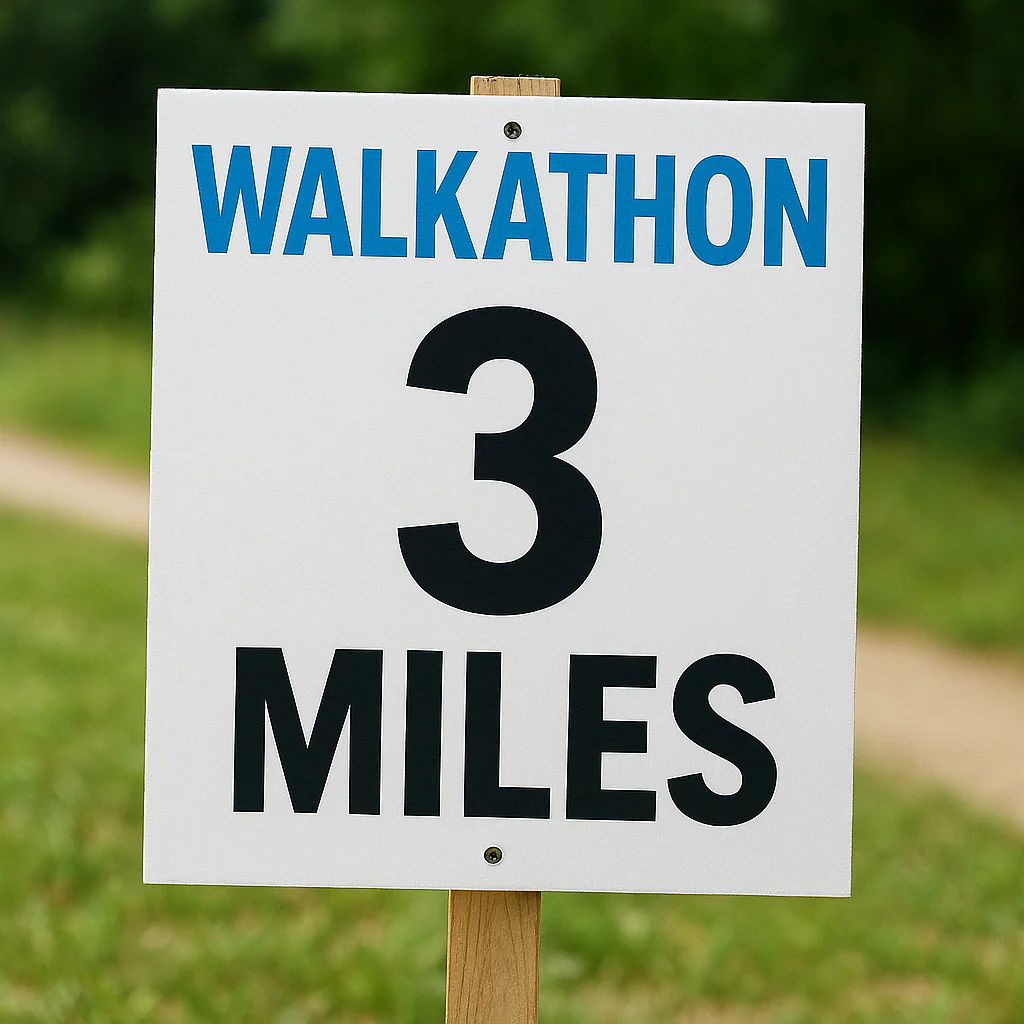
Ever stood at the starting line of a charity event, heart pounding, wondering if you’d signed up for a leisurely stroll or a grueling marathon? You aren’t alone. For years, a persistent myth has circulated that walkathons are rigidly locked into specific distances like the 5K or 10K, leaving many potential participants intimidated by the idea of a “one-size-fits-all” rule. The truth is far more liberating: walkathons are as flexible as the communities that organize them. From a casual 1-mile “Fun Walk” to an endurance-testing 26.2-mile challenge, the distance is rarely a hard limit but rather a customizable goal designed to include everyone from toddlers to ultra-endurance athletes.
In this comprehensive guide, we’re diving deep into the evolution of walkathon distances, debunking the mileage myths, and revealing how organizers tailor routes to fit every fitness level. We’ll explore why the 3.1-mile 5K became the gold standard, how “no-limit” events work, and the surprising ways distance impacts your fundraising potential. Whether you’re a first-timer eyeing a local park loop or a seasoned walker preparing for a half-marathon, you’ll discover that the only rule is showing up. By the end of this article, you’ll know exactly how to choose the perfect distance for your next big cause—and why your dog might just be the best walking partner you never knew you needed.
Key Takeaways
- Walkathons are NOT limited to a single distance; they range from 1-mile strolls to 26.2-mile marathons and beyond.
- The 5K (3.1 miles) remains the most popular distance due to its perfect balance of challenge and accessibility.
- Many events offer multi-distance options or “Fun Walk” formats where participants can choose their own mileage.
- Distance selection impacts fundraising strategies, with longer distances often attracting higher per-person pledges.
- Safety and terrain are the primary factors organizers consider when determining route lengths, not arbitrary rules.
Table of Contents
- ⚡️ Quick Tips and Facts
- 📜 The Evolution of the Walkathon: From Ancient Origins to Modern Marathons
- 🚶 ♀️ Are Walkathons Limited to a Specific Number of Miles? The Great Distance Debate
-
- The Classic 5K: Why 3.1 Miles Became the Gold Standard
-
- The 10K Challenge: Doubling Down on Endurance
-
- The 13.1 Half-Marathon: Where Walkers Meet Runers
-
- The Full Marathon (26.2): Pushing the Limits of Human Stamina
-
- The “Fun Walk” Phenomenon: Why Some Events Have No Mileage Limit
- 📏 Understanding Distance Variations: How Organizers Choose the Perfect Route
- 🏆 Walkathon Categories: Matching Your Pace to the Perfect Event
- 🗺️ Route Planning Secrets: Terrain, Elevation, and the “Mileage Myth”
- 🎒 Gear Up: Essential Equipment for Short Strolls vs. Long Hauls
- 🥗 Fueling the Journey: Nutrition Strategies for Different Walkathon Distances
- 🤝 Community Impact: How Distance Affects Fundraising Potential
- 🐕 Hiking With Dogs · Join: Can Your Furry Friend Join the Walk?
- 💡 Pro Tips for First-Timers: Avoiding the “Walkathon Wobbles”
- 🏁 Conclusion
- 🔗 Recommended Links
- ❓ FAQ: Your Burning Questions About Walkathon Distances Answered
- 📚 Reference Links
⚡️ Quick Tips and Facts
Before you lace up your sneakers and start wondering if you need to train for a 5K or a 50-mile ultramarathon, let’s hit the pause button and drop some essential truth bombs about walkathon distances.
- The Short Answer: No, walkathons are NOT limited to a specific number of miles. They are as flexible as your schedule and as varied as the causes they support.
- The Sweet Spot: While 3.1 miles (5K) is the statistical “Gold Standard” for charity walks, events range from a casual 1-mile “stroll” to grueling 26.2-mile marathons and even 10-mile endurance challenges.
- The “Fun Walk” Factor: Many community events explicitly market themselves as “no distance limit,” allowing participants to walk as far or as little as they feel comfortable.
- Safety First: Regardless of the advertised distance, listening to your body is the only rule that never changes.
- Fundraising Corelation: Interestingly, longer distances often correlate with higher individual fundraising goals, but shorter events attract significantly higher participation numbers.
If you’re still scratching your head about exactly how many miles you should be aiming for, don’t worry. We’ve got a dedicated deep dive on How many miles is a walkathon? that breaks down the math behind the miles. But for now, let’s just say: variety is the spice of life (and walking)!
📜 The Evolution of the Walkathon: From Ancient Origins to Modern Marathons
You might think the walkathon is a modern invention born from the era of “fun runs” and neon t-shirts, but the concept of walking for a cause is as old as humanity itself.
The Ancient “Walk of Atonement”
Long before we had registration fees and finish line medals, ancient civilizations used walking as a form of penance, pilgrimage, and community bonding. The Greeks walked the “Sacred Way” to Delphi, and medieval pilgrims trekked hundreds of miles to Santiago de Compostela. These weren’t just exercise; they were spiritual endurance tests.
The Birth of the Modern Charity Walk
Fast forward to the 20th century. The modern charity walkathon really took off in the 1970s and 80s, largely driven by the American Cancer Society’s Relay for Life and the March of Dimes. These organizations realized that while running marathons were great for elite athletes, walking was inclusive. It allowed grandparents, children, and people with disabilities to participate.
“We didn’t want to leave anyone behind. If you could walk, you could help us fight cancer.” — A veteran organizer from the 1980s Relay for Life.
From Fixed Distances to Flexible Events
In the early days, events often mimicked the 42.195 km (26.2 miles) of the Olympic marathon. However, organizers quickly realized that forcing a 26-mile distance on a 70-year-old grandmother was a recipe for disaster, not fundraising.
This realization birthed the multi-distance event, where a single route might offer a 1K, 5K, and 10K option simultaneously. Today, the flexibility of distance is the hallmark of a successful walkathon, ensuring that inclusivity remains at the core of the movement.
🚶 ♀️ Are Walkathons Limited to a Specific Number of Miles? The Great Distance Debate
Here is the million-dollar question (or rather, the million-mile question): Are walkathons limited to a specific number of miles?
The answer is a resounding NO. Unlike track meets where the 10m dash is always 10m, walkathons are fluid by design. However, there are patterns and standards that organizers follow to ensure safety, logistics, and participant satisfaction.
Why Do Some Events Stick to Specific Distances?
While you can walk any distance, organizers often choose specific milestones for logistical simplicity and marketing appeal.
| Distance | Common Name | Typical Use Case | Why This Distance? |
|---|---|---|---|
| 1 Mile | The “Stroll” | School fundraisers, kids’ events | Low barrier to entry; easy for families. |
| 3.1 Miles | 5K | The most popular charity distance | Matches the “standard” race distance; achievable for most. |
| 6.2 Miles | 10K | Intermediate walkers | A step up in challenge without the marathon dread. |
| 13.1 Miles | Half-Marathon | Serious walkers/runers | Bridges the gap between walking and running. |
| 26.2 Miles | Full Marathon | Ultra-endurance events | The ultimate test of human stamina. |
| Variable | Fun Walk | Community festivals | No limit; walk as far as you want. |
The “Fun Walk” Phenomenon: Why Some Events Have No Mileage Limit
Have you ever seen a sign that says “Walk as far as you like”? That’s the Fun Walk. These events are often held in parks or on boardwalks where closed courses aren’t feasible.
- Pros: Maximum flexibility; great for people with mobility issues or those who just want to socialize.
- Cons: Harder to measure fundraising per mile; harder to provide aid stations for everyone.
But here’s the twist: Even in a “no limit” event, most participants self-select a distance. Why? Because humans love goals. Without a finish line, the walk can feel aimless. That’s why many “no limit” events still encourage a 3-mile loop as a suggested route.
1. The Classic 5K: Why 3.1 Miles Became the Gold Standard
If you walk into a charity event, there is a 70% chance it is a 5K. Why? Because 3.1 miles is the sweet spot of human endurance.
- Time Commitment: It takes the average walker about 45 to 60 minutes. This fits perfectly into a lunch break or a Saturday morning before brunch.
- Training Time: You can train for a 5K in just 4 to 6 weeks. This low barrier to entry means more participants, which means more donations.
- The Psychology: It feels like a “real race” without the intimidation of a marathon.
Pro Tip: If you are new to walking, start here. It’s the perfect distance to test your gear and your stamina without risking injury.
2. The 10K Challenge: Doubling Down on Endurance
Double the distance, double the fun (and the blisters). The 10K (6.2 miles) is where the casual walker starts to feel like an athlete.
- The Challenge: It requires more than just “walking.” You need stamina, better hydration strategies, and perhaps a bit of pace management.
- The Crowd: You’ll find a mix of walkers, jogers, and runners. It’s a great place to meet people who are slightly more serious about their fitness.
- Fundraising Power: Participants often set higher fundraising goals for a 10K because they feel they are “doing more” for the cause.
3. The 13.1 Half-Marathon: Where Walkers Meet Runers
The Half-Marathon (13.1 miles) is a beast. It’s the distance where walkathons often merge with running events.
- The “Walk/Run” Method: Many participants use the Galloway Method (walk intervals) to complete this distance.
- The Mental Game: The first 6 miles are easy. The last 6 miles are a mental battle.
- Safety Note: For a pure walking event, a 13.1-mile route requires extensive support, including multiple water stations, medical tents, and a longer course closure time.
4. The Full Marathon (26.2): Pushing the Limits of Human Stamina
Yes, there are 26.2-mile walkathons. They are rare, but they exist. These are often ultra-endurance challenges for specific causes (like Alzheimer’s awareness or cancer research).
- The Reality Check: Walking 26.2 miles takes 6 to 9 hours for an average walker.
- The Commitment: You need a support crew, specialized foot care, and a mental fortitude that borders on the insane.
- The Reward: The sense of accomplishment is unmatched. As one participant told us, “I didn’t just walk for cancer; I walked through it.”
5. The “Fun Walk” Phenomenon: Why Some Events Have No Mileage Limit
We touched on this earlier, but let’s dive deeper. In a Fun Walk, the route is often a loop that can be taken once, twice, or three times.
- Scenario: A park loop is 1 mile. You can walk it 1 time (1 mile), 3 times (3 miles), or 10 times (10 miles).
- The Benefit: This allows a family with a toddler to do 1 mile, while a fitness enthusiast does 5. Everyone gets a medal (or a sticker) for participating.
- The Downside: It can be chaotic to track who walked how far for fundraising purposes.
📏 Understanding Distance Variations: How Organizers Choose the Perfect Route
So, how does an organizer decide if their event will be a 5K or a 10K? It’s not just a coin toss. It’s a mix of logistics, terrain, and target audience.
The Terrain Factor
- Flat Courses: Ideal for longer distances (10K+) because they are easier on the joints.
- Hilly Courses: Often kept shorter (5K or less) to prevent overexertion and injury.
- Urban vs. Rural: City walks are often limited by street closures and traffic, favoring shorter, looped courses. Rural walks can be longer but require more shuttle logistics.
The “Cutoff Time” Rule
Every walkathon has a cutoff time. If the course is 5 miles, and the cutoff is 2 hours, the pace must be maintained.
- Slow Paces: If the average walker is 20 mins/mile, a 5K takes 1 hour 40 mins. Safe!
- Long Distances: A 26.2-mile walk with a 6-hour cutoff requires a 23 min/mile pace. This is tough for walkers, so organizers often extend cutoffs to 8 or 9 hours for ultra-walks.
Safety and Medical Support
The longer the distance, the more medical support is needed.
- 5K: 1 medical tent at the finish.
- 10K+: Medical tents every 3-5 miles.
- 26.2+: Full medical team, ambulances on standby, and sweper vehicles to pick up straglers.
🏆 Walkathon Categories: Matching Your Pace to the Perfect Event
Not all walkathons are created equal. Understanding the categories can help you choose the right event for your fitness level.
1. The “Couch to 5K” Walker
- Target: Beginners, seniors, families.
- Distance: 1-3 miles.
- Vibe: Social, fun, low pressure.
- Goal: Just get moving!
2. The “Serious Stroller”
- Target: Regular walkers, fitness enthusiasts.
- Distance: 5K – 10K.
- Vibe: Competitive but friendly.
- Goal: Beat your personal best time.
3. The “Ultra-Walker”
- Target: Endurance athletes, charity champions.
- Distance: 13.1 – 26.2+ miles.
- Vibe: Grind, grit, and glory.
- Goal: Complete the impossible.
4. The “Themed Walk”
- Target: Everyone!
- Distance: Variable (often 1-3 miles).
- Vibe: Costumes, music, dancing.
- Goal: Have a blast and raise money.
🗺️ Route Planning Secrets: Terrain, Elevation, and the “Mileage Myth”
Ever wonder why a 5K feels harder on a hilly course than a flat one? It’s the elevation gain.
The “Mileage Myth”
Many people think 1 mile is 1 mile. WRONG.
- Flat 5K: Easy, breezy.
- Hilly 5K: Fels like a 7K.
- Why? Walking uphill requires 3x the energy of walking on flat ground.
How to Read a Course Map
When registering, always look for the elevation profile.
- Flat: Good for speed and beginners.
- Rolling: Good for intermediate walkers.
- Mountainous: Save this for your next adventure (or stick to a shorter distance).
The “Loop” vs. “Out-and-Back”
- Loop: You never see the same scenery twice. Great for mental engagement.
- Out-and-Back: You walk to a point and turn around. Easier to navigate but can get boring.
🎒 Gear Up: Essential Equipment for Short Strolls vs. Long Hauls
You wouldn’t wear flip-flops to a marathon, right? Same logic applies to walkathons. Your gear depends on the distance.
For Short Strolls (1-3 Miles)
- Shoes: Comfortable sneakers or walking shoes.
- Clothing: Breathable t-shirt and shorts.
- Extras: Water bottle, sunscreen.
For Long Hauls (10K+)
- Shoes: Trail running shoes or high-end walking shoes with extra cushioning.
- Clothing: Moisture-wicking fabrics, compression socks (to prevent swelling).
- Extras: Hydration pack, electrolyte tablets, blister kit, hat, sunglasses.
Recommended Brands:
- Shoes: Broks, Hoka, New Balance.
- Hydration: CamelBak, Ultimate Direction.
- Socks: Darn Tough, Smartwol.
👉 CHECK PRICE on:
- Broks Ghost Walking Shoes: Amazon | Broks Official
- CamelBak Hydration Pack: Amazon | CamelBak Official
🥗 Fueling the Journey: Nutrition Strategies for Different Walkathon Distances
You wouldn’t drive a car on an empty tank, so why walk a marathon without fuel?
The 5K (Under 1 Hour)
- Strategy: Hydrate before and after. No food needed during the walk.
- Tip: Eat a light snack (banana or toast) 30 mins before.
The 10K (1-2 Hours)
- Strategy: Hydrate at every station. Consider a gel or chews if you feel a drop in energy.
- Tip: Electrolytes are key if it’s hot.
The Half/Full Marathon (2+ Hours)
- Strategy: Carb-loading the night before. Eat every 45-60 mins during the walk.
- What to Eat: Banas, energy gels, pretzels, sports drinks.
- Warning: Don’t try new foods on race day! Stomach issues are the #1 reason people drop out.
🤝 Community Impact: How Distance Affects Fundraising Potential
Does walking further mean raising more money? Yes, but with a caveat.
- Short Distances (5K): High participation = Volume fundraising. Many small donations add up.
- Long Distances (10K+): Lower participation = High-value donations. Participants often ask for larger pledges per mile.
The “Mileage Pledge” Strategy:
Many walkers ask sponsors to donate $1 per mile.
- 5K Walker: $3.10 per sponsor.
- 26.2 Walker: $26.20 per sponsor.
This makes the longer distance a powerful tool for major donors. However, the 5K is better for corporate sponsors who want visibility among a large crowd.
🐕 Hiking With Dogs · Join: Can Your Furry Friend Join the Walk?
Can your dog join the walkathon? It depends on the event!
The Rules of the Road
- Leash Laws: Most events require dogs to be on a short leash (6ft max).
- Distance Limits: Dogs shouldn’t be forced to walk 10+ miles unless they are trained working dogs.
- Heat Safety: Dogs overheat faster than humans. Never walk your dog in a 5K if it’s above 75°F (24°C).
Best Breds for Long Walks
- Border Collies: High energy, great for 10K+.
- Labradors: Friendly, steady pace.
- Greyhounds: Surprisingly good walkers, but need rest.
What to Bring for Your Dog
- Collapsible water bowl.
- Portable water.
- Pop bags (always!).
- Cooling vest for hot days.
👉 Shop
on:
- Dog Hydration Gear: Amazon | Chewy
- Cooling Vests: Amazon | Ruffwear Official
💡 Pro Tips for First-Timers: Avoiding the “Walkathon Wobbles”
New to the walkathon scene? Don’t let the blisters or cramps ruin your day.
1. The “Test Run”
Walk the course (or a similar distance) a week before the event. This helps you gauge your pace and break in your shoes.
2. The “Start Line Strategy”
Don’t start too fast! 90% of walkers start too fast and burn out by mile 2. Pace yourself like you have a marathon to run.
3. The “Blisters are the Enemy”
- Prevention: Use moleskin or blister pads on hot spots before they hurt.
- Socks: Wear synthetic or wol socks. Cotton is the enemy (it holds moisture).
4. The “Post-Walk Recovery”
- Stretch: Do light stretching immediately after.
- Hydrate: Drink water with electrolytes.
- Elevate: Put your feet up to reduce swelling.
🏁 Conclusion

So, are walkathons limited to a specific number of miles? Absolutely not. From the 1-mile strolls that get kids excited about fitness to the 26.2-mile marathons that test the limits of human endurance, the world of walkathons is as diverse as the causes they support.
The perfect distance for you depends on your fitness level, your goals, and your willingness to push your limits. Whether you choose the classic 5K for its accessibility or the 10K for its challenge, the most important thing is to get moving, connect with your community, and make a difference.
Remember: The distance doesn’t matter as much as the heart you put into it. So, lace up, grab your friends (and maybe your dog), and hit the pavement. The world is waiting for your steps!
🔗 Recommended Links
Ready to gear up for your next walkathon? Check out these top-rated products and resources:
- Best Walking Shoes for Long Distances:
- Hydration Packs & Bottles:
- Blister Prevention & Care:
- Books on Walking & Endurance:
❓ FAQ: Your Burning Questions About Walkathon Distances Answered

What is the average distance of a charity walkathon?
The average distance is 3.1 miles (5K). This is the most popular distance because it strikes a balance between challenge and accessibility. However, many events offer multiple distances (1K, 5K, 10K) to cater to different fitness levels.
Read more about “🚶 ♀️ What’s the Avg Walkathon Distance for Beginners? (2026 Guide)”
Can participants choose their own walking distance in a walkathon?
Yes and no. In multi-distance events, you register for a specific distance (e.g., 5K or 10K). In Fun Walks, you can often walk as far as you like, but you may need to register for a specific category if you want to be eligible for prizes or fundraising recognition.
Read more about “🏆 Top 15 Walkathon Fundraising Websites (2026)”
How are walkathon routes measured and verified?
Routes are typically measured using a calibrated bicycle (Jones Counter) or GPS devices. For official races, the route must be certified by a governing body (like USA Track & Field) to ensure the distance is accurate. For charity walks, organizers often use GPS apps to verify the route, but the precision may vary.
Are there different categories for different walking distances in walkathons?
Yes. Most events have categories like:
- 1K/1 Mile: For kids and seniors.
- 5K: The standard charity distance.
- 10K: For intermediate walkers.
- Half/Full Marathon: For endurance athletes.
- Fun Walk: No distance limit.
Read more about “How Many Miles Should You Walk Daily for Health? 🚶 ♂️ (2026)”
What happens if I can’t finish the distance?
Most walkathons have a cutoff time. If you can’t finish within the time limit, you may be asked to exit the course for safety reasons. However, many events offer shuttle services to bring you back to the finish line. Never push yourself to the point of injury!
Read more about “🚶 ♀️ How Many Miles is a Standard Walkathon Route? (2026 Guide)”
📚 Reference Links
- American Cancer Society: Relay for Life
- March of Dimes: Walk for Babies
- USA Track & Field: Course Certification
- Mayo Clinic: Benefits of Walking
- My Lightning Tracker & Alerts: App Store – For tracking weather conditions during outdoor events.
- Terminator Training: How to Ruck a Sub-2 Hour 12 Miler – Insights on endurance training and pacing.