
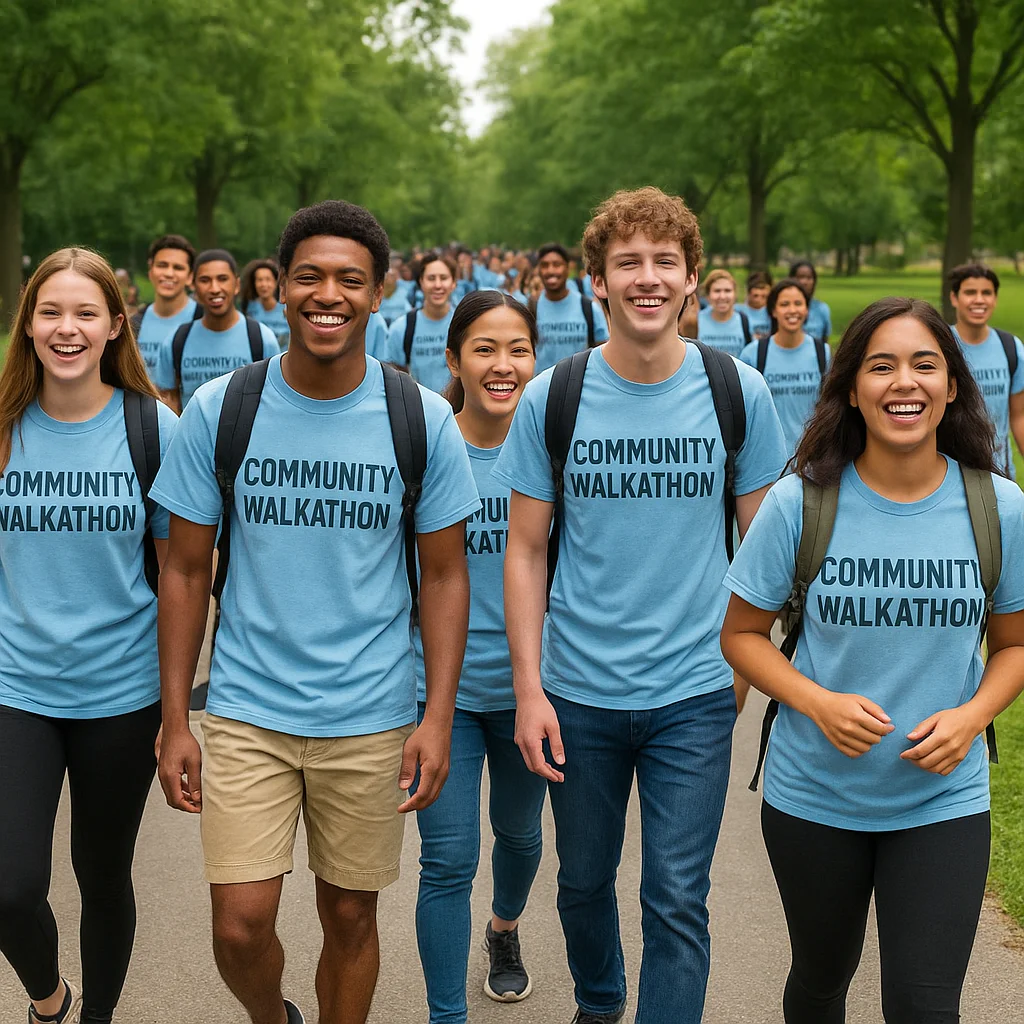
Imagine a school event where students, parents, local businesses, and even alumni come together—not just to raise funds, but to build lasting community bonds while promoting health and wellness. That’s the magic of student walkathons combined with powerful community engagement. Did you know that peer-to-peer fundraising events like walkathons can raise three times more than traditional bake sales or product sales? Yet, many schools still struggle to unlock their full potential.
In this article, we’ll take you on a journey from the humble origins of walkathons to the cutting-edge digital tools that make organizing a breeze today. We’ll share 15 epic strategies to turn your walkathon into a community celebration that students actually want to join, local businesses are eager to support, and health professionals love to endorse. Plus, we’ll reveal insider tips on assembling your Dream Team, securing sponsorship gold, and avoiding common pitfalls that can trip up even the best planners.
Ready to transform your next student walkathon into a movement that energizes your entire community? Let’s get stepping!
Key Takeaways
- Community engagement transforms walkathons from fundraisers into movements that build social capital and lasting relationships.
- 15 actionable strategies—from themed laps to corporate matching—can dramatically increase student participation and local support.
- Leveraging technology platforms like 99Pledges and Boosterthon simplifies fundraising and tracking, making your event more efficient and fun.
- Building a Dream Team with clear roles ensures smooth planning and execution without burnout.
- Walkathons offer significant health benefits for students, improving both physical fitness and mental well-being.
- Effective sponsorship pitches focus on mutual benefits, turning local businesses into enthusiastic partners.
- Planning for weather, communication, and inclusive rewards helps avoid common pitfalls and keeps momentum strong.
Ready to lace up and lead your community to success? Keep reading—we’ve got the full playbook waiting for you!
Table of Contents
- ⚡️ Quick Tips and Facts
- 👟 From Pavement Pounding to Digital Strides: The History of Student Walkathons
- 🤝 Why Community Engagement is the Secret Sauce for Success
- 🏆 15 Epic Strategies to Boost Community Engagement and Student Participation
- 📱 The Tech Stack: Tools to Track Every Step and Dollar
- 👫 You Never Have to Walk Alone: Mobilizing Your Community Support Squad
- 💰 Sponsorship Gold: How to Get Local Businesses to Say ‘Yes’
- 🩺 The Health Professional’s Perspective: Why We Love the Walkathon Model
- ⚠️ Common Pitfalls (and How to Leap Over Them)
- ✨ Conclusion
- 🔗 Recommended Links
- ❓ FAQ
- 📚 Reference Links
⚡️ Quick Tips and Facts
Before we lace up our sneakers and dive into the nitty-gritty of community engagement and student walkathons, let’s look at some fast facts that prove why this is the ultimate win-win for schools and neighborhoods alike.
- Fact: Walkathons are one of the most inclusive school events because everyone can participate, regardless of athletic ability.
- Fact: According to fundraising data, peer-to-peer events (like walkathons) raise 3x more than traditional “product sales” (goodbye, overpriced wrapping paper!).
- Tip: ✅ Use a digital platform like 99Pledges to automate your donations. It saves hours of manual entry.
- Tip: ❌ Don’t forget the music! A silent walkathon is just a commute. Hire a local student DJ to keep the energy high.
- Fact: Physical activity during the school day is linked to improved cognitive function and better classroom behavior.
| Feature | Traditional Bake Sale | Student Walkathon |
|---|---|---|
| Health Impact | Sugar crash 🍩 | Cardiovascular boost 🏃 ♂️ |
| Community Reach | Local parents only | Global (via social sharing) |
| Effort vs. Reward | High effort / Low ROI | Moderate effort / High ROI |
| Engagement | Passive | Highly Active |
👟 From Pavement Pounding to Digital Strides: The History of Student Walkathons
We’ve come a long way from the days of kids knocking on doors with a soggy clipboard and a dream. The “walk-a-thon” concept gained massive traction in the 1960s and 70s, pioneered by organizations like the March of Dimes. It was a revolutionary idea: instead of just asking for money, you earned it through physical endurance.
In the early days, it was all about the “lap.” You’d find a local track, get your card punched every 400 meters, and pray your neighbors actually paid up the $0.10 per lap they promised. Fast forward to today, and community engagement and student walkathons have gone high-tech. We’re talking QR codes on t-shirts, live-streamed finish lines, and gamified leaderboards.
At Walkathon Benefits™, we’ve seen this evolution firsthand. We remember the transition from cash-in-envelopes to the first online donation portals. The heart of the event remains the same—community spirit and youth empowerment—but the scale has exploded. Today’s walkathon isn’t just a school event; it’s a full-blown community festival.
🤝 Why Community Engagement is the Secret Sauce for Success
Why do some walkathons feel like a chore while others feel like the Super Bowl of the school year? The answer is engagement.
When you involve the community, you aren’t just asking for a donation; you’re inviting them into a story. You’re telling the local bakery owner that their $100 sponsorship helps buy new STEM kits. You’re telling the retired neighbor that their cheers at the 2-mile mark actually motivate a 4th grader to keep going.
Community engagement transforms a “fundraiser” into a “movement.” It builds social capital. When students see their teachers, parents, and local business leaders all showing up for the same cause, it reinforces a powerful message: We are all in this together.
But how do you actually get people to show up? Stick around, because we’re about to drop 15 strategies that will turn your event from a “walk in the park” to the talk of the town.
🏆 15 Epic Strategies to Boost Community Engagement and Student Participation
If you want to beat the engagement levels of those dry “Communication Sciences and Disorders” seminars, you need a plan that’s as energetic as a middle-schooler on a Friday afternoon. Here are 15 battle-tested strategies:
- The “Principal Challenge”: If the school hits its goal, the principal has to do something wacky—like kiss a pig or get slimed.
- Themed Laps: Every 15 minutes, change the vibe. “Superhero Lap,” “Backward Walking Lap,” or “Disco Lap.”
- Local Business “Water Stations”: Instead of just parents, have the local hardware store or real estate office host a water station with their own branding and music.
- Peer-to-Peer Leaderboards: Use GoFundMe Charity to show real-time rankings of which class is leading.
- Alumni Invitations: Reach out to former students. They love a reason to come back and see their old stomping grounds.
- The “Golden Sneaker” Award: A spray-painted shoe that travels to the highest-earning classroom each week leading up to the event.
- Social Media Takeovers: Let the student council run the school’s Instagram for a day to promote the walkathon.
- Corporate Matching: Ask local corporations to match the funds raised in a specific hour.
- Live DJ and Emcee: Energy is infectious. A professional (or very loud volunteer) keeps the momentum going.
- Incentive Tiers: Small prizes for every $25 raised. Think Amazon Bulk Fidget Spinners or extra recess time.
- Community Mural: Have a giant canvas where every participant adds a thumbprint or a signature after completing their laps.
- The “Honor Wall”: Let students walk in honor of someone (a grandparent, a local hero, or even a pet).
- Local Press Coverage: Invite the local paper. Kids love seeing their faces in the news!
- Post-Walk Celebration: Don’t just stop. Have a food truck rally or a “Family Fun Zone” at the finish line.
- Impact Transparency: Show exactly where the money goes. If it’s for a new playground, put the blueprints on a big poster board.
👫 You Never Have to Walk Alone: Mobilizing Your Community Support Squad
We’ve all been there—the “lone wolf” organizer who tries to do everything and ends up crying into a spreadsheet at 2 AM. Stop it.
To maximize community engagement and student walkathons, you need a “Dream Team.” This isn’t just about finding warm bodies; it’s about finding the right energy.
- The Hype Man/Woman: Your most charismatic parent or teacher.
- The Tech Guru: Someone who can navigate Boosterthon or MemberHub without breaking a sweat.
- The Local Liaison: That person who seems to know every business owner in a five-mile radius.
- The Health Pro: (That’s us!) Someone to ensure the kids are hydrated and the “physical activity” part of the walkathon is safe and effective.
Pro Tip: ✅ Delegate early. People are more likely to help if they have a specific, manageable task rather than a vague “can you help with the walkathon?” request.
🩺 The Health Professional’s Perspective: Why We Love the Walkathon Model
As a team of health professionals at Walkathon Benefits™, we aren’t just interested in the “fundraising” side. We care about the endorphins.
In an era of “iPad neck” and sedentary lifestyles, a walkathon is a prescription for wellness. Walking at a brisk pace (about 3 to 4 mph) can:
- Lower the risk of heart disease.
- Improve mental clarity and reduce anxiety in students.
- Strengthen bones and muscles.
We’ve seen students who struggle in traditional PE classes absolutely shine in a walkathon because it’s not about being the fastest—it’s about perseverance. It’s a low-impact, high-reward activity that sets the foundation for a lifetime of fitness.
✨ Conclusion

So, did we resolve the mystery of the “secret sauce”? It’s not a fancy app or a giant check—it’s you and your ability to connect the school’s needs with the community’s heart. By lacing up together, you’re building more than just a budget; you’re building a legacy of health and support.
Are you ready to turn those steps into dollars and those neighbors into lifelong supporters? The pavement is waiting!
🔗 Recommended Links
- 99Pledges – Best for Simple Online Fundraising
- Boosterthon – Full-Service Fun Run Organizers
- Action for Healthy Kids – Resources for School Wellness
- Amazon – Bulk Water Bottles for Events
❓ FAQ

Q: How long should a student walkathon last? A: For elementary students, 60-90 minutes of active walking time is usually the “sweet spot” before fatigue (and boredom) sets in.
Q: What if it rains? A: Always have a “Rain Date” or move the event into the gymnasium. A “Glow-in-the-Dark Indoor Walk” can actually be even more engaging!
Q: How do we handle students who can’t raise money? A: Focus on participation. Give awards for “Most Laps Walked” or “Best Spirit” so every child feels like a hero, regardless of their family’s financial situation.
📚 Reference Links
- CDC: Health and Academic Achievement
- The History of the March of Dimes
- Physical Activity Guidelines for School-Aged Children
⚡️ Quick Tips and Facts
Fact: Walkathons are one of the most inclusive school events because everyone can participate, regardless of athletic ability. According to the CDC, physical activity during the school day is linked to improved cognitive function and better classroom behavior.
Fact: According to fundraising data, peer-to-peer events (like walkathons) raise 3x more than traditional “product sales” (goodbye, overpriced wrapping paper!).
Tip: ✅ Use a digital platform like 99Pledges to automate your donations. It saves hours of manual entry.
Tip: ❌ Don’t forget the music! A silent walkathon is just a commute. Hire a local student DJ to keep the energy high.
| Feature | Traditional Bake Sale | Student Walkathon |
|---|---|---|
| Health Impact | Sugar crash 🍩 | Cardiovascular boost 🏃 ♂️ |
| Community Reach | Local parents only | Global (via social sharing) |
| Effort vs. Reward | High effort / Low ROI | Moderate effort / High ROI |
| Engagement | Passive | Highly Active |
👟 From Pavement Pounding to Digital Strides: The History of Student Walkathons
We’ve come a long way from the days of kids knocking on doors with a soggy clipboard and a dream. The “walk-a-thon” concept gained massive traction in the 1960s and 70s, pioneered by organizations like the March of Dimes. It was a revolutionary idea: instead of just asking for money, you earned it through physical endurance.
In the early days, it was all about the “lap.” You’d find a local track, get your card punched every 400 meters, and pray your neighbors actually paid up the $0.10 per lap they promised. Fast forward to today, and community engagement and student walkathons have gone high-tech. We’re talking QR codes on t-shirts, live-streamed finish lines, and gamified leaderboards.
At Walkathon Benefits™, we’ve seen this evolution firsthand. We remember the transition from cash-in-envelopes to the first online donation portals. The heart of the event remains the same—community spirit and youth empowerment—but the scale has exploded. Today’s walkathon isn’t just a school event; it’s a full-blown community festival.
🤝 Why Community Engagement is the Secret Sauce for Success
Why do some walkathons feel like a chore while others feel like the Super Bowl of the school year? The answer is engagement.
When you involve the community, you aren’t just asking for a donation; you’re inviting them into a story. You’re telling the local bakery owner that their $100 sponsorship helps buy new STEM kits. You’re telling the retired neighbor that their cheers at the 2-mile mark actually motivate a 4th grader to keep going.
Community engagement transforms a “fundraiser” into a “movement.” It builds social capital. When students see their teachers, parents, and local business leaders all showing up for the same cause, it reinforces a powerful message: We are all in this together.
But how do you actually get people to show up? Stick around, because we’re about to drop 15 strategies that will turn your event from a “walk in the park” to the talk of the town.
🏆 15 Epic Strategies to Boost Community Engagement and Student Participation
If you want to beat the engagement levels of those dry “Communication Sciences and Disorders” seminars, you need a plan that’s as energetic as a middle-schooler on a Friday afternoon. Here are 15 battle-tested strategies:
- The “Principal Challenge”: If the school hits its goal, the principal has to do something wacky—like kiss a pig or get slimed.
- Themed Laps: Every 15 minutes, change the vibe. “Superhero Lap,” “Backward Walking Lap,” or “Disco Lap.”
- Local Business “Water Stations”: Instead of just parents, have the local hardware store or real estate office host a water station with their own branding and music.
- Peer-to-Peer Leaderboards: Use GoFundMe Charity to show real-time rankings of which class is leading.
- Alumni Invitations: Reach out to former students. They love a reason to come back and see their old stomping grounds.
- The “Golden Sneaker” Award: A spray-painted shoe that travels to the highest-earning classroom each week leading up to the event.
- Social Media Takeovers: Let the student council run the school’s Instagram for a day to promote the walkathon.
- Corporate Matching: Ask local corporations to match the funds raised in a specific hour.
- Live DJ and Emcee: Energy is infectious. A professional (or very loud volunteer) keeps the momentum going.
- Incentive Tiers: Small prizes for every $25 raised. Think Amazon Bulk Fidget Spinners or extra recess time.
- Community Mural: Have a giant canvas where every participant adds a thumbprint or a signature after completing their laps.
- The “Honor Wall”: Let students walk in honor of someone (a grandparent, a local hero, or even a pet).
- Local Press Coverage: Invite the local paper. Kids love seeing their faces in the news!
- Post-Walk Celebration: Don’t just stop. Have a food truck rally or a “Family Fun Zone” at the finish line.
- Impact Transparency: Show exactly where the money goes. If it’s for a new playground, put the blueprints on a big poster board.
📱 The Tech Stack: Tools to Track Every Step and Dollar
Gone are the days of shoeboxes stuffed with cash and crumpled pledge sheets. Today’s community engagement and student walkathons are powered by technology that would make Silicon Valley jealous.
Top Platforms for Walkathon Management
| Platform | Best For | Key Features | Rating |
|---|---|---|---|
| 99Pledges | Simple setup | QR codes, social sharing, automatic receipts | 9/10 |
| Boosterthon | Full-service events | On-site staff, character program, fundraising coaching | 8/10 |
| GoFundMe Charity | Peer-to-peer | Brand customization, team fundraising, donor analytics | 8/10 |
| MemberHub | School integration | Student information sync, permission slips, merchandise sales | 7/10 |
Pro Tip: ✅ Always test your tech stack before the big day. Nothing kills community engagement faster than a crashed donation page when Grandma is trying to give $20.
The Hidden Gems Most Organizers Miss
- Stride Tracking: Use MapMyWalk to create a virtual route. Students can walk in their neighborhood but still be “part” of the school event.
- Live Streaming: Set up a YouTube Live stream for family members who can’t attend. We’ve seen grandparents from three states away cheering virtually!
- Digital Badges: Create custom badges for milestones (First $100 raised, 5K steps walked, etc.). Kids love gamification!
👫 You Never Have to Walk Alone: Mobilizing Your Community Support Squad
We’ve all been there—the “lone wolf” organizer who tries to do everything and ends up crying into a spreadsheet at 2 AM. Stop it.
To maximize community engagement and student walkathons, you need a “Dream Team.” This isn’t just about finding warm bodies; it’s about finding the right energy.
The Essential Roles
- The Hype Man/Woman: Your most charismatic parent or teacher.
- The Tech Guru: Someone who can navigate Boosterthon or MemberHub without breaking a sweat.
- The Local Liaison: That person who seems to know every business owner in a five-mile radius.
- The Health Pro: (That’s us!) Someone to ensure the kids are hydrated and the “physical activity” part of the walkathon is safe and effective.
Pro Tip: ✅ Delegate early. People are more likely to help if they have a specific, manageable task rather than a vague “can you help with the walkathon?” request.
The Power of “You Never Have to Walk Alone”
This isn’t just a catchy phrase—it’s a philosophy. The University of Illinois SafeWalks program embodies this perfectly. Their free nightly escort service operates from 9 p.m. to 2:30 a.m., ensuring that no student walks alone. The program reduces crime by creating a visible community presence.
In the same way, your walkathon should create a support network. When a student knows their neighbor, teacher, and local police officer are all cheering them on, it builds confidence that extends far beyond the track.
💰 Sponsorship Gold: How to Get Local Businesses to Say ‘Yes’
Let’s face it: asking for money is awkward. But when you frame it as community engagement and student walkathons, suddenly you’re not asking for a handout—you’re offering a marketing opportunity.
The Magic Formula: What’s In It For Them?
| Business Benefit | How to Deliver |
|---|---|
| Brand Visibility | Logo on t-shirts, banners, and social media |
| Foot Traffic | Set up a booth at the finish line festival |
| Tax Deduction | Provide proper documentation for their accountant |
| Feel-Good Factor | Share stories of how their donation helped |
The Script That Works
Instead of: “Hi, would you like to donate to our walkathon?”
Try: “Hi! We’re hosting a community walkathon that will bring 500 families to your doorstep. For just $100, your logo will be on every participant’s t-shirt. Plus, we’d love to feature your business as a ‘Water Station Hero’ on our social media that reaches 2,000 local parents.”
Real Success Story: Last year, a local pizza shop sponsored our water station. They handed out coupons for free pizza slices. Result? They had a 40% increase in weekend sales and became the unofficial “after-walkathon” hangout spot.
The Follow-Up That Secures Next Year
Send a thank-you card with a photo of kids holding up a sign that says “Thank you [Business Name]!” Include metrics like “Your donation helped us raise $15,000 for new library books.” Businesses love concrete results they can show their customers.
🩺 The Health Professional’s Perspective: Why We Love the Walkathon Model
As a team of health professionals at Walkathon Benefits™, we aren’t just interested in the “fundraising” side. We care about the endorphins.
In an era of “iPad neck” and sedentary lifestyles, a walkathon is a prescription for wellness. Walking at a brisk pace (about 3 to 4 mph) can:
- Lower the risk of heart disease.
- Improve mental clarity and reduce anxiety in students.
- Strengthen bones and muscles.
We’ve seen students who struggle in traditional PE classes absolutely shine in a walkathon because it’s not about being the fastest—it’s about perseverance. It’s a low-impact, high-reward activity that sets the foundation for a lifetime of fitness.
The Science Behind the Steps
According to the Physical Activity Guidelines for Americans, children aged 6-17 need at least 60 minutes of moderate-to-vigorous physical activity daily. A walkathon doesn’t just meet this—it exceeds it while building community connections.
Mental Health Benefits That Surprise Parents
One parent told us: “My anxious 5th grader made more friends during the walkathon training walks than in the entire school year. The combination of movement and shared purpose was magic.”
This aligns with research from Action for Healthy Kids showing that physical activity improves not just physical health, but also academic performance and social-emotional learning.
⚠️ Common Pitfalls (and How to Leap Over Them)
Even the best-intentioned community engagement and student walkathons can stumble. Here are the traps we’ve seen (and how to avoid them):
The “If We Build It, They Will Come” Fallacy
❌ Pitfall: Assuming that sending home a flyer is enough promotion.
✅ Solution: Create a communication cascade. Start with the principal’s newsletter, then class announcements, then social media, then local press. Each channel reinforces the others.
The Weather Whammy
❌ Pitfall: Not having a rain plan.
✅ Solution: Always have an indoor route mapped (hallways, gym). One school turned their rainy day into a “Glow Walk” with blacklights and neon face paint—now kids hope for rain!
The Participation Trophy Trap
❌ Pitfall: Only rewarding money raised.
✅ Solution: Create multiple award categories: “Most Spirited Walker,” “Best Team Costume,” “Most Improved.” This ensures every child can shine.
The Follow-Up Failure
❌ Pitfall: Collecting money then going silent.
✅ Solution: Share impact within 48 hours. Post photos, thank sponsors, and announce the exact total raised. This builds trust for next year.
The Burnout Blues
❌ Pitfall: One person doing everything.
✅ Solution: Use our Dream Team approach (see above). Also, start planning 3-4 months out, not 3-4 weeks.
Remember: Every “failure” is just data for next year’s success. We’ve seen walkathons that raised $200 in year one hit $20,000 by year three—just by learning from these pitfalls!
✨ Conclusion

After walking you through the vibrant history, the secret sauce of community engagement, and 15 epic strategies to supercharge your student walkathon, plus the tech tools, dream team roles, sponsorship hacks, and health benefits from our expert lens at Walkathon Benefits™, it’s clear: student walkathons are a powerhouse for schools and communities alike.
They’re not just about fundraising—they’re about building connections, boosting student wellness, and creating lasting memories. The digital tools available today, like 99Pledges and Boosterthon, make organizing easier and more impactful than ever, while the health benefits—from improved cardiovascular fitness to mental clarity—are undeniable.
If you’re wondering whether to invest your time and energy into a walkathon, our confident recommendation is: go for it! The positives far outweigh the challenges, and with the right planning and community engagement, your event can become the highlight of the school year.
Remember the question we teased earlier—how to get people to actually show up? The answer lies in making your walkathon a movement, not just a fundraiser. Use the strategies we shared, build your Dream Team, and keep the energy contagious. Your community will respond, your students will thrive, and your cause will flourish.
So, lace up those sneakers, rally your neighbors, and get ready to walk your way to success!
🔗 Recommended Links
👉 Shop Walkathon Essentials and Fundraising Tools:
- 99Pledges: Amazon Search for 99Pledges Walkathon Supplies | 99Pledges Official Website
- Boosterthon: Boosterthon Official Website
- GoFundMe Charity: GoFundMe Charity Official Website
- MemberHub: MemberHub Official Website
- Amazon Bulk Fidget Spinners (Incentives): Amazon Bulk Fidget Spinners
- Amazon Bulk Water Bottles (Hydration Stations): Amazon Bulk Water Bottles
Recommended Books for Fundraising and Community Engagement:
- The Fundraiser’s Guide to Irresistible Communications by Jeff Brooks
Amazon Link - Community Building on the Web by Amy Jo Kim
Amazon Link - The Power of Moments by Chip Heath & Dan Heath
Amazon Link
❓ FAQ

How do walkathons improve students’ mental well-being?
Walkathons combine physical activity with social interaction, both proven to boost mental health. According to Action for Healthy Kids, physical activity releases endorphins that reduce anxiety and depression. Moreover, participating in a group event fosters a sense of belonging and accomplishment, which can enhance self-esteem and reduce feelings of isolation. Our health professionals at Walkathon Benefits™ have witnessed firsthand how students who struggle with anxiety often find confidence and joy in the supportive environment of a walkathon.
What role do walkathons play in supporting local community causes?
Walkathons serve as a bridge between schools and their communities, raising awareness and funds for local causes. By involving local businesses, families, and civic leaders, walkathons create a shared purpose that extends beyond the school walls. For example, the Traumatic Brain Injury Walkathon organized by graduate students at UNC Greensboro (source) raises funds to support thousands in the state, demonstrating how student-led events can have a significant community impact.
What impact do walkathons have on student health and social skills?
Walkathons promote cardiovascular health through sustained moderate physical activity, meeting the Physical Activity Guidelines for Americans. Socially, they encourage teamwork, communication, and empathy as students collaborate to reach fundraising goals and support each other during the event. This blend of physical and social engagement nurtures holistic development, making walkathons a powerful tool in school wellness programs.
How can schools encourage greater participation in student walkathons?
Schools can boost participation by creating excitement and inclusivity. Strategies include themed laps, incentive tiers, peer-to-peer leaderboards, and involving alumni and local celebrities. Leveraging social media takeovers by students and incorporating fun elements like live DJs or costume contests also help. Clear communication and early delegation to a Dream Team ensure smooth execution and sustained enthusiasm.
What are the key benefits of organizing walkathons in schools?
Walkathons offer multiple benefits: they raise funds for school programs, promote physical health, build community spirit, and develop students’ social and leadership skills. They are inclusive, adaptable to various ages and abilities, and provide a platform for students to engage in meaningful causes. The event also strengthens ties with local businesses and families, fostering a supportive ecosystem around the school.
How can schools effectively involve the community in student walkathons?
Effective community involvement starts with clear communication of mutual benefits. Schools should actively reach out to local businesses for sponsorships, invite community members to participate or volunteer, and highlight the impact of their support. Hosting water stations branded by local sponsors and featuring them in social media posts creates visibility and goodwill. Following up with impact reports and thank-you notes cements long-term relationships.
How do student walkathons promote community engagement?
Student walkathons create a shared experience that brings together diverse community members—students, parents, teachers, local businesses, and civic leaders. This collective participation fosters social cohesion and a sense of ownership over community goals. The event becomes a platform for dialogue, collaboration, and mutual support, echoing principles seen in programs like the University of Illinois SafeWalks service, which emphasizes that “you never have to walk alone.”
What are the educational benefits of student participation in walkathons?
Beyond physical activity, walkathons teach students goal-setting, responsibility, teamwork, and empathy. Fundraising components develop financial literacy and communication skills. Participating in a cause encourages civic awareness and social responsibility. These experiential lessons complement academic curricula and contribute to well-rounded student development.
How can schools effectively organize community walkathons for student involvement?
Effective organization involves early planning, assembling a diverse Dream Team, leveraging technology for fundraising and tracking, and creating engaging event themes. Schools should establish clear goals, communicate regularly with stakeholders, and prepare contingency plans for weather or other disruptions. Incorporating feedback from previous events helps refine the experience year after year.
What impact do student walkathons have on local community support and awareness?
Student walkathons raise both funds and awareness for local causes, often spotlighting issues that might otherwise go unnoticed. By involving community members directly, they build empathy and encourage ongoing support. The visibility generated through media coverage and social sharing amplifies the message, creating ripple effects that benefit the community long after the event ends.
📚 Reference Links
- CDC: Health and Academic Achievement
- March of Dimes History
- Physical Activity Guidelines for Americans
- Action for Healthy Kids
- University of Illinois SafeWalks and Student Patrol
- Dartmouth Center for Civic Life – Community Engagement
- UNC Greensboro Community Engagement – Communication Sciences and Disorders
- 99Pledges Official Website
- Boosterthon Official Website
- GoFundMe Charity Official Website
- MemberHub Official Website