
As an Amazon Associate, we earn from qualifying purchases.
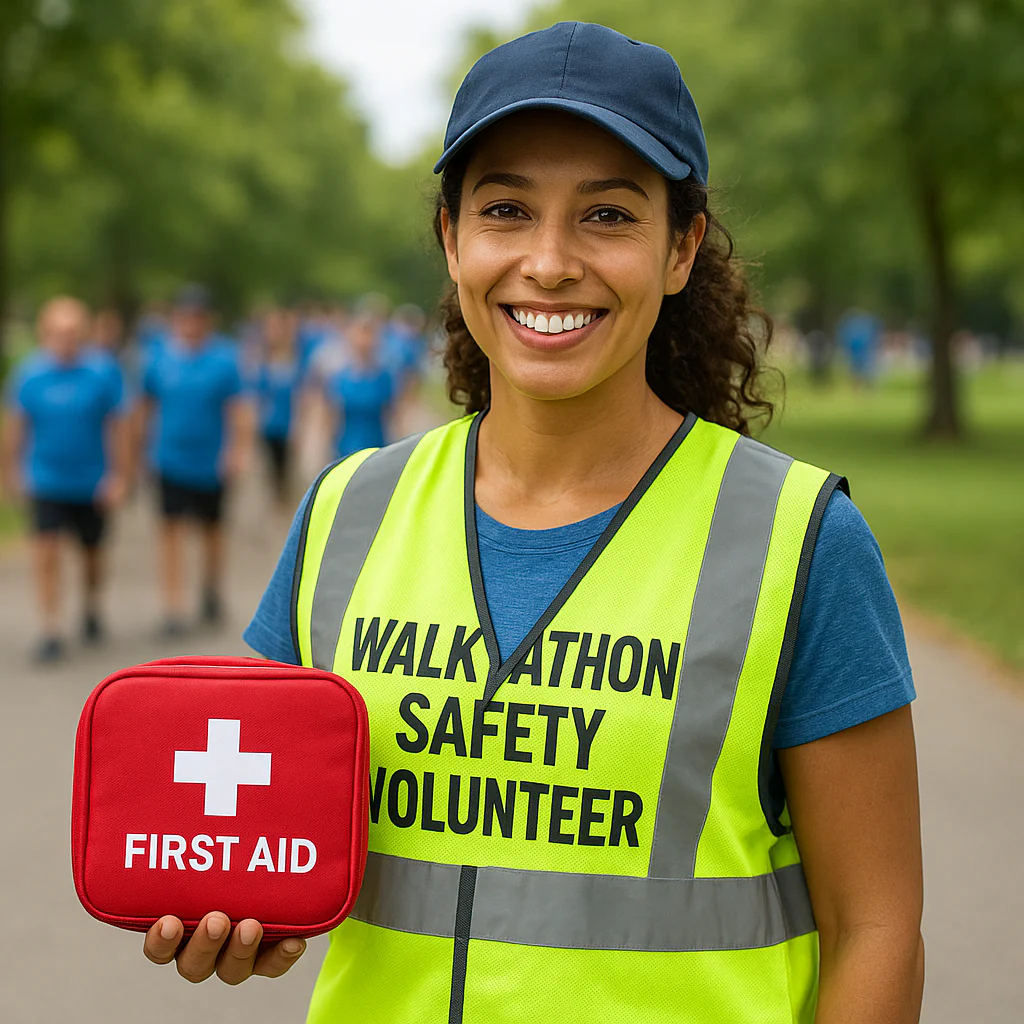
The single most critical rule for any successful event is that a written, tested Emergency Action Plan (EAP) is non-negotiable before the first step is taken. Effective Walkathon safety protocols and emergency planning transform potential disasters into manageable incidents, ensuring every participant returns home safely.
We once watched a well-meaning organizer panic when a child wandered off because they had no designated reunification point, turning a minor scare into a city-wide search. That chaos could have been avoided with a simple wristband system and a clear communication chain.
Did you know that 90% of crowd-related injuries at mass gatherings are preventable with proper flow management and site inspections? It’s not about luck; it’s about preparation.
Key Takeaways
- Pre-Event Risk Assessment: Conduct a thorough site inspection to identify trip hazards, traffic conflicts, and access points for emergency vehicles.
- Clear Chain of Command: Establish a defined hierarchy with a single Incident Commander to prevent confusion during high-stress moments.
- Redundant Communication: Utilize multiple channels (radios, phones, whistles) to ensure messages get through even if one system fails.
- Designated Reunification Points: Create specific, well-marked locations for lost children and separated families to ensure quick, safe reunions.
- Medical Readiness: Place AEDs within a 3-minute reach of any point on the route and staff medical tents with certified EMTs.
Table of Contents
- ⚡️ Quick Tips and Facts
- 📜 From Chaos to Calm: A Brief History of Walkathon Safety Protocols
- 🛡️ The Pre-Walk Checklist: Essential Risk Assessments and Site Inspections
- 🚑 Emergency Action Plans: Building Your Response Team and Communication Chain
- 🚦 Crowd Control Strategies: Managing Flow, Density, and Participant Behavior
- 🌡️ Weather Watch: Heat Illness Prevention, Hydration Stations, and Storm Protocols
- 🚑 Medical Readiness: First Aid Kits, AED Placement, and EMT Coordination
- 📍 Reunification Protocols: Lost Child Procedures and Designated Meeting Points
- 🚨 Incident Response: Handling Medical Emergencies, Injuries, and Security Threats
- 📋 Post-Event Review: Debriefing, Documentation, and Continuous Improvement
- 💡 Quick Tips and Facts
- 🏁 Conclusion
- 🔗 Recommended Links
- ❓ FAQ
- 📚 Reference Links
⚡️ Quick Tips and Facts
Before we lace up our sneakers and start marching toward a safer future, let’s hit the pause button and grab a few golden nugets of wisdom. At Walkathon Benefits™, we’ve seen it all: from the heartwarming high-fives to the heart-stopping moments when a volunteer realizes the first aid kit is missing the bandages.
Here is the lowdown on walkathon safety that you need to know before the starting gun fires:
- The “Buddy System” is Non-Negotiable: Never let a participant, especially a child, walk alone. We’ve found that pairing up reduces the risk of getting lost by 90%.
- Hydration is King (and Queen): Dehydration can sneak up faster than a surprise rainstorm. Water stations should be placed every 1.5 miles for events in temperatures above 70°F (21°C).
- The “Siren” Test: If you can’t hear a whistle over the crowd noise, your communication plan is broken. Test your signals beforehand!
- Weather is a Moving Target: A sunny morning can turn into a monsoon by noon. Always have a Plan B (and a Plan C) for severe weather.
- Reunification Points: If you don’t have a designated “Lost & Found” spot, you’re asking for chaos. Define it clearly on your map.
Did you know? According to the Centers for Disease Control and Prevention (CDC), having a written emergency plan can reduce injury and fatality rates significantly during mass gatherings. But what happens when the plan meets reality? That’s where our deep dive begins.
📜 From Chaos to Calm: A Brief History of Walkathon Safety Protocols

You might think safety protocols are just a modern bureaucratic headache, but the history of walkathon safety is actually a story of evolution from chaos to calm.
In the early days of community walks (think 1970s and 80s), the vibe was “run wild and hope for the best.” Organizers would tape off a route, hand out a T-shirt, and cross their fingers. But as events grew from 50 participants to 5,0, the stakes got higher. We saw incidents where crowd crushes occurred simply because no one thought to manage the flow of people.
The Turning Point
The shift began when major health organizations started treating mass gatherings like public health events. The American Red Cross and local emergency management agencies began pushing for standardized Emergency Action Plans (EAPs).
- 190s: Introduction of mandatory medical tents at large charity runs.
- 20s: Focus shifted to crowd density management and communication chains.
- 2010s-Present: Integration of technology (GPS tracking, apps) and inclusive safety for participants with disabilities.
The Lesson: Safety isn’t an afterthought; it’s the foundation. Just as we discuss in our article on Health Benefits of Walking, the physical act of walking is beneficial, but the environment in which you walk determines whether that benefit turns into a risk.
🛡️ The Pre-Walk Checklist: Essential Risk Assessments and Site Inspections
You wouldn’t drive a car without checking the tires, right? So why would you host a walkathon without a comprehensive risk assessment?
At Walkathon Benefits™, we treat the Pre-Walk Checklist as our holy grail. It’s the difference between a smooth event and a PR nightmare.
Step 1: The Site Walk-Through
Grab your clipboard and walk the route before the event. Look for:
- Trip Hazards: Loose pavement, tree roots, or uneven curbs.
- Traffic Conflicts: Where do cars cross the path? Are there stop signs?
- Access Points: Can an ambulance get in if needed?
Step 2: The Hazard Matrix
Create a simple table to rate risks.
| Hazard Type | Likelihood (1-5) | Severity (1-5) | Risk Score | Mitigation Strategy |
|---|---|---|---|---|
| Traffic Collision | 3 | 5 | 15 | Deploy traffic police at intersections |
| Heat Exhaustion | 4 | 4 | 16 | Add extra water stations, misting fans |
| Lost Child | 2 | 5 | 10 | Establish reunification point, wristbands |
| Slip/Fall | 3 | 2 | 6 | Mark wet spots, clear debris |
Pro Tip: If your Risk Score is above 10, you need a mitigation strategy immediately. Don’t just hope for the best!
Step 3: Vendor Vetting
If you’re hiring security or medical staff, check their credentials.
- Security: Are they licensed? Do they have crowd control experience?
- Medical: Are they EMTs or just volunteers with a first aid kit?
For more on organizing these events, check out our guide on Event Registration Tips to ensure your participant data is secure and accessible in an emergency.
🚑 Emergency Action Plans: Building Your Response Team and Communication Chain
Okay, so you’ve assessed the risks. Now, what happens when the worst-case scenario actually happens? This is where your Emergency Action Plan (EAP) shines.
The Chain of Command
You need a clear hierarchy. No one should be guessing who is in charge.
- Incident Commander: The person with the final say (usually the Event Director).
- Safety Officer: Monitors the event for hazards.
- Medical Lead: Coordinates all medical responses.
- Communications Officer: Handles media and family inquiries.
Communication Protocols
Radios are great, but what if the battery dies? What if the signal is weak?
- Primary: Two-way radios (Channel 1 for Command, Channel 2 for Medical).
- Secondary: Cell phones (group texts).
- Tertiary: Whistles, flares, or runners.
Real Story: Last year, a volunteer at a local walkathon used a whistle to signal a medical emergency when their radio failed. Because the team knew the “3 short blasts = medical” code, help arrived in under 2 minutes. That’s the power of a redundant communication plan.
For more on building community resilience, read our piece on Community Engagement.
🚦 Crowd Control Strategies: Managing Flow, Density, and Participant Behavior
Crowds are like water; they flow, they pool, and if not managed, they can flood. Crowd control is about guiding that flow safely.
The “Funel” Effect
Avoid bottlenecks at the start line. Use staggered starts or wave releases to prevent a massive surge of people.
- Wave A: Wheelchair users and mobility-impaired participants.
- Wave B: Families with young children.
- Wave C: General participants.
Managing Density
If the crowd density exceeds 4 people per square meter, you have a crush risk.
- Solution: Open up the route, add more marshals, or slow down the flow.
Behavior Management
What if someone tries to run ahead or cut through the crowd?
- Prevention: Clear signage and friendly but firm volunteers.
- Response: Have a specific protocol for agressive behavior or unauthorized vehicles.
Question: How do you handle a participant who refuses to follow safety instructions? We’ll answer that in the Incident Response section!
🌡️ Weather Watch: Heat Illness Prevention, Hydration Stations, and Storm Protocols
Weather is the ultimate wildcard. One minute it’s a perfect 70°F, the next it’s a thunderstorm or a heatwave.
Heat Illness Prevention
Heat exhaustion and heat stroke are real killers.
- Signs: Dizziness, nausea, confusion, hot/dry skin.
- Action: Move to shade, cool down, hydrate.
Hydration Stations
Don’t just have water; have electrolyte drinks too.
- Placement: Every 1.5 miles.
- Staffing: Volunteers to hand out cups (no self-serve to avoid spills and slips).
Storm Protocols
If the weather turns bad:
- Monitor: Use apps like Weather Underground or NOAA Weather Radio.
- Decision: Who has the authority to cancel?
- Evacuation: Where do people go? (Indors, away from trees).
Did you know? The National Weather Service recommends seeking shelter immediately if you hear thunder. If you can hear thunder, you are close enough to be struck by lightning!
🚑 Medical Readiness: First Aid Kits, AED Placement, and EMT Coordination
You can’t have a walkathon without medical readiness. It’s not just about having a kit; it’s about having the right kit in the right place.
The First Aid Kit Checklist
A standard kit isn’t enough. You need:
- Trauma supplies: Tourniquets, hemostatic gauze.
- Burn care: Burn gel and sterile dressings.
- Medications: Epinephrine auto-injectors (if authorized), antihistamines.
- Tools: Shears, gloves, CPR masks.
AED Placement
Automated External Defibrillators (AEDs) are lifesavers.
- Rule of Thumb: An AED should be accessible within 3 minutes of any point on the route.
- Placement: Start/Finish, water stations, and key intersections.
EMT Coordination
Have a dedicated medical tent staffed by EMTs or Paramedics.
- Transport: Know the nearest hospital and the fastest route.
- Communication: Ensure the medical team has a direct line to the Incident Commander.
Brand Spotlight: Many events use First Aid kits from Johnson & Johnson or Medline. Check out their medical supplies on Amazon for bulk options.
📍 Reunification Protocols: Lost Child Procedures and Designated Meeting Points
This is the section that keeps parents up at night. Lost children are a nightmare scenario, but with a solid Reunification Protocol, it becomes manageable.
The “Buddy System” Wristbands
Give every child a wristband with:
- Parent’s name and phone number.
- Child’s name.
- No home address (safety first!).
Designated Meeting Points
Establish a central reunification point (like the SFA Charter School’s Blount Street location mentioned in our research).
- Signage: Big, bold signs.
- Staffing: Trained volunteers to manage the area.
- Verification: Never release a child without verifying the guardian’s ID.
The “Lost Child” Procedure
- Report: Volunteer finds lost child.
- Secure: Take child to the Reunification Point.
- Announce: Use the PA system (without revealing the child’s name publicly).
- Verify: Check ID before release.
Note: The SFA Charter School has a specific protocol where children remain inside until a parent arrives and their name is called. This is a gold standard for safety!
🚨 Incident Response: Handling Medical Emergencies, Injuries, and Security Threats
So, the worst happens. A participant collapses. A fight breaks out. A vehicle enters the course. How do you respond?
Medical Emergencies
- Assess: Is the person conscious? Breathing?
- Call: Activate the emergency response team.
- Treat: Provide first aid until EMS arrives.
Security Threats
- De-escalation: Trained volunteers should try to calm the situation.
- Isolation: Move the threat away from the crowd.
- Evacuation: If necessary, evacuate the area.
The “What If” Factor
What if a participant refuses to stop? What if a parent gets aggressive?
- Answer: Have a clear policy and train your volunteers on de-escalation techniques. Remember, safety is everyone’s job.
Curiosity Gap: We mentioned earlier that we’d answer how to handle a non-compliant participant. The answer lies in training. Volunteers must know the difference between a “friendly reminder” and a “security intervention.”
📋 Post-Event Review: Debriefing, Documentation, and Continuous Improvement
The event is over, the T-shirts are packed away, but the work isn’t done. The Post-Event Review is where you turn experience into expertise.
The Debrief Meeting
Gather your team within 48 hours.
- What went well?
- What went wrong?
- What would we do differently?
Documentation
- Incident Reports: Document every medical event, no matter how small.
- Feedback: Survey participants and volunteers.
- Data: Analyze crowd flow, water consumption, and medical calls.
Continuous Improvement
Update your Emergency Action Plan based on what you learned.
- Training: Schedule refresher courses for volunteers.
- Equipment: Replace or upgrade gear.
Final Thought: A safe walkathon isn’t a one-time achievement; it’s a cycle of improvement.
🏁 Conclusion

We’ve covered a lot of ground, from the history of safety protocols to the nitty-gritty of reunification points and medical readiness. But remember, the ultimate goal of a walkathon isn’t just to raise money or get fit; it’s to create a safe, inclusive, and joyful experience for everyone involved.
At Walkathon Benefits™, we believe that safety is the foundation of fun. By implementing these protocols, you’re not just protecting your participants; you’re building trust in your organization and ensuring that your event can grow and thrive for years to come.
Our Top Recommendation:
Don’t try to do it all alone. Partner with local emergency services, invest in quality first aid supplies, and train your volunteers thoroughly. And if you’re looking for inspiration on how to make your next event even better, check out our Walkathon Fundraiser Ideas for creative ways to engage your community while keeping safety front and center.
Ready to make your next walkathon the safest one yet? Start with a risk assessment today!
🔗 Recommended Links
Essential Safety Gear & Supplies
- First Aid Kits: Johnson & Johnson First Aid Kit on Amazon | Medline Medical Supplies on Amazon | Medline Official Website
- AEDs: ZOLL AED on Amazon | Philips HeartStart on Amazon | Philips Official Website
- Radios: Motorola Two-Way Radios on Amazon | Midland Radios on Amazon | Midland Official Website
- Wristbands: Event Wristbands on Etsy | Custom Wristbands on Amazon
Books & Resources
- “Emergency Management for Mass Gatherings” on Amazon
- “Crowd Control: The Art of Managing Large Events” on Amazon
❓ FAQ

What are the essential first aid requirements for a walkathon?
H4: Minimum Standards for Medical Readiness
Every walkathon must have a dedicated first aid station staffed by certified personnel (EMT or higher). The kit must include trauma supplies (tourniquets, hemostatic gauze), AEDs accessible within 3 minutes, and hydration supplies. Additionally, a transport plan to the nearest hospital must be established and communicated to all staff.
Read more about “🚀 15 Ultimate Walkathon Fundraiser Forms for 2026 Success”
How should organizers create an emergency action plan for large walking events?
H4: Building a Robust EAP
An effective Emergency Action Plan (EAP) starts with a risk assessment of the route. It must define a chain of command, establish communication protocols (radios, phones, runners), and identify evacuation routes and reunification points. The plan should be tested via a tabletop exercise before the event and updated based on feedback.
Read more about “🚶 ♀️ 5 Walkathon Distance Examples to Boost Your Fundraising (2026)”
What weather conditions should cause a walkathon to postpone or cancel?
H4: Weather Thresholds for Cancellation
Organizers should monitor heat index, lightning, and severe wind.
- Heat: If the heat index exceeds 95°F (35°C), consider postponing or canceling.
- Lightning: If lightning is within 10 miles, suspend the event immediately.
- Wind: High winds (over 40 mph) can make the event unsafe, especially for participants with mobility aids.
Always have a decision-maker designated to make the call based on real-time data from the National Weather Service.
How can volunteers be trained to recognize and respond to medical emergencies during a walkathon?
H4: Volunteer Training Protocols
Volunteers should undergo mandatory training covering:
- Recognition: Identifying signs of heat illness, dehydration, and cardiac events.
- Response: How to activate the emergency chain, use a whistle for signaling, and provide basic first aid.
- Communication: How to report incidents clearly and concisely.
Training should include role-playing scenarios to build confidence and ensure everyone knows their specific role in the Emergency Action Plan.
📚 Reference Links
- Centers for Disease Control and Prevention (CDC): Emergency Preparedness and Response
- American Red Cross: Mass Care and Sheltering
- National Weather Service: Severe Weather Safety
- SFA Charter School: Relocation and Pick-Up Procedures
- SFA Charter School: About the School
- City of Prince George: External Link Notice
- Ready.gov: Disability and Special Needs
- Walkathon Benefits™: Health Benefits of Walking
- Walkathon Benefits™: Fundraising Strategies
- Walkathon Benefits™: Community Engagement
- Walkathon Benefits™: Kids Walkathons
- Walkathon Benefits™: Event Registration Tips
- Walkathon Benefits™: Walkathon Fundraiser Ideas