

Some good fundraiser ideas are the ones that fit your cause, your community, and the time and volunteers you have. A walkathon, peer-to-peer campaign, restaurant give-back night, or school read-a-thon can all work well when the purpose is clear and it’s easy for people to take part.
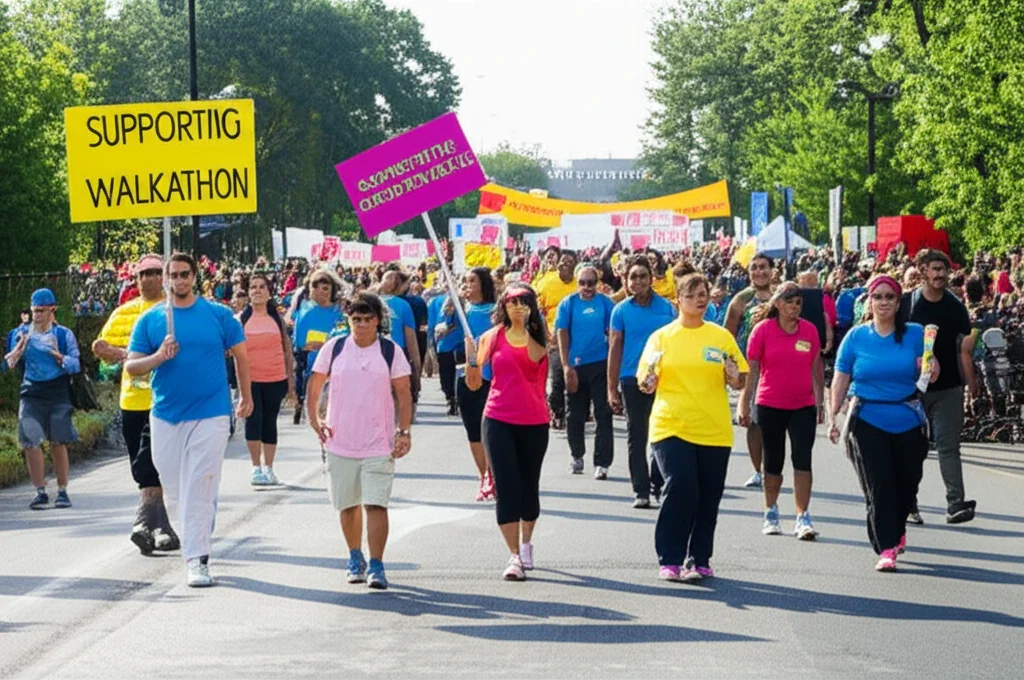
For a cause that thrives on movement and community spirit, we’re especially fond of walkathons: they can combine participant pledges, business sponsorships, and donations while bringing people together. One small detail can make a big difference, too: a shorter route or virtual option may help more people join in, even if they can’t complete a full course.
Below, we’ve gathered 220 fundraiser ideas, from quick, low-cost events to seasonal campaigns and creative walkathon challenges. Use the list to find an idea that feels doable, then shape it around what your supporters actually want to do.
Key Takeaways
- Choose a fundraiser that fits your audience, cause, and volunteer capacity.
- Walkathons can combine fundraising with community connection and physical activity.
- Estimate costs and net proceeds before setting a goal or choosing an event.
- Make donating or registering simple, accessible, and mobile-friendly.
- Share a clear story, thank supporters, and report how funds were used.
Table of Contents
- ⚡️ Quick Tips and Facts: Fundraising Ideas That Work
- 📚 How Fundraising Ideas Have Evolved
- 🎨 Fundraising Ideas That Spark Creativity
- 1–22: Community Events and In-Person Fundraisers
- 23–44: Food, Drinks, and Tasty Fundraiser Ideas
- 45–66: Walkathons, Fitness Challenges, and Active Fundraisers
- 67–88: School, Youth, and PTA Fundraising Ideas
- 89–110: Workplace, Business, and Employee Fundraisers
- 111–132: Online Fundraising and Crowdfunding Ideas
- 133–154: Seasonal and Holiday Fundraising Ideas
- 155–176: Low-Cost, Quick, and Easy Fundraisers
- 177–198: Creative Auctions, Raffles, and Sales Fundraisers
- 199–220: Cause-Based and Community-Service Fundraisers
- 🗓️ Seasonal Fundraising Ideas for Every Time of Year
- 💛 Fundraising Ideas by Cause and Organization
- Fundraising for Schools, Sports Teams, and Clubs
- Fundraising for Nonprofits, Charities, and Community Groups
- Fundraising for Medical Bills and Personal Causes
- 🧰 Fundraising Essentials: Planning, Tools, and Permissions
- Set a Fundraising Goal and Budget
- Choose a Fundraising Platform and Payment Method
- Permits, Raffle Rules, Taxes, and Accessibility
- 📈 Fundraising Strategy Ideas: Promote, Engage, and Raise More
- Build a Fundraising Timeline and Recruit Volunteers
- Write a Compelling Fundraising Story
- Promote Your Fundraiser on Social Media and by Email
- Thank Donors and Measure Fundraising Results
- 🌐 First-Time Crowdfunding? Start Here
- How to Choose a Crowdfunding Platform
- Crowdfunding Page Checklist
- Common Crowdfunding Mistakes to Avoid
- 💬 What Fundraisers and Donors Say: Practical Lessons
- ✅ Fundraising Tips for Better Results
- 🏁 Conclusion
- 🔗 Recommended Links
- ❓ FAQ: Good Fundraising Ideas
- What are some good fundraiser ideas for a small group?
- What is the easiest fundraiser to organize?
- How can I raise money quickly?
- What fundraisers make the most money?
- How do you promote a fundraiser with no budget?
- Are raffles and auctions good fundraising ideas?
- How can I make an online fundraiser successful?
- 📖 Reference Links
⚡️ Quick Tips and Facts: Fundraising Ideas That Work
A good fundraiser isn’t necessarily the fanciest one. It’s the one that fits your cause, your people, your time, and your ability to follow through. A neighborhood walkathon can raise money, get people moving, and bring supporters together; a raffle can be simpler, but may do less to build lasting community involvement.
For more walk-specific inspiration, see our guide to 25 Walkathon Fundraiser Ideas That Raise More in 2026 👟. You can also browse our fundraising strategies and community engagement resources.
| Quick fact | What it means for your fundraiser |
|---|---|
| There’s no universally best fundraising idea. | Choose based on your audience, mission, capacity, and likely expenses. |
| Events can raise money in more than one way. | A walkathon might combine registration, pledges, sponsors, merchandise, and a post-event donation appeal. |
| Easy giving matters. | Use a mobile-friendly donation page and clear instructions; the Federal Trade Commission recommends checking charities before donating. |
| Thank-you messages are part of fundraising. | Prompt, personal acknowledgments help supporters understand their contribution was received and valued. |
| Safety and compliance are part of the plan. | Check venue rules, permits, insurance needs, accessibility, and local requirements, especially for raffles and food sales. |
Quick recommendations by goal
- Need a fast, low-lift fundraiser? Try a restaurant give-back night, a digital giving appeal, or a small community sale.
- Want to build community and encourage movement? Consider a walkathon or step challenge. Regular walking has established health benefits; see the CDC’s guidance on physical activity and our health benefits of walking.
- Have a strong network of enthusiastic supporters? Peer-to-peer fundraising can let participants invite friends and family to give.
- Have access to donated items or experiences? A silent auction may suit your audience, but allow enough time to collect, describe, and promote items.
- Have very little volunteer capacity? Favor an online campaign or a partner-hosted event over a complex festival.
Our first rule: estimate costs before celebrating projected revenue. A fundraiser that raises $5,000 but costs $4,500 to run may be less useful than a simpler event that nets $3,000.
📚 How Fundraising Ideas Have Evolved
Fundraising once leaned heavily on in-person appeals, collection jars, benefit dinners, and door-to-door campaigns. Those still have a place. Now, organizers can pair them with online donations, peer-to-peer pages, livestreams, text-to-give, and recurring gifts.
The shift isn’t “online replaces community.” It’s online makes community easier to extend. A local walkathon can bring people to a park while letting distant relatives sponsor a participant from another state.
CauseVox describes fundraisers as “events that bring supporters together — from 5Ks and galas to trivia nights and auctions.” That’s a useful reminder: an activity can be both a way to raise funds and a reason for people to connect with a cause. Its fundraising ideas guide also covers recurring giving, pledge campaigns, and peer-to-peer efforts.
What has changed—and what has not
| Then and now | Still true |
|---|---|
| Giving can happen on phones and social platforms. | Donors want to know what their gift supports. |
| Participants can fundraise through personal pages. | A clear, credible message matters. |
| Events can serve in-person and virtual supporters. | Volunteers need realistic roles and instructions. |
| Campaign progress can be shared quickly. | Follow-up and appreciation should not stop when the event ends. |
Kindsight’s fundraising overview emphasizes keeping donors engaged through a changing environment. Its cited fundraising figures are specific to its source and period, so treat them as context rather than a prediction for your organization. The practical lesson is sound: variety helps you reach people in ways that suit them, while consistent communication helps supporters stay connected.
🎨 Fundraising Ideas That Spark Creativity
Here are 220 ideas, grouped by format so you can skim straight to what fits. These are idea starters, not promises of a particular return. Revenue depends on audience size, local interest, costs, and execution.
Before you pick one, ask:
- Who are we hoping will participate or donate?
- What can our team deliver well?
- Which expenses, permissions, or safety needs could affect the net proceeds?
- How will we explain where the money goes?
1–22: Community Events and In-Person Fundraisers
- Neighborhood block party with suggested donations
- Community talent show
- Outdoor movie night
- Local band concert
- Benefit dinner
- Pancake breakfast
- Community picnic
- Cultural festival
- Family game night
- Trivia night
- Bingo night
- Board-game tournament
- Community dance
- Adult prom
- Open-mic night
- Comedy show
- Local history walking tour
- Museum or gallery after-hours event
- Community clean-up day with sponsor pledges
- Car wash
- Yard or garage sale
- Used-book sale
23–44: Food, Drinks, and Tasty Fundraiser Ideas
- Bake sale
- Cookie-decorating workshop
- Pie auction
- Chili cook-off
- BBQ fundraiser
- Soup supper
- Restaurant give-back night
- Food-truck gathering
- Coffee morning
- Hot-chocolate stand
- Lemonade stand
- Community potluck with donations
- Cooking class
- Local chef demonstration
- International-food tasting
- Picnic-basket raffle, where legal
- Holiday cookie box sale
- Homemade jam or preserves sale
- Community cookbook
- Candy or chocolate sale
- Popcorn sale
- Plant-and-sip or paint-and-sip event
45–66: Walkathons, Fitness Challenges, and Active Fundraisers
- Community walkathon
- Pledge-per-lap walk
- Virtual walking challenge
- Step-count challenge
- Family fun run
- 5K run or walk
- Hike-a-thon
- Bike-a-thon
- Dance-a-thon
- Swim-a-thon
- Spin-class fundraiser
- Yoga fundraiser
- Stair-climb challenge
- Sports tournament
- Mini-golf tournament
- Golf tournament
- Pickleball tournament
- Basketball free-throw challenge
- Soccer shootout
- Obstacle-course challenge
- Community relay race
- “Move every day” month-long pledge challenge
67–88: School, Youth, and PTA Fundraising Ideas
- Read-a-thon
- School walkathon
- Fun run
- Student art show and sale
- Classroom craft market
- School talent show
- Family movie night
- Principal-for-a-day prize, subject to school policy
- Teacher-versus-student sports match
- School spirit wear sale
- Used-uniform exchange
- Book fair fundraiser
- Student car wash
- School trivia night
- STEM showcase with donations
- School garden plant sale
- Holiday gift-wrap station
- School dance
- Penny or spare-change challenge
- Sponsor-a-classroom reading campaign
- Playground or library sponsorship drive
- Family fitness day
For age-appropriate event ideas and planning considerations, visit our Kids Walkathons category.
89–110: Workplace, Business, and Employee Fundraisers
- Employee giving campaign
- Company-matched donation drive
- Casual-dress donation day
- Department step challenge
- Workplace walkathon
- Office bake sale
- Lunch-and-learn with donations
- Charity trivia break
- Team volunteer day
- Customer checkout donation campaign
- Restaurant sales-share night
- Business-sponsored community walk
- Employee talent show
- Workplace raffle, where permitted
- Charity auction of donated services
- Company-sponsored fitness class
- “Round up your purchase” campaign
- Coworker birthday giving pool
- Customer appreciation event with a cause
- Professional skills workshop with registration donations
- Matching-gift awareness campaign
- Charity-branded product collaboration
111–132: Online Fundraising and Crowdfunding Ideas
- General crowdfunding campaign
- Project-specific crowdfunding page
- Peer-to-peer fundraising campaign
- Birthday fundraiser
- Livestream benefit concert
- Online trivia night
- Virtual art auction
- Online workshop or class
- Virtual walkathon
- Social-media photo challenge
- Short-video challenge
- Online giving day
- Digital pledge drive
- Monthly giving campaign
- Email appeal series
- Text-to-give campaign, using a suitable provider
- Virtual talent show
- Online cooking demonstration
- Digital membership drive
- Virtual book club fundraiser
- Livestream gaming fundraiser
- Online donor matching campaign
133–154: Seasonal and Holiday Fundraising Ideas
- Spring flower or seedling sale
- Earth Day community clean-up
- Spring fun run
- Easter egg hunt
- Summer splash day
- Outdoor concert
- Community garden open day
- Back-to-school supply drive
- Fall harvest festival
- Pumpkin-carving contest
- Halloween haunted house
- Holiday craft fair
- Holiday gift-wrap station
- Winter walkathon
- New Year movement challenge
- Valentine’s Day flower sale
- Mother’s Day brunch
- Father’s Day family sports day
- Thanksgiving meal fundraiser
- GivingTuesday campaign
- Holiday cookie sale
- Seasonal coat or blanket drive with donation option
155–176: Low-Cost, Quick, and Easy Fundraisers
- Donation jar at a partner business
- Spare-change collection
- Digital donation appeal
- Birthday fundraiser
- Social-media giving challenge
- Community car wash
- Potluck with suggested donations
- Bring-your-own-board-game night
- Volunteer-led neighborhood clean-up
- Used-book collection and sale
- Reusable-bag or tote sale
- Donated-item mini auction
- Restaurant give-back night
- Bake sale using donated ingredients
- Workplace casual-dress day
- Small-group trivia night
- Pay-what-you-can workshop
- Community plant swap with donations
- Digital raffle, only where lawful and properly approved
- Sponsor-a-mile campaign
- Peer-to-peer pledge appeal
- Online auction of donated services
177–198: Creative Auctions, Raffles, and Sales Fundraisers
- Silent auction
- Live auction
- Online auction
- Experience auction
- Local business gift-basket auction
- Student art auction
- Services auction
- “Principal for a day” auction, where appropriate
- Reserved parking-space fundraiser
- 50/50 raffle, where lawful
- Prize raffle, where lawful
- Guess-the-number jar game
- Wine pull, where legal and suitable
- Plant sale
- Handmade craft sale
- Community discount-card sale
- Branded apparel sale
- Calendar sale
- Greeting-card sale
- Local honey or produce sale
- Holiday wreath sale
- Donated sports or concert memorabilia sale
199–220: Cause-Based and Community-Service Fundraisers
- Sponsor-a-walker campaign
- Memorial walk
- Mental-health awareness walk
- Community health fair with donations
- Charity sleep-out, with safety planning
- Food-bank donation challenge
- Coat or blanket drive with sponsor pledges
- Community garden workday fundraiser
- Habitat or neighborhood improvement day
- Animal shelter adoption event
- Pet walkathon
- Blood-donation awareness campaign
- Youth sports equipment drive
- Library literacy challenge
- Community art installation
- Local history preservation appeal
- Environmental clean-up pledge drive
- Veterans’ community appreciation event
- Caregiver support benefit
- Hospital or clinic community appeal, with privacy protections
- Faith-community service day
- Local emergency relief campaign
How to choose from the list: shortlist three ideas, estimate net proceeds and volunteer hours, then ask a few likely participants which one they’d actually attend. A quick audience check can save you from planning an elaborate event for an audience that would rather join a simple walk and donate from home.
🗓️ Seasonal Fundraising Ideas for Every Time of Year
Seasonal events can give people an easy reason to participate, but weather, school calendars, holidays, and venue availability all matter. A winter walkathon may be memorable; it also needs a cold-weather plan, a shorter route option, and a way to keep water from turning into an ice sculpture. 🧣
| Season | Ideas to consider | Planning checks |
|---|---|---|
| Spring | Flower sale, garden day, fun run, clean-up | Rain plan, planting schedules, accessible route |
| Summer | Walkathon, outdoor movie, picnic, concert | Shade, hydration, heat plan, restrooms |
| Fall | Harvest festival, school challenge, costume walk | Daylight, costumes, traffic, school schedules |
| Winter | Holiday sale, indoor walk challenge, gift wrapping | Indoor venue, snow plan, accessible entry |
A seasonal walkathon checklist
- Choose a date with your audience in mind. Check school, faith-community, sports, and local event calendars.
- Check local conditions. Review venue rules and weather risks; consult the National Weather Service for heat-safety resources.
- Offer participation options. Include a shorter route, a virtual option, or a non-walking volunteer role.
- Explain what to bring. Give clear guidance on footwear, clothing, water, and accessibility.
- Have a contingency plan. Tell participants what happens if severe weather forces a change.
For event sign-ups and participant communication, explore our event registration tips. For ideas that keep neighbors involved beyond event day, browse community engagement.
💛 Fundraising Ideas by Cause and Organization
The same fundraiser can feel perfect for one group and awkward for another. A school might thrive on a read-a-thon; a neighborhood health nonprofit might have a natural fit with a walkathon. Match the activity to the mission and audience, rather than choosing an idea simply because it’s popular.
Fundraising for Schools, Sports Teams, and Clubs
Strong options include:
- Read-a-thons, walkathons, and team challenges
- Art shows, concerts, and talent nights
- Community restaurant nights
- School spirit wear and seasonal sales
- Sponsor-a-player or sponsor-a-class campaigns
Keep the student experience central. Give children clear, age-appropriate roles, protect their privacy, and follow school policies for photos, payments, and supervision. Our Kids Walkathons section offers more youth-focused planning ideas.
Fundraising for Nonprofits, Charities, and Community Groups
Consider peer-to-peer campaigns, a community walk, matching-gift drives, auctions, giving days, and recurring donations. Kindsight’s article highlights local business partnerships and clear appeals about what is needed. It also warns against vague in-kind requests: be specific about what you can use to avoid receiving unwanted items.
If you’re pursuing grants, start with official sources such as Grants.gov for U.S. federal opportunities, and check your state or local government for additional programs. Grants are not a quick substitute for event fundraising; applications may require time, eligibility checks, and reporting.
Fundraising for Medical Bills and Personal Causes
A personal campaign can be meaningful, but it should be transparent and careful with sensitive information.
- State the need plainly and explain how funds will be used.
- Share updates with the permission of the person or family involved.
- Avoid posting private medical details without explicit consent.
- Keep records of gifts and expenses.
- Check how fundraising income may affect benefits, taxes, or financial assistance; consider qualified professional advice.
For charity and crowdfunding campaigns, the FTC’s donation guidance can help donors assess requests. GoFundMe’s resource page focuses on tips such as fundraiser images and titles, rather than a list of event ideas; its practical takeaway is to make the campaign clear and easy to understand. See GoFundMe fundraising resources.
🧰 Fundraising Essentials: Planning, Tools, and Permissions
Before posters, playlists, and prize baskets, build the basics. We’ve seen enthusiastic committees plan the fun first and discover the route, restrooms, or payment process later. The cure is not glamorous, but it works: write down the plan, name an owner for each task, and check the details early.
Set a Fundraising Goal and Budget
A strong goal is specific, explainable, and based on a reasonable estimate.
- Name the purpose. “Support community wellness programs” is less concrete than “fund six months of free community walking sessions.”
- Set a gross target and a net target. Gross is all money collected; net is what remains after expenses.
- List costs. Consider venue, insurance, permits, payment processing, supplies, signage, sanitation, and accessibility needs.
- Estimate participation conservatively. Use previous event figures or ask a likely audience before committing.
- Set a stretch goal only after the core goal is credible. Stretch goals can motivate, but they should not make the original target look arbitrary.
| Budget item | Questions to ask |
|---|---|
| Venue and route | Is the space available and accessible? Do we need permission? |
| Supplies | Can items be borrowed, reused, or donated? |
| Payments | What are the platform and processing terms? |
| Safety | Do we need insurance, trained staff, first aid, or traffic control? |
| Promotion | Can community partners share the event at no cost? |
| Accessibility | Are routes, restrooms, communications, and participation options inclusive? |
Choose a Fundraising Platform and Payment Method
Compare tools on ease of use, mobile experience, recurring giving, peer-to-peer pages, reporting, accessibility, privacy, and fees. Don’t pick based on a single headline feature.
Examples to research include:
- GoFundMe for personal and community fundraising campaigns
- CauseVox for nonprofit campaigns and peer-to-peer fundraising
- PayPal for online payment options
- Stripe for payment processing and donation integrations
- Donorbox for donation forms and recurring giving
- Givebuter for fundraising campaigns and events
Features and fees can change. Read current terms, check payout timing, and test the donor journey on a phone before launch. A platform should make giving clearer—not add a maze of taps.
Permits, Raffle Rules, Taxes, and Accessibility
Rules vary by location and organization type. Do not assume a raffle, food sale, public-space event, or cash-prize game is automatically allowed.
Check with:
- Your municipality or venue about permits, park use, road closures, noise, and food handling
- Your insurer about event coverage and volunteer activities
- Your state regulator or legal adviser about raffles, gaming, and charitable solicitation
- The IRS or a tax professional about tax treatment and required records
- Your organization’s privacy lead about participant and donor data
For accessibility, review the ADA National Network’s event-planning resources. Provide clear route details, accessible restrooms where available, seating or rest stops, and alternative ways to participate. A fundraiser should invite people in—not make them solve an obstacle course before the actual obstacle course.
📈 Fundraising Strategy Ideas: Promote, Engage, and Raise More
Good ideas need a good invitation. Kindsight notes that “the online world is noisy,” which is why a clear purpose and call to action matter. We’d add this: tell people exactly what to do, by when, and why it matters.
Build a Fundraising Timeline and Recruit Volunteers
A practical timeline for a community event might look like this:
| When | Main tasks |
|---|---|
| 8–12 weeks before | Confirm goal, venue, permissions, budget, platform, and event lead |
| 6–8 weeks before | Recruit volunteers, approach sponsors, open registration |
| 4–6 weeks before | Publish campaign story, share participant toolkits, confirm suppliers |
| 2–3 weeks before | Send reminders, check route and safety plan, review registrations |
| Event week | Confirm roles, weather plan, signage, contact list, and payment setup |
| After event | Thank participants, share results, send funds as planned, gather feedback |
Volunteer roles could include:
- Event lead and route lead
- Registration and donor-support helpers
- Sponsor and business liaison
- Accessibility and participant-support contact
- Safety or first-aid coordinator, where appropriate
- Photographer or communications volunteer, with consent procedures
Keep roles specific. “Help wherever” sounds friendly but can leave everyone unsure what to do.
Write a Compelling Fundraising Story
A useful campaign story answers four questions:
- What is the need?
- Who benefits?
- How will donations be used?
- What should supporters do now?
Use real, permission-based stories and clear impact descriptions. Avoid guarantees you cannot substantiate. For health-related causes, protect personal information and follow applicable privacy rules; U.S. healthcare organizations should consult their privacy officers about HIPAA.
A simple structure:
“We’re organizing [activity] to support [specific purpose]. Your gift helps pay for [clear use]. Join us by [action] before [date]. We’ll share an update after the campaign.”
Promote Your Fundraiser on Social Media and by Email
Use a mix of channels:
- Email to existing supporters
- Social posts with a clear action and accessible event details
- Printed flyers at partner locations, with permission
- Local community calendars and newsletters
- Direct outreach to businesses, clubs, and neighborhood groups
- Participant-created posts through peer-to-peer pages
For walkathons, provide shareable copy and a registration link. Mention route length, accessibility information, start time, what donations support, and how to join virtually if available. Our event registration tips cover participant sign-up and event communication.
Thank Donors and Measure Fundraising Results
Thank supporters promptly and personally where possible. Then measure more than the headline total.
Track:
- Gross revenue and net proceeds
- Number of donors and participants
- Average gift and repeat gifts
- Sponsorships and in-kind support
- Volunteer hours and event costs
- New supporters who opted in to future communication
- Participant feedback and accessibility improvements
CauseVox says donors want simple, well-branded giving experiences and describes recurring giving as a useful way to support continuing relationships. Those are platform-published recommendations, not guarantees of results. Test what works for your audience and report your own outcomes honestly.
🌐 First-Time Crowdfunding? Start Here
Crowdfunding can make a campaign easy to share, but publishing a page is only the beginning. The page needs a clear purpose, believable target, trusted organizer, and regular updates.
How to Choose a Crowdfunding Platform
Compare:
- Whether the platform suits your organization and location
- Payment and payout arrangements
- Transaction and platform fees
- Donor data and privacy practices
- Recurring giving and peer-to-peer options
- Accessibility and mobile performance
- Support options and reporting
Read the terms before you invite donors. Platform availability, features, and fees may vary over time and by country.
Crowdfunding Page Checklist
- A direct, specific title
- A short explanation of the need
- A clear fundraising goal and deadline, if applicable
- A simple description of how funds will be used
- A photo or video shared with consent
- A prominent donation or registration link
- Suggested giving levels tied to real needs, not invented impact
- Updates showing progress and next steps
- A way to contact the organizer
- A thank-you and follow-up plan
GoFundMe’s fundraising resources emphasize practical presentation details such as titles and images. That’s consistent with a broader rule: make the appeal recognizable, accurate, and easy to act on. See GoFundMe’s fundraising resources.
Common Crowdfunding Mistakes to Avoid
❌ Posting once and assuming the campaign will spread itself
❌ Setting a target without explaining the need
❌ Using personal images or health details without permission
❌ Failing to update supporters
❌ Ignoring platform terms, local laws, or tax considerations
❌ Collecting more information than you need
❌ Promising a specific outcome you cannot control
✅ Share updates, acknowledge donations, and tell supporters what happens next.
💬 What Fundraisers and Donors Say: Practical Lessons
Fundraising guidance differs because organizations have different audiences, budgets, and goals. One source may favor large events; another may emphasize easy digital giving. These are not necessarily contradictions: a gala may suit a well-resourced organization with established donors, while a small walking group may do better with a peer-to-peer challenge.
What the competing guides get right
- CauseVox highlights walks, peer-to-peer campaigns, recurring gifts, and donor-friendly forms. Its page also gives fundraising performance figures, but these are provider-reported findings and should be checked against the linked methodology before using them as forecasts.
- Kindsight emphasizes donor engagement, local partnerships, and making requests specific. Its article offers a broad menu of ideas, though its statistics reflect its own cited period and should not be treated as universal benchmarks.
- GoFundMe’s linked resource page is not an idea catalog; it focuses on improving campaign presentation, including titles and images. That can still help an online fundraiser stand out.
We’d trust the sources for inspiration and practical prompts, then use your own past results, audience feedback, and actual cost estimates to make the final call.
A walkathon lesson from the field
At community events, we’ve seen the simplest participant instructions do a surprising amount of work. A clear map, a short route option, a water plan, and a friendly volunteer at check-in can make people feel welcome before the first step. That matters because the best event is not merely the one that collects donations; it’s the one participants would recommend to a friend.
The first YouTube video, “Top 10 Fundraising Ideas That Always Work” by Handbid, offers another perspective from event fundraising, including themed dinners, auctions, and interactive activities. Treat its examples as a starting point, then adapt them to your cause, audience, and resources.
✅ Fundraising Tips for Better Results
- Start with your audience. Ask supporters what they would attend, share, or sponsor.
- Choose one main action. Registration, donation, sponsorship, or volunteering should be unmistakably easy to find.
- Show the impact honestly. Explain the purpose without overstating what a gift can achieve.
- Look for partners early. Local businesses may contribute space, supplies, services, or promotion.
- Keep registration simple. Our event registration tips can help reduce confusion.
- Make participation flexible. Offer different route lengths, virtual options, or volunteer roles when possible.
- Budget for safety and access. Don’t cut essential planning to make a forecast look better.
- Give participants ready-made sharing tools. Include a short message, link, and suggested photo guidance.
- Send updates before and after the event. Supporters should hear more than a last-minute appeal.
- Thank people by name when feasible. Follow your organization’s consent and privacy practices.
- Review what worked. Save useful materials, record actual costs, and ask participants for feedback.
- For a walkathon, make movement welcoming. Walking can support physical activity, but participants’ abilities and health needs vary. Encourage people to choose a comfortable pace and consult a healthcare professional when appropriate. See the CDC’s adult physical activity guidance and our health benefits of walking.
A final planning prompt
If you can answer who it serves, what it costs, how people join, and what happens after they donate, you’re close to a fundraiser that is both useful and trustworthy. If one answer is still fuzzy, that’s your next planning task—not a reason to panic.