
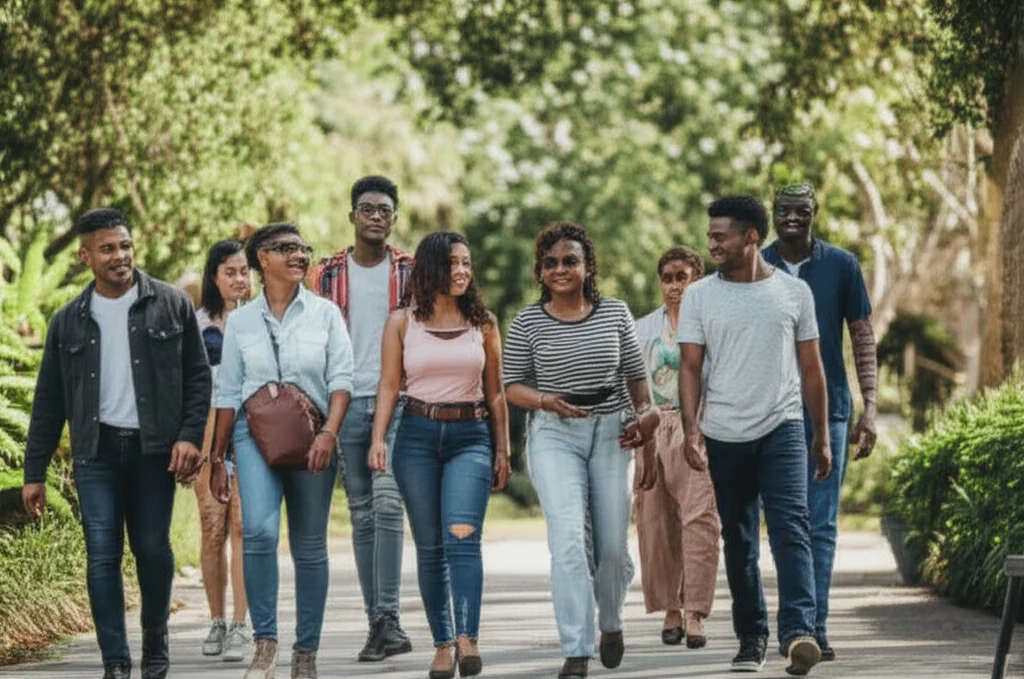
The key benefits of participating in a walkathon include supporting physical activity and well-being, building community, raising funds, and bringing attention to a cause. To convey those benefits to potential supporters and participants, connect the walk to a clear mission, explain how people can take part, and show what their support will accomplish.
A walkathon can be a short neighborhood loop, a school fundraiser, or a virtual event that brings people together from different places. One participant might walk for fitness; another might join because a friend invited them; a donor may support the cause without taking a single step. The best event makes room for all three.
The message matters as much as the miles: tell people who benefits, how funds or awareness will help, and how they can join in. Make participation welcoming with flexible distances and options to walk, roll, volunteer, donate, or fundraise.
Key Takeaways
- Walkathons combine movement with purpose: participants can support their well-being while helping a cause.
- Community is a benefit, too: teams, families, and neighbors can connect around a shared goal.
- Make your invitation specific: explain who the event supports, how to participate, and what donations will fund.
- Welcome different ways to contribute: offer flexible routes and options for people who cannot attend or walk.
- Build trust with transparency: share verified impact information and report fundraising results after the event.
Table of Contents
- ⚡️ Quick Tips and Facts
- 🚶 What Is a Walkathon? How the Walking Fundraiser Works
- Walkathon Origins and the Rise of Community Walking Events
- Walkathon, Charity Walk, or Step Challenge: What’s the Difference?
- 🌟 9 Key Benefits of Participating in a Walkathon
- 1. Support Physical Health and Everyday Movement
- 2. Boost Mental Well-Being and Reduce Stress
- 3. Build Community and Strengthen Social Connections
- 4. Raise Funds for a Meaningful Cause
- 5. Increase Awareness of Your Mission
- 6. Make Healthy Habits Easier to Form
- 7. Encourage Friendly Competition and Gamification
- 8. Engage Employees, Families, and Supporters
- 9. Create an Inclusive Event with Flexible Ways to Join
- 🏢 How Walkathons Benefit Nonprofits, Schools, and Organizations
- Fundraising, Visibility, and Long-Term Supporter Relationships
- Workplace Wellness, Team Morale, and Employee Engagement
- 💬 How to Explain Walkathon Benefits to Potential Supporters
- Match Your Message to Donors, Participants, and Sponsors
- Use Clear, Specific, Credible Impact Statements
- Walkathon Promotion Examples and Sample Invitation Copy
- Answer Common Concerns About Time, Fitness, and Donations
- 🗓️ How to Plan and Organize a Successful Walkathon
- Set a Fundraising or Awareness Goal
- Choose an In-Person, Virtual, or Hybrid Format
- Select a Route, Date, and Accessible Venue
- Create a Realistic Budget and Find Sponsors
- Plan Registration, Donations, and Fundraising Tools
- Recruit Volunteers and Assign Event-Day Roles
- Promote the Walkathon Before, During, and After the Event
- Prepare Safety, Accessibility, and Weather Plans
- Thank Participants and Share the Results
- 📣 How to Encourage More People to Participate
- Offer Flexible Distances and Ways to Take Part
- Use Teams, Milestones, and Friendly Challenges
- Make Registration and Fundraising Simple
- 📊 Measure Walkathon Success Beyond the Finish Line
- Track Participation, Funds Raised, and Awareness
- Gather Feedback and Improve Your Next Event
- ❓ Frequently Asked Questions About Walkathons
- How far is a walkathon?
- Do you need to be fit to participate in a walkathon?
- Can you join a walkathon virtually?
- How can a walkathon raise money?
- What should you bring to a walkathon?
- How do you ask people to support a walkathon?
- 🏁 Conclusion
- 🔗 Recommended Links
- 📚 Reference Links
⚡️ Quick Tips and Facts
- A walkathon pairs movement with a shared purpose: participants walk together—or independently in a virtual event—while raising funds or awareness for a cause.
- Keep the ask simple: explain who benefits, what support will accomplish, when and where the event happens, and how to join or donate.
- Make participation flexible: offer a short route, a longer route, and a virtual or “walk and roll” option where feasible.
- Walking counts even when it is not a race. The U.S. Physical Activity Guidelines recommend adults aim for 150–300 minutes of moderate-intensity aerobic activity per week; brisk walking is one way to accumulate it.
- Make donations easy on a phone. A complicated form can trip up a fundraiser faster than an untied shoelace. The OneCause walkathon guide reports that 63% of surveyed donors considered ease of giving the most important factor when attending an event; treat that as a survey finding, not a universal law.
- Start promoting early: event details, a clear cause story, and an easy registration link give people time to invite their own networks.
- Celebrate more than the top step count: recognize team spirit, consistency, personal progress, fundraising, volunteering, and accessibility advocacy.
- For fresh, audience-friendly themes and activities, browse our walkathon ideas.
- Explore our guides to the health benefits of walking, fundraising strategies, and community engagement.
| Walkathon at a glance | What it means |
|---|---|
| Main purpose | Raise money, awareness, community participation, or a combination |
| Typical formats | In-person, virtual, and hybrid |
| Who can participate | People with a range of ages and abilities, when routes and options are planned inclusively |
| How people contribute | Walk, roll, donate, fundraise, volunteer, sponsor, or share the event |
| A practical success measure | Funds raised and mission reach, alongside participation, accessibility, and participant experience |
🚶 What Is a Walkathon? How the Walking Fundraiser Works
A walkathon is a walking event organized around a purpose. Participants complete a route or distance and may collect donations, raise pledges, share information about a cause, or simply join a community wellness event. Some happen at a park one Saturday morning; others run virtually over several days or weeks.
The appealing part is that a walkathon is not one-size-fits-all. A family may walk a short loop, a team may tackle a longer route, and a supporter in another city may record a neighborhood walk and donate online. The event can be a fundraiser, a community celebration, a wellness activity—or all three.
The Events.org walkathon overview similarly emphasizes fundraising, awareness, health, and community. The OneCause guide adds that peer-to-peer fundraising pages can help participants invite friends and family to support the cause.
Walkathon Origins and the Rise of Community Walking Events
Walkathons grew as a practical way to bring people together around charitable causes: walking is visible, easy to understand, and generally requires less specialized equipment than many organized sports. Modern events have expanded beyond a single route. Digital registration, fundraising pages, social media, and activity-tracking apps now make it possible to connect participants across neighborhoods, workplaces, and time zones.
The format has evolved, but the core idea remains refreshingly human: people move together, tell others why the cause matters, and invite them to help. For a closer look at the practical planning basics, see Events.org’s guide to organizing a walkathon.
Walkathon, Charity Walk, or Step Challenge: What’s the Difference?
These terms overlap, but they do not always describe the same event.
| Format | Main focus | How participation works | Common use |
|---|---|---|---|
| Walkathon | Walking plus a goal, often fundraising or awareness | Complete a route or distance, sometimes with pledges | Nonprofits, schools, neighborhoods |
| Charity walk | Walking to support a charitable cause | Join an organized walk and donate or fundraise | Cause campaigns and community events |
| Step challenge | Accumulating steps over a set period | Track steps individually or as a team | Workplace wellness and group motivation |
| Virtual walkathon | Walking from different places | Record distance or steps and share progress online | Distributed teams and geographically broad fundraising |
| Hybrid walkathon | Shared event plus remote options | Attend in person or complete an equivalent activity remotely | Events seeking broader access |
A step challenge can be part of a walkathon, but the two are not interchangeable. A step challenge often focuses on movement totals over time; a charity walkathon typically puts the cause and fundraising front and center.
🌟 9 Key Benefits of Participating in a Walkathon
Why do people sign up? Usually it is not just the route. They come for the cause, the company, the fresh-air reset, the family outing, or the satisfaction of doing something concrete. A well-designed walkathon can offer several benefits at once—without asking anyone to become a marathoner overnight.
| Benefit | What participants may gain | What supporters organizers may gain |
|---|---|---|
| Physical activity | A reason to move more | A positive, health-oriented event |
| Mental well-being | Outdoor time and a sense of accomplishment | A supportive shared experience |
| Community | Conversation and teamwork | Stronger local connections |
| Fundraising | A direct way to contribute | Donations and new supporter relationships |
| Awareness | A chance to learn and share | More visibility for the mission |
| Habit-building | A routine and achievable goal | Continued engagement after event day |
| Motivation | Progress milestones and team energy | More participation and recognition opportunities |
| Inclusion | Several ways to take part | Wider community reach when access is considered |
| Personal meaning | Action aligned with values | A compelling story to share with supporters |
1. Support Physical Health and Everyday Movement
Walking is a low-impact way to add physical activity to the day. A walkathon can turn “I should move more” into an actual date on the calendar, with a route, a team, and a reason to show up. The CDC’s physical activity guidance recommends adults get at least 150 minutes of moderate-intensity activity each week, along with muscle-strengthening activities on two days.
That is a population-level recommendation, not a requirement for entering a walkathon. Start at a level that suits your current health and fitness, build gradually, and ask a health professional for advice if you have a chronic condition, recent injury, or concerns about increasing activity.
We often see the “small loop” become the event’s unsung hero. A participant who starts with one lap may discover that a second feels comfortable. The win is not matching another person’s pace; it is finding a safe, sustainable way to move.
For more guidance, visit our health benefits of walking resource.
2. Boost Mental Well-Being and Reduce Stress
A walkathon can add more than steps: time outdoors, social connection, and a sense of purpose may all make the experience feel rewarding. Walking is not a substitute for mental health care, but regular physical activity can support well-being. The National Institute of Mental Health includes physical activity among habits that can support mental health.
A shared walk also creates room for low-pressure conversation. There is no conference-room table to stare across, and pauses feel natural: “Let’s catch our breath,” is a perfectly respectable meeting agenda. For someone who finds a large social event daunting, walking beside one person can feel more approachable than standing in a crowded reception.
3. Build Community and Strengthen Social Connections
Walkathons give people a shared goal and a reason to meet beyond their usual circles. Families, coworkers, neighbors, students, volunteers, and local businesses can participate in the same event while contributing in different ways.
The Events.org walkathon guide highlights community connection as one of the event’s core benefits. The OneCause guide also describes how participant fundraising can bring a cause to new networks.
A team leaderboard may add a little friendly rivalry, but the deeper reward is belonging: participants can see that their contribution matters even if they are not the fastest or highest-step walker. That is why we recommend team goals alongside individual recognition.
4. Raise Funds for a Meaningful Cause
Walkathons give supporters a clear action to take: participate, invite others, and raise or contribute funds. Donations can come from personal fundraising pages, event registration, sponsorships, merchandise, or other activities that fit the organization and its community.
The Association of Fundraising Professionals provides professional resources for ethical fundraising practice. Organizers should be transparent about the intended use of funds, donation processing, any event costs, and how results will be reported.
A credible fundraising message explains impact without promising more than the organization can verify. Instead of saying, “Every donation saves a life,” describe the specific program or service the fundraising supports and link to reliable information about it.
See our fundraising strategies for more ways to shape a clear, responsible campaign.
5. Increase Awareness of Your Mission
Every participant who shares an event page, wears a campaign shirt, or tells a friend why they joined can help extend the cause’s reach. That awareness may matter even when someone cannot donate right away.
A mission becomes easier to remember when supporters can explain it in plain language:
“We’re walking to support [the organization’s verified program or cause]. Funds raised will support [specific, documented purpose].”
Use real participant stories only with permission, protect sensitive information, and avoid reducing people who benefit from a program to fundraising props. The strongest storytelling respects dignity and keeps the community’s experience at the center.
6. Make Healthy Habits Easier to Form
A scheduled event can be a helpful nudge to walk more consistently. Joining a team, setting a modest goal, and tracking progress can make movement visible and satisfying. Still, habit formation varies by person; there is no universal “21-day” guarantee that a behavior will become automatic.
For a realistic approach:
- Choose a manageable starting point.
- Attach walking to an existing routine, such as a lunch break.
- Increase duration or distance gradually.
- Celebrate consistency, not only big totals.
- Keep a post-event plan so activity does not stop at the finish line.
A walkathon is a spark, not a magic wand. The routine you keep afterward is where long-term value can grow.
7. Encourage Friendly Competition and Gamification
Friendly challenges can motivate some participants, especially when progress is visible and teams encourage one another. Points, badges, milestones, and team totals can make the experience playful—but leaderboards should not become a public ranking of who is “healthiest.”
Consider recognizing categories such as:
- Most consistent participation
- Most improved from a personal baseline
- Best team encouragement
- Most creative fundraising story
- Strongest volunteer contribution
- Most inclusive team spirit
Workplace platforms such as Vantage Fit can support corporate wellness challenges and activity tracking. Before selecting any platform, review privacy settings, accessibility, device compatibility, data handling, and whether participants can opt for an alternative tracking method.
8. Engage Employees, Families, and Supporters
A walkathon can connect people who do not usually work or volunteer side by side. Families may join a school event, staff may form workplace teams, and supporters who cannot walk can volunteer, donate, or share the event.
For workplace programs, keep the tone supportive. Avoid implying that employees must disclose health conditions, use a wearable, or compete publicly. Participation should be voluntary and should not affect employment decisions.
For schools and family-focused events, see our kids walkathons resources for ideas that put safety, age-appropriate distances, and family involvement first.
9. Create an Inclusive Event with Flexible Ways to Join
Accessibility is not a decorative extra. It affects who can take part, feel welcome, and contribute. Consider step-free routes, accessible restrooms, seating and rest stops, clear route information, multiple distances, a quiet or lower-stimulation option, and virtual participation where practical.
The OneCause walkathon guide highlights inclusive “Walk & Roll” language and options for participants with different mobility needs. Ask community members about access needs during planning rather than guessing on their behalf.
Possible participation options include:
- Walking, rolling, or completing another approved activity
- Choosing a short, medium, or longer route
- Joining remotely
- Fundraising without attending
- Voluntering at check-in or a rest station
- Supporting a team donation goal without tracking steps
The best event is not the one that asks everyone to do the same thing. It is the one that makes meaningful participation possible in more than one way.
🏢 How Walkathons Benefit Nonprofits, Schools, and Organizations
Walkathons can be valuable because they combine several kinds of engagement in one event: participation, peer-to-peer fundraising, cause education, volunteer involvement, and sponsor relationships. But results depend on fit. An event should serve the organization’s mission and capacity—not create a logistical circus that eats the team’s time.
Fundraising, Visibility, and Long-Term Supporter Relationships
For nonprofits and schools, a walkathon can bring existing supporters together while introducing the cause to participants’ networks. Participants can create fundraising pages, invite friends, and share updates. That personal invitation may make the campaign feel more immediate than a generic appeal.
The OneCause guide describes donor connection and peer-to-peer fundraising as walkathon strengths, and provides examples of organizations that used walk-and-roll events to raise funds and broaden participation. Those examples are useful inspiration, but they are not guarantees: results vary with audience size, mission fit, outreach, event costs, and fundraising follow-through.
| Potential organizational value | How a walkathon may contribute | What to measure |
|---|---|---|
| Fundraising | Donations, pledges, sponsorships, and event-related contributions | Net revenue, not only gross donations |
| Awareness | Participants share the cause and campaign materials | Reach, website visits, sign-ups, referrals |
| Supporter development | New participants may become repeat donors or volunteers | New supporters and follow-up engagement |
| Community relationships | Local groups participate around a shared goal | Teams, partners, volunteer retention |
| Program storytelling | Event materials explain the mission | Engagement with mission content and feedback |
Strong donor relationships grow through trust. Share a post-event update that says what was raised, how funds will be used, and what supporters can do next. Our community engagement and fundraising strategy articles offer related guidance.
Workplace Wellness, Team Morale, and Employee Engagement
A workplace walkathon can offer a low-barier way to encourage movement and social connection, particularly when people can join at their own pace. In a virtual or multi-week format, colleagues in different locations may participate without traveling to one venue.
The Vantage Fit article reports high participation in some company step challenges, including examples of 97% participation. Those are individual case-study results, not a typical participation benchmark. Workplace size, management support, communication, incentive design, and how participation is counted can all affect the result.
For a respectful workplace event:
- Offer a no-tracker option.
- Keep participation voluntary.
- Do not treat step totals as a measure of employee value.
- Provide noncompetitive ways to contribute.
- Consider shift patterns, disability access, caregiving responsibilities, and different work locations.
- Avoid collecting or exposing personal health data unnecessarily.
A movement event can help create shared energy, but no one should feel pressured to reveal activity data or perform wellness for the office leaderboard. 🧭
💬 How to Explain Walkathon Benefits to Potential Supporters
The key message is not “walking is good.” Most people already suspect that. The compelling message connects the activity, the cause, and the impact: why this walk matters, who it supports, and exactly how someone can help.
Match Your Message to Donors, Participants, and Sponsors
Different people care about different parts of the event. Use one central message, then tailor the details to the audience.
| Audience | Lead with | Make clear |
|---|---|---|
| Participants | Community, purpose, and a welcoming experience | Distance options, date, accessibility, registration |
| Donors | Mission impact and trust | Where funds go, how to donate, tax or receipt details where applicable |
| Sponsors | Community reach and shared values | Audience, sponsorship benefits, recognition, reporting |
| Volunteers | Practical contribution and teamwork | Roles, shift lengths, training, safety contacts |
| Families | Fun, inclusion, and clear logistics | Child-friendly route, supervision, facilities, weather plan |
| Employees | Flexible movement and team connection | Voluntary participation, privacy, noncompetitive options |
The Events.org planning guide recommends explaining the purpose, setting measurable goals, and using a mix of promotional channels. That is sound advice: a compelling story needs practical information beside it.
Use Clear, Specific, Credible Impact Statements
An impact statement should be concrete, easy to verify, and honest about what is known.
Less clear: “Join our walk and change the world!”
More useful: “Join the community walk on Saturday to support [named program]. Our goal is to raise [verified target] for [specific, confirmed use of funds]. Walk, roll, volunteer, or donate online.”
When describing a donation’s effect:
- Confirm the program or service the event supports.
- Use figures supplied and approved by the organization.
- Explain whether donations are restricted to a specific purpose.
- Avoid implying a direct one-to-one impact unless the organization can substantiate it.
- Share a progress update and final results after the event.
This approach may sound less dramatic, but credibility is better fundraising fuel than a promise you cannot keep.
Walkathon Promotion Examples and Sample Invitation Copy
The OneCause walkathon guide recommends promoting events across channels and gives examples of fundraising events that combined community participation with cause visibility. Use those examples as models, then adapt the message to your own audience and verified impact.
Short social post
👟 We’re walking for [cause]! Join us on [date] at [location], or take part virtually from wherever you are. Choose the distance that works for you, bring a friend, and help support [specific program or purpose]. Register or donate: [event link].
Supporter email
Subject: Walk with us for [cause]
We’re bringing our community together for a walkathon on [date] to support [specific purpose]. You can walk, roll, volunteer, fundraise, or donate. We’ve planned [accessibility or participation options] so more people can join in a way that works for them. Learn more and register at [event link].
Sponsor invitation
We’re seeking community partners for our [event name] walkathon. Your support will help us [verified mission purpose] while connecting your organization with local participants. We’d be glad to share our audience information, sponsorship options, and post-event reporting plan.
For children’s and family events, our kids walkathons page can help you adapt the invitation and event experience.
Answer Common Concerns About Time, Fitness, and Donations
People may hesitate because they think the event is a race, they cannot manage the distance, or they do not know how fundraising works. Address those concerns directly.
- “I’m not very fit.” Explain that pace is self-selected and offer a short route or nonwalking way to contribute.
- “I can’t attend in person.” Offer a virtual option, team fundraising, or online donation if possible.
- “I don’t know how to fundraise.” Provide a ready-to-share message and a personal fundraising page.
- “Where does the money go?” Link to a clear description of the supported program and explain how results will be reported.
- “I don’t have a fitness tracker.” Make a tracker optional; offer phone-based, manual, or non-step participation.
The goal is not to talk someone out of a legitimate concern. It is to make the choices clear enough that they can decide confidently.
🗓️ How to Plan and Organize a Successful Walkathon
A successful event is built on clear decisions, thoughtful logistics, and a plan for after the finish line. Start with the purpose; then choose a format and route that suit the community, the cause, and the organizing team’s capacity.
For activity ideas that can add personality without muddying the mission, see our walkathon ideas guide.
Set a Fundraising or Awareness Goal
Choose a small number of goals you can actually measure. A useful framework is to track fundraising, participation, awareness, and participant experience separately.
Examples:
- Raise a specified amount in net funds for a named program.
- Register a target number of walkers, rollers, donors, or teams.
- Recruit a defined number of volunteers.
- Reach a measured number of new community contacts.
- Improve a participant experience measure from the previous event.
Use SMART goals: specific, measurable, achievable, relevant, and time-bound. Set a realistic target based on your audience, past results, outreach capacity, and event costs—not just optimism and a very enthusiastic spreadsheet.
Choose an In-Person, Virtual, or Hybrid Format
There is no single best format. Choose based on participant needs and your ability to deliver a safe, smooth event.
| Format | Advantages | Trade-offs |
|---|---|---|
| In-person | Shared atmosphere, visible community, easier group celebration | Requires route planning, permits where applicable, staffing, and contingency plans |
| Virtual | Participants can join from different locations and choose their own route | Requires clear instructions, accessible digital tools, and ways to maintain momentum |
| Hybrid | Combines a gathering with remote participation | Adds coordination and communication needs across formats |
A virtual event can widen geographic reach, but it is not automatically more inclusive: participants still need clear instructions and accessible sign-up and donation options. An in-person event offers face-to-face connection, but route access, transport, and timing may limit who can attend.
The OneCause guide describes virtual and hybrid participation as useful ways to involve supporters beyond a single location.
Select a Route, Date, and Accessible Venue
For an in-person walkathon, select a route that matches participants’ needs and the event’s staffing capacity.
Check:
- Surface condition, width, slope, crossings, and curb cuts
- Accessible restrooms and parking or transit access
- Rest areas, water access, and shade where available
- Start and finish areas, signage, and emergency access
- Route permissions, park requirements, and local rules
- Nearby facilities and possible construction or traffic issues
Walk the route before event day. If the route includes multiple distances, test and mark each one clearly. Invite people with mobility and access expertise to review the plan; a map can look smooth on a screen while hiding a real-world obstacle.
For inclusive event planning, consult the ADA National Network and relevant local accessibility requirements. Our event registration tips can help you make the route and sign-up details easy to find.
Create a Realistic Budget and Find Sponsors
A budget helps you understand how much the event needs to raise and what resources are available. Consider:
- Permits and venue arrangements
- Insurance and safety services, if needed
- Registration or fundraising platform fees
- Signs, water, accessibility support, and rest areas
- Marketing and printing
- Staff, volunteer training, and event equipment
- Contingency costs
- Post-event reporting and follow-up
When approaching sponsors, explain the mission, audience, event format, sponsor recognition, and reporting plan. Offer options that fit the organization’s capacity, including in-kind support, volunteer teams, or outreach assistance. Be transparent about sponsorship terms and avoid promising reach or outcomes you cannot substantiate.
For help developing the fundraising side, explore our fundraising strategies category.
Plan Registration, Donations, and Fundraising Tools
A registration system should make the next step obvious. Potential participants should be able to understand the event, choose a participation option, register, and donate without hunting through a maze of buttons.
Compare event tools on:
- Mobile-friendly registration and donation
- Team and peer-to-peer fundraising pages
- Social sharing and email tools
- Donation reporting and exports
- Accessibility and language support
- Privacy, data security, and user permissions
- Volunteer and event-management features
- Customer support and the organization’s total costs
The Events.org guide describes features such as event registration, fundraising, and contact management. A platform’s advertised features are not a substitute for checking current terms, privacy policies, and fit for your event.
See our event registration tips for ways to reduce friction and improve sign-up clarity.
Recruit Volunteers and Assign Event-Day Roles
Volunteers make the event run; they should not have to guess what to do. Assign a lead and backup for each major role.
| Role | Typical responsibilities |
|---|---|
| Event lead | Coordinate decisions, schedule, and issue escalation |
| Registration team | Welcome participants and answer sign-up questions |
| Route marshals | Direct walkers and report route concerns |
| Water or rest-stop team | Replenish supplies and assist participants |
| Accessibility contact | Respond to access requests and check planned accommodations |
| Fundraising support | Help with donation questions and event updates |
| First-aid or emergency contact | Follow the event’s safety plan and contact emergency services when appropriate |
| Cleanup team | Restore the venue and collect supplies |
Brief volunteers before event day. Give them the schedule, route map, emergency contacts, and a clear way to contact the event lead. If you are working with children or vulnerable groups, follow relevant safeguarding procedures and local requirements.
Promote the Walkathon Before, During, and After the Event
Promotion works best when it is steady, specific, and easy to share. Build a simple calendar:
- Announce the event: share the cause, date, format, and registration link.
- Explain participation: clarify distances, accessibility, virtual options, and how donations work.
- Share the mission: use approved stories, program facts, and participant voices.
- Show progress: post team sign-ups, fundraising milestones, and practical reminders.
- Make a final invitation: tell people exactly how to join, donate, or volunteer.
- Report back: share the results and the next way to stay involved.
Use email, social media, community groups, local media, workplace channels, and partner organizations where appropriate. The OneCause guide recommends beginning social promotion well ahead of an event; its suggestion of at least a month is a useful planning reference, not a hard rule for every audience.
If you feature participant photos or stories, obtain permission and respect any privacy requests. Our community engagement page has additional ideas for keeping supporters involved.
Prepare Safety, Accessibility, and Weather Plans
A safe event starts with preparation and clear communication. The precise plan depends on route, group size, weather, participant ages, and local requirements.
Before event day:
- Check route conditions and local weather forecasts.
- Identify emergency access points and a decision-maker for postponement or cancellation.
- Share route, transport, facilities, and contact information with participants.
- Plan hydration and rest opportunities appropriate to the conditions.
- Make accessibility arrangements visible in event information.
- Keep a participant count and a way to communicate urgent updates.
- Follow local rules for permits, traffic control, insurance, and first aid.
On event day, encourage participants to wear comfortable, weather-appropriate clothing and to listen to their bodies. People who feel unwell, dizzy, unusually short of breath, or in pain should stop and seek appropriate help. Emergency concerns require local emergency services.
The CDC’s walking guidance offers general advice about making walking activity part of a safe routine. Event organizers should also consult local authorities and qualified safety professionals for event-specific requirements.
Thank Participants and Share the Results
The final mile of a walkathon is communication. Thank participants, donors, volunteers, sponsors, and community partners, then report what happened.
A useful post-event update includes:
- Number of participants and teams, using clear definitions
- Funds raised and whether the figure is gross or net
- How funds will support the mission
- Volunteer and sponsor acknowledgments
- Accessibility or participant feedback highlights
- Photos or stories shared with permission
- Future opportunities to stay involved
The OneCause guide emphasizes follow-up and supporter recognition. We agree: a warm thank-you is good; a clear results report makes it trustworthy.
📣 How to Encourage More People to Participate
Participation grows when the event feels meaningful, manageable, and welcoming. The message “Everyone can do it!” may sound friendly, but it can miss people whose health, access needs, schedules, or circumstances make walking difficult. Better to show the different ways people can contribute.
Offer Flexible Distances and Ways to Take Part
Provide choices that make the event approachable:
- Short, medium, and longer routes
- A virtual option, if the team can support it well
- Walking, rolling, or another clearly explained participation method
- Team fundraising without attending
- Volunteer roles for people who prefer not to walk
- Donation-only participation
A flexible event can welcome people without lowering the meaning of their contribution. Use clear language so participants know which options are available before registration.
Use Teams, Milestones, and Friendly Challenges
Teams can help participants feel accountable and supported. Keep challenges inclusive by rewarding effort and encouragement, not just top totals.
Ideas include:
- Team distance goals
- Fundraising milestones
- A “walk with a buddy” invitation
- Daily movement check-ins
- Costume or team-name contests
- Recognition for most consistent participation
- A shared goal where each person’s contribution counts
For workplace or school challenges, make participation voluntary and avoid publicly revealing individual health or location data. If using a platform such as Vantage Fit, review its current data and privacy features before you invite people to participate.
Make Registration and Fundraising Simple
The easier it is to understand and join the event, the fewer people will get stuck midway.
- Use one clear registration link.
- Explain whether there is a participation fee or donation request.
- State what registration includes.
- Make team creation and fundraising-page setup straightforward.
- Offer a ready-to-share invitation.
- Provide a contact for access or registration help.
- Test the full process on a phone before launch.
A mobile-friendly process matters because many supporters encounter an event through a text or social post. Our event registration tips cover more ways to make sign-up clear.
📊 Measure Walkathon Success Beyond the Finish Line
A big fundraising total is exciting, but it is only one part of the picture. Measure both outcomes and experience so you can tell whether the event helped the cause and worked for the people involved.
Track Participation, Funds Raised, and Awareness
Choose metrics before registration opens. Define each one so your final report is understandable.
| Measure | Example | Why it helps |
|---|---|---|
| Participation | Registered, attended, remote, and volunteer counts | Shows reach and drop-off |
| Fundraising | Gross donations, expenses, and net funds | Clarifies financial results |
| Fundraiser activity | Number of active personal or team pages | Shows peer-to-peer engagement |
| Awareness | Campaign visits, shares, email engagement, or media mentions | Indicates visibility |
| Community reach | New supporters, partners, and participating groups | Helps assess network growth |
| Inclusion and experience | Access requests met, feedback themes, and satisfaction | Identifies improvements |
Do not present a total step count or calorie estimate as a medical outcome. These are activity measures, not proof that an event improved anyone’s health. Be clear about how the numbers were collected and what they can—and cannot—show.
Gather Feedback and Improve Your Next Event
Ask a small number of focused questions shortly after the event:
- Was the event information easy to understand?
- Did the route or virtual format meet your needs?
- Did you feel welcome and supported?
- What should we keep, change, or add?
- Would you participate or volunteer again?
Offer an accessible survey format and a way to provide feedback privately. Review responses alongside event data; a modest event with high participant satisfaction and strong community connections may be more valuable than a larger event that overwhelmed volunteers or excluded people.
For continuing engagement ideas, explore community engagement and fundraising strategies.
❓ Frequently Asked Questions About Walkathons

How far is a walkathon?
There is no universal distance. Some events offer a short community loop, while others include several-mile routes or a distance goal completed across multiple days. Set distance options according to the audience, route, weather, staffing, and accessibility needs. A walkathon does not have to be a race—or require everyone to cover the same distance.
Do you need to be fit to participate in a walkathon?
No. Many walkathons are self-paced and offer different ways to participate. Check the route and activity details, choose an option appropriate for you, and build up gradually if you are preparing for a longer distance. If you have a health condition or are unsure what level of activity is appropriate, consult a qualified health professional. The CDC’s physical activity guidelines provide general recommendations, not individualized medical advice.
Can you join a walkathon virtually?
Often, yes—if the organizers offer a virtual option. Participants may complete a walk in their own area, join a remote team, share progress, fundraise, or donate online. Confirm how distance or participation is recorded, whether any tracking app is required, and what route-safety guidance applies. Virtual formats can extend reach, but participants still need accessible registration and clear instructions.
How can a walkathon raise money?
Organizers can combine peer-to-peer fundraising, personal or team donation pages, sponsorships, pledges, event donations, and other suitable activities. Make the donation process simple and explain the intended use of funds. Report event costs and final results clearly so supporters can understand how the fundraiser performed.
What should you bring to a walkathon?
Follow the organizer’s instructions, which may include:
- Comfortable clothing and well-fitting walking shoes
- Weather-appropriate layers
- Water, if participants are expected to bring their own
- Sun protection or rain protection as conditions require
- Any personal medication or mobility aids you use
- A charged phone and event contact details
Do not assume every event has the same facilities or supplies. Review the route, weather plan, and accessibility information beforehand.
How do you ask people to support a walkathon?
Be personal, direct, and specific. Explain why you are participating, what cause the event supports, and how the person can help. Offer clear choices—donate, join your team, volunteer, or share the event—and include one easy link. Avoid pressuring people or implying that a gift is required to be supportive.
What motivational strategies encourage more people to join and support walkathons?
Make participation feel achievable and meaningful. Offer team sign-ups, flexible distances, noncompetitive recognition, progress updates, and a clear explanation of the cause. Provide ready-to-share fundraising messages and celebrate different contributions, including volunteering and personal progress. Incentives can add fun, but they should not make people feel that their health or step count is being judged.
How can walkathons raise awareness and funds for charitable causes?
Participants can share the organization’s mission while inviting donations through personal fundraising pages, team campaigns, or event links. Awareness grows through participant networks, local partners, community media, and event-day storytelling. Use accurate program information, disclose how funds will be used, and follow up with results. The OneCause walkathon guide discusses peer-to-peer fundraising and cause awareness as related event benefits.
What are effective ways to promote a walkathon to increase community involvement?
Start with a clear event page that explains the purpose, date, format, route options, accessibility, and ways to participate. Then share it through email, social media, community organizations, schools, workplaces, local media, and event ambassadors. Keep posts useful—not just frequent—and make every invitation include a clear next step. Our community engagement resources offer additional outreach ideas.
How does participating in a walkathon improve physical and mental health?
A walkathon can encourage movement, outdoor time, social interaction, and a sense of accomplishment. Walking may contribute to meeting recommended physical activity levels; the CDC identifies brisk walking as a moderate-intensity activity. Mental health experiences vary, and a walkathon is not a replacement for professional care. Choose a safe pace and consult a clinician if you need personalized activity guidance.
How can I prepare for a walkathon if I am new to walking?
Start with short, comfortable walks and increase time or distance gradually. Test your shoes and clothing before event day, plan rest breaks, and check the route’s surface and facilities. Follow organizer guidance for hydration and weather. Avoid trying to make up for limited preparation with a sudden, strenuous workout just before the event.
What are the most important things to consider when organizing a walkathon?
Begin with the cause and goals, then select a suitable format, route, budget, fundraising platform, and volunteer team. Plan registration, accessibility, safety, communication, permissions, and contingency arrangements. Decide in advance how you will measure and report results. The Events.org organizing guide also covers planning, promotion, volunteers, and event logistics.
How can I create a successful fundraising strategy for a walkathon?
Set a realistic target, identify the program funds will support, and make it easy for participants to create personal or team fundraising pages. Provide sample outreach copy, regular updates, and recognition for fundraisers at different levels. Track net proceeds as well as total donations, and share the results afterward. Social media can extend the reach of a participant’s personal invitation, but it works best alongside email, partner outreach, and direct conversations.
How can I explain a walkathon’s impact to potential donors and supporters?
Connect three details: the cause, the action, and the verified use of support. For example: “Walk with us to support [named program]. Donations will contribute to [specific, confirmed purpose]. Join, fundraise, volunteer, or donate here.” Use approved statistics and stories, and be clear about what is still unknown. After the event, share what was raised and what happens next.
Do participants need a fitness tracker or smartwatch?
No, unless an event has a clearly stated requirement—which we generally recommend avoiding for broad public participation. A phone, manual log, team contribution, or non-tracking participation option may work instead. For workplace challenges, tracking should be voluntary, and organizers should explain what data is collected, who can see it, and how it will be used.
Can people with disabilities participate in a walkathon?
Many can, depending on the event’s design and available accommodations. Ask organizers about route surfaces, slopes, curb cuts, accessible restrooms, seating, transport, and alternate participation methods. Organizers should consult participants about access needs, publish details in advance, and consider inclusive language such as “walk and roll.” Accessibility needs vary, so one route or accommodation will not work for everyone.
What happens after the walkathon?
Organizers should thank everyone involved, report fundraising and participation results, explain how funds will be used, gather feedback, and invite supporters to remain involved. For participants, the event can be a starting point for regular walking, volunteering, or future fundraising. The finish line is a good place to celebrate—but a poor place to end the conversation.