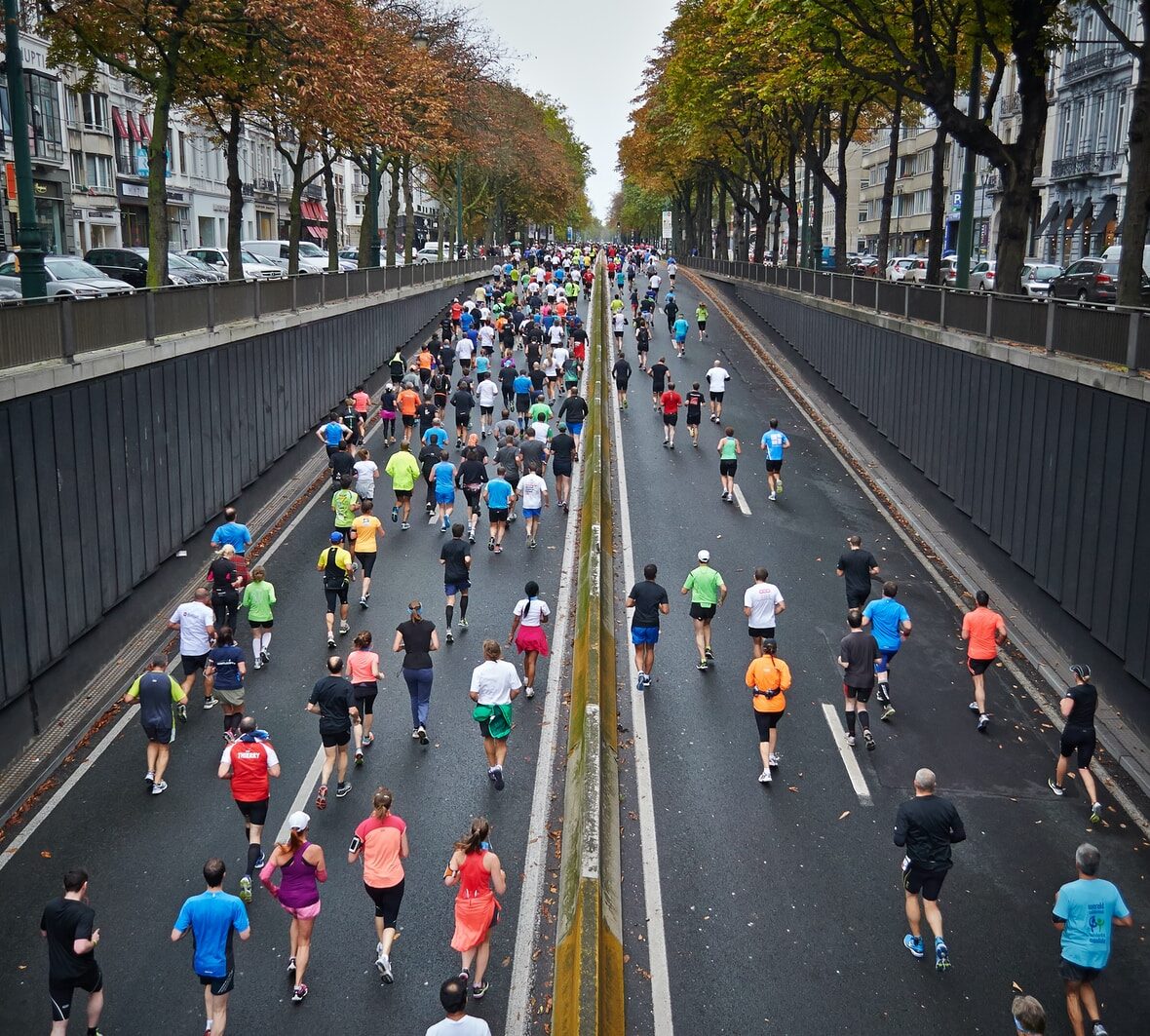
A good first walkathon distance is one you can prepare for, complete at a comfortable effort, and safely shorten or stop if needed. One mile, a shorter custom loop, or a 5K can each be appropriate depending on the person and course; none is a universal beginner distance.
Choose from current evidence: a recent comfortable walk, the measured route, surface and hills, event time limits, weather, accessibility, and available support. A practice walk on comparable terrain is more useful than an anonymous success story or a fixed fitness rule.
Key Takeaways
- No universal starting distance: choose from recent walking ability and the actual course.
- Practice first: repeat a comfortable route on similar terrain before increasing distance.
- Check event details: confirm measurement, surface, hills, cutoff, water, toilets, first aid, accessibility, and exit options.
- Estimate, do not race the clock: use your comfortable pace and add event-day buffer.
- Stop or seek help when needed: symptoms and changing conditions matter more than finishing a planned distance.
Table of Contents
- ⚡️ Quick Tips and Facts
- 📜 From Couch to 5K: The History of the Beginner Walkathon
- 🏃 ♀️ What is a Good Distance for a Beginner’s Walkathon?
- 1. The Sweet Spot: Why 1 to 3 Miles is the Magic Number
- 2. The 5K Challenge: Is 3.1 Miles Too Ambitious for Day One?
- 🧠 How to Gauge Your Personal Walking Stamina and Endurance
- 👟 Gear Up: Essential Shoes and Apparel for Your First Walk
- 🥗 Fueling Your Feet: Nutrition and Hydration Strategies for New Walkers
- 🗺️ Route Planning: Finding the Perfect Terrain for Beginners
- ⏱️ Pacing Yourself: How Long Should a Beginner Walkathon Take?
- 🚑 Safety First: Preventing Injuries and Knowing When to Stop
- 🏆 Mental Tricks to Crush Your First Walkathon Goals
- 📊 Beginner Walkathon Distance Comparison Chart
- 🎉 Real Stories: How We (and Others) Conquered Our First Mile
- 🏁 Conclusion
- 🔗 Recommended Links
- ❓ FAQ: Common Questions About Beginner Walkathon Distances
- 📚 Reference Links
⚡️ Quick Tips and Facts
- A one-mile option is often easier to test than a 5K, but course surface, hills, weather, and crowding can matter as much as distance.
- Five kilometers equals about 3.1 miles; ten kilometers equals about 6.2 miles.
- Use your recent comfortable walking time to estimate a finish window, then add event-day buffer for check-in, congestion, stops, and terrain.
- Choose an event with a published route, accessibility details, aid information, time limits, and a clear way to shorten or stop.
- If you have symptoms, a health condition, or a long period of inactivity, use qualified medical guidance to decide what is appropriate.
📜 From Couch to 5K: The History of the Beginner Walkathon
You might think walkathons are a modern invention born from the era of corporate team-building and charity Instagram posts, but the roots go much deeper. The concept of walking for a cause isn’t new; it’s evolved from ancient pilgrimage traditions to the organized charity walks we see today.
In the early 20th century, walking was simply how people got around. But as cars took over, walking became a deliberate act of health or protest. The modern charity walkathon really gained traction in the 1970s and 80s, largely driven by the breast cancer awareness movement (think Susan G. Komen) and the March of Dimes. These organizations realized that walking was the most inclusive sport on the planet. Unlike running, which requires a certain level of cardiovascular fitness, walking is accessible to almost everyone, from a 7-year-old to a 70-year-old.
The 5K distance (3.1 miles) became the gold standard because it’s a metric conversion of the old “3-mile” standard, which was considered a “long walk” in the pre-automobile era. It’s long enough to feel like a challenge but short enough that a family can do it together.
Did you know? The first recorded “walkathon” for charity was actually a “walk-a-thon” in the 1930s, modeled after the marathons of the time, but the distance was often variable. It wasn’t until the 1980s that the 5K became the standardized entry-level distance for the masses.
Today, organizations like Walkathon Benefits™ champion the idea that every step counts, whether you’re raising money for a local shelter or just trying to get your heart rate up.
🏃 ♀️ What Is a Good Beginner Walkathon Distance?
Start with the shortest official option that matches a recent comfortable walk. If you have not walked regularly, a one-mile route or short loop can provide a useful first test. A 5K is about 3.1 miles, but the label alone does not show whether its hills, surface, weather, or cutoff suit you.
Use a Practice Walk
- Choose a route with similar surface and hills.
- Walk at a conversational effort without trying to set a personal record.
- Record distance, elapsed time, stops, symptoms, and how you feel later that day.
- Repeat before increasing the route.
Compare the Event, Not Just the Distance
A shorter unsupported trail may be harder than a longer flat, staffed route. Review the map, accessibility information, time limit, water and toilet locations, medical support, weather policy, and how participants can stop or shorten the course.
People returning after inactivity, managing health conditions, or experiencing symptoms should use qualified medical guidance rather than a generic mileage rule.
🧠 How to Gauge Your Personal Walking Stamina and Endurance
How do you know if you’re ready for that 5K? You don’t need a lab test. You need a self-assessment.
At Walkathon Benefits™, we use the “Talk Test” and the “Time Test” to gauge readiness.
The Talk Test
This is the gold standard for intensity.
- Can you hold a conversation? If you can talk in full sentences without gasping for air, your pace is perfect for a beginner walkathon.
- Can you sing? If you can sing a song, you’re going too slow (though that’s fine for a leisurely stroll!).
- Can you only say a few words? You’re going too fast. Slow down!
The Time Test
Try this simple challenge at home:
- Put on your walking shoes.
- Walk at a brisk pace (where you feel a slight warmth but can still talk).
- Set a timer for 20 minutes.
- Result: If you can do this without stopping, you are ready for a 1–2 mile event. If you can do 45 minutes, you are ready for a 5K.
Insider Secret: Many beginners overestimate their stamina. They think, “I walked to the mailbox, I can do 5 miles!” The reality is that continuous movement is different from intermittent movement. Start with the time test to build that continuous endurance.
👟 Gear Up: Essential Shoes and Apparel for Your First Walk
You don’t need a full wardrobe of neon spandex, but gear matters. The wrong shoes can turn a fun 3-mile walk into a painful nightmare of blisters and arch pain.
The Shoe Hierarchy
Not all sneakers are created equal. Running shoes are often too stiff for walking, and walking shoes are designed with a specific heel-toe drop to accommodate the walking gait.
Top Brand Recommendations:
- Broks: Known for their Adrenaline GTS and Ghost series, which offer excellent stability.
- ASICS: The Gel-Nimbus and Gel-Kayano lines are legendary for cushioning.
- New Balance: Great for wide feet; the Fresh Foam series is a favorite among walkers.
- Hoka: If you need maximum cushioning, the Clifton or Bondi models are like walking on clouds.
How to Choose:
- Go to a specialty running store. Don’t buy shoes online without trying them on first.
- 👉 Shop in the afternoon. Your feet swell during the day; you want shoes that fit your largest foot size.
- Leave a thumb’s width of space between your longest toe and the end of the shoe.
Apparel Essentials
- Socks: NO COTON. Cotton holds moisture and causes blisters. Use merino wool or synthetic blends (like Smartwol or Balega).
- Clothing: Wear moisture-wicking fabrics. Avoid heavy denim or cotton t-shirts.
- Layers: Dress in layers so you can peel them off as you warm up.
👉 Shop
- Broks Running: Amazon | Broks Official
- ASICS: Amazon | ASICS Official
- Smartwol Socks: Amazon | Smartwol Official
🥗 Food and Hydration for a Beginner Walkathon
For a short event, avoid introducing an unfamiliar food, drink, or supplement on event day. Review the organizer’s water policy and weather guidance, carry what the event permits, and use a plan you have already tolerated during ordinary walks.
Fluid and food needs vary with duration, temperature, individual health, and exertion. Universal timing windows and dehydration percentages do not replace individual guidance. People with medical conditions or medication-related fluid restrictions should follow their clinician’s advice.
🗺️ Route Planning for a First Walkathon
- Verify the measured distance: use the organizer’s route map rather than assuming a track or loop length.
- Inspect surface and grade: hills, grass, gravel, curbs, and uneven pavement can change effort and accessibility.
- Find exits and shortcuts: know where you can safely stop, shorten the route, or reach transportation.
- Check support: locate water, toilets, first aid, shade, and staffed crossings.
- Practice on comparable terrain: a flat treadmill session does not fully represent a hilly or uneven outdoor course.
⏱️ Estimate Your Finish Time
Measure how long a comfortable recent walk took on similar terrain. Divide the time by the distance to find your average minutes per mile or kilometer, multiply by the event distance, and add a realistic buffer for check-in, congestion, stops, weather, and elevation.
Do not treat the estimate as a deadline. Follow the event’s published cutoff and support rules, start at a conversational effort, and slow down or stop when symptoms or conditions require it.
🚑 Safety First: Preventing Injuries and Knowing When to Stop
Safety is paramount. The last thing you want is to get injured before or during your event.
Common Beginner Injuries
- Blisters: Caused by friction and moisture. Prevention: Wear proper socks and break in your shoes.
- Shin Splints: Pain along the shin bone. Prevention: Strengthen calves, wear supportive shoes, and don’t increase distance too quickly.
- Plantar Fascitis: Hel pain. Prevention: Stretch your calves and feet before and after walking.
When to Stop
Listen to your body.
- Sharp Pain: If you feel a sharp, stabbing pain, stop immediately.
- Dizziness: Sit down, drink water, and cool off.
- Chest Pain: This is a medical emergency. Call for help.
Pro Tip: Always walk with a buddy or let someone know your route and expected return time.
🏆 Mental Tricks to Crush Your First Walkathon Goals
The hardest part of a walkathon isn’t your legs; it’s your mind.
The “Chunking” Method
Don’t think about the whole 3 miles. Break it down into 1-mile chunks.
- “I just need to get to that tree.”
- “I just need to get to the next water station.”
- “I just need to get to the halfway point.”
Positive Self-Talk
Replace “I can’t do this” with “I am strong, and I am doing this.”
- Visualization: Before the event, visualize yourself crossing the finish line. Feel the medal around your neck.
The Power of the Crowd
In a walkathon, the energy is electric. Use the crowd to your advantage. When you feel tired, look at the people cheering. Their energy is contagious!
📊 Beginner Walkathon Distance Comparison Chart
To help you visualize the differences, here is a quick comparison of common distances:
| Distance | Miles | Km | Estimated Time (Beginner) | Difficulty Level | Best For |
|---|---|---|---|---|---|
| 1K | 0.6 | 1 | 10–15 mins | ⭐ Very Easy | Kids, absolute beginners, recovery |
| 3K | 1.9 | 3 | 25–35 mins | ⭐ Easy | First-timers, casual walkers |
| 5K | 3.1 | 5 | 45–60 mins | ⭐ Moderate | The Standard Beginner Goal |
| 10K | 6.2 | 10 | 90–120 mins | ⭐ Challenging | Experienced beginners, fitness enthusiasts |
| Half Marathon | 13.1 | 21.1 | 2.5–3.5 hours | ⭐ Hard | Advanced walkers, serious training |
Note: Times are estimates based on a 3–4 mph pace with breaks.
🎉 Turn a Practice Walk Into Evidence
Instead of relying on an anonymous success story, run a practice walk and record the details that transfer to event day:
- distance and elapsed time;
- surface, hills, temperature, and stops;
- footwear and any equipment used;
- how you felt during the walk and later that day; and
- what you would change before increasing distance.
One repeatable practice route gives you better planning evidence than a generic claim about what all beginners can finish.
Beginner Stories From Our Community
We have all been there: wondering whether the first event will be too far, too slow, or simply uncomfortable. These two walkers’ experiences are why our recommendation is to build evidence gradually instead of choosing a distance for prestige.
Sarah’s story: Sarah, a 45-year-old accountant, signed up for a 5K because her daughter was participating. “I thought I could just walk it,” she told us, “but by mile 2, my feet were screaming.” She stopped, cried a little, and then finished the last mile with encouragement from another walker. “When I crossed that finish line, I felt like I could do anything.”
Mike’s story: Mike, 60, had not walked for exercise in 20 years. He started with a one-mile loop around his block. “I felt ridiculous,” he admitted. “But after a week, I did 1.5 miles. Then 2. Then 3.” He is now training for a 10K. “It’s not about the speed,” he says. “It’s about showing up.”
Our recommendation: start with the distance you can complete comfortably in training—often a 5K or shorter option—then progress only after your feet, recovery, pace, and schedule show that the next distance is realistic. For a first event, we also favor a flat, paved route over an unfamiliar hilly course.
🏁 Conclusion

So, what is a good distance for a beginner’s walkathon? The answer is simple: The distance that challenges you without breaking you.
For most people, that’s the 5K (3.1 miles). It’s the perfect balance of achievement and accessibility. But if you’re just starting out, don’t be afraid to aim for 1 or 2 miles. The most important thing is to get moving, stay consistent, and enjoy the journey.
Remember, the goal isn’t to be the fastest walker; it’s to be the one who crosses the finish line with a smile on your face. Whether you’re walking for charity, for health, or just for fun, every step you take is a victory.
Our Final Recommendation:
- Start Small: Aim for a 5K or even a 3K for your first event.
- Train Smart: Build up your distance gradually over 4–6 weeks.
- Gear Up: Invest in good shoes and moisture-wicking socks.
- Listen to Your Body: Rest when you need to, and don’t push through pain.
- Have Fun: It’s a celebration, not a punishment!
You’ve got this. The finish line is waiting for you.
🔗 Recommended Links
Disclosure: As an Amazon Associate, we may earn from qualifying purchases. Shoes, apparel, and walking resources are included only when they are relevant to preparing for the event.
Ready to get started? Here are some resources to help you on your journey:
- Walking Shoes:
Broks Adrenaline GTS: Amazon | Broks Official
ASICS Gel-Nimbus: Amazon | ASICS Official
New Balance Fresh Foam: Amazon | New Balance Official - Walking Socks:
Smartwol PhD Outdoor Light: Amazon | Smartwol Official
Balega Hidden Comfort: Amazon | Balega Official - Books:
The Complete Guide to Walking for Health, Weight Loss and Fitness by Mark Fenton: Amazon
Hal Higdon’s How To Train: Amazon
❓ FAQ: Common Questions About Beginner Walkathon Distances

How long does it typically take to build up endurance for a walkathon, and what kind of progress can I expect as a beginner?
Building endurance is a gradual process. For a complete beginner, 4 to 6 weeks of consistent walking (3–4 times a week) is usually enough to prepare for a 5K.
- Week 1-2: Focus on walking 20–30 minutes at a comfortable pace.
- Week 3-4: Increase to 35–45 minutes, adding a few minutes each session.
- Week 5-6: Try one longer walk of 45–60 minutes.
- Progress: You’ll notice your breathing becomes easier, your legs feel stronger, and you can walk longer without stopping.
What are some tips for choosing a walkathon distance that is challenging yet achievable for a beginner?
- Assess your current fitness: Can you walk 30 minutes without stopping? If yes, a 5K is achievable. If no, start with a 1–2 mile event.
- Consider the terrain: Flat courses are easier than hilly ones.
- Check the time limit: Ensure the event allows enough time for your pace.
- Listen to your gut: If a distance feels too scary, pick a shorter one. You can always do a longer one next time.
How can I train for a walkathon if I have no prior experience with long-distance walking?
- Start with time, not distance: Walk for 15 minutes, then 20, then 30.
- Use the “Walk-Run” method: Walk for 4 minutes, jog for 1 minute (if comfortable), repeat.
- Join a group: Walking with others keeps you motivated.
- Track your progress: Use an app or a journal to log your walks.
What is a reasonable walking distance for someone who is just starting to exercise regularly?
For someone just starting, 1 to 2 miles is a great starting point. This is roughly 20–30 minutes of walking. It’s enough to get your heart rate up but not so much that you’re sore for days.
What is the ideal distance for a first-time walkathon participant?
The 5K (3.1 miles) is widely considered the ideal distance for a first-time participant. It’s the standard for beginner events and offers a sense of accomplishment without being overwhelming.
Read more about “🚶 ♀️ How to Train for a Walkathon: The Ultimate 12-Week Plan (2026)”
How many miles should a beginner aim for in a charity walk?
Aim for 3 miles (5K) for your first charity walk. If the event offers a 1-mile or 2-mile option, that’s also a fantastic choice. The goal is to participate and enjoy the experience.
Read more about “🚶 ♀️ Walking 30 Minutes a Day for a Month Results: The 2026 Truth”
Is a 5K too far for someone new to walking events?
No, a 5K is not too far if you have built up a base of 30 minutes of walking. However, if you are completely sedentary, start with a shorter distance. The 5K is designed to be achievable for beginners with some preparation.
Read more about “🚶 ♀️ 45-Minute Walk Benefits: Your Daily Health Reset (2026)”
What are the health benefits of completing a short distance walkathon?
Completing a short distance walkathon offers numerous benefits:
- Cardiovascular health: Improves heart and lung function.
- Weight management: Burns calories and boosts metabolism.
- Mental health: Reduces stress and anxiety through endorphin release.
- Social connection: Builds community and support networks.
- Confidence: Achieving a goal boosts self-esteem.
Read more about “Is Walking 30 Minutes a Day Enough Exercise? (2026) 🚶 ♀️”
📚 Reference Links
- Hal Higdon’s Walkers Half Marathon Program: Hal Higdon
- Verywell Fit: 10k Walk Training Schedule for Beginners (Note: Link may be unavailable due to server error, check site search)
- Quora: What is a good time to run 3 km?
- American Heart Association: Walking for Health
- CDC: Physical Activity Basics
- Walkathon Benefits™: Health Benefits of Walking | Fundraising Strategies | Community Engagement | Kids Walkathons | Event Registration Tips