
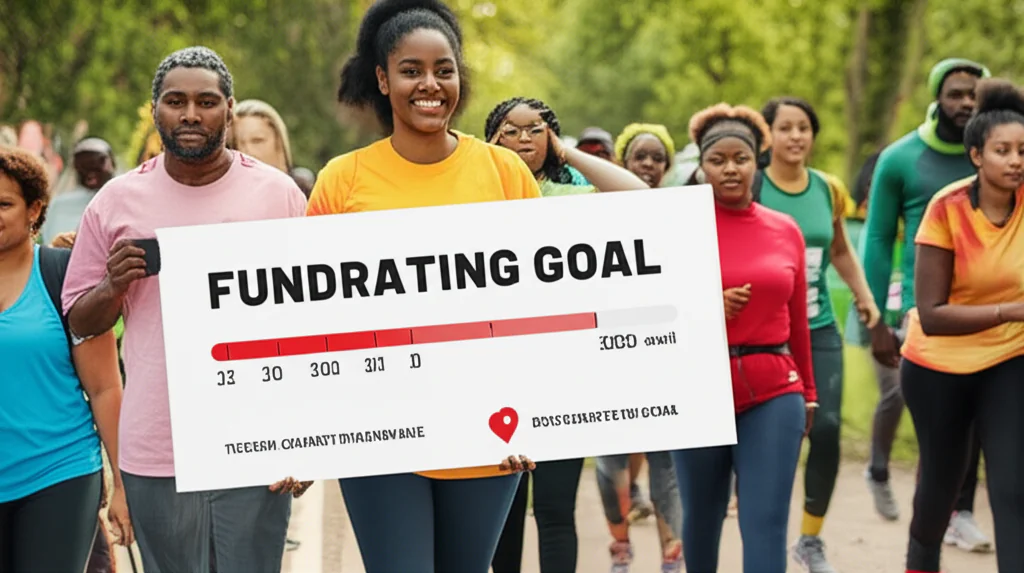

The secret to a profitable charity walk isn’t just a good cause; it’s rigorous pre-planning and integrated technology that keeps costs under 35% of revenue. Mastering charity walk event management best practices transforms a chaotic gathering into a streamlined fundraising engine that donors love.
We once watched a well-meaning team spend $15,0 on a “perfect” event that only raised $12,0 because they forgot to calculate permit fees and medical staff costs. It was a costly lesson in why budget discipline matters more than a pretty banner.
Did you know that only 7% of fundraising events actually hit or exceed their goals? The difference between the 7% and the rest isn’t luck; it’s strategic execution.
You don’t need a massive budget to succeed, but you do need a clear roadmap that covers everything from route safety to post-event stewardship. Let’s dive into the exact steps that turn walkers into lifelong advocates.
Key Takeaways
- Start Early: Secure permits and venues 6–8 months in advance to avoid last-minute disasters.
- Control Costs: Keep total event expenses under 35% of your fundraising goal to ensure maximum impact.
- Leverage Tech: Use all-in-one platforms like Givebutter to streamline registration, check-in, and donor data.
- Prioritize Safety: Implement a comprehensive medical and emergency plan before the first step is taken.
- Steward Immediately: Send personalized thank-you notes within 48 hours to boost donor retention.
Table of Contents
- ⚡️ Quick Tips and Facts
- 📜 The Evolution of Charity Walks: From Local Strolls to Global Movements
- 🎯 Step 1: Strategy, Goal Setting, & Budget Planning
- Define Your Fundraising Ask First 📋
- Calculate Your True Event Costs 💰
- Set SMART Goals for Walkathon Success 🎯
- 👯 Step 2: Assemble Your Dream Team & Volunteer Squad
- Recruit, Train, and Retain Dedicated Volunteers 🤝
- Delegate Roles for Maximum Efficiency 🏃 ♀️
- 📅 Step 3: Date, Venue, & Format Selection
- Scouting the Perfect Route for Safety and Scenery 🗺️
- Hybrid vs. In-Person: Choosing the Right Walkathon Format 🌐
- 📣 Step 4: Promotion, Registration, & Sponsorship Acquisition
- Crafting a Marketing Campaign That Gets Feet Moving 📢
- Treat Sponsors as Strategic Partners, Not ATMs 🤝
- Streamlining Participant Registration and Payment Processing 💳
- 🎉 Step 5: Event Day Logistics & Execution
- Event Check-In Made Easy: 8 Expert Tips for Smooth Sailing ✅
- Managing Crowds, Safety, and Medical Emergencies 🚑
- Creating Memorable Participant Experiences 🏅
- 💌 Step 6: Post-Event Follow-Up, Stewardship, & Data Analysis
- Plan Your Post-Event Follow-Up Before the Event Starts 💛
- Track Attendance Data as Donor Intelligence 📊
- How Do You Measure Nonprofit Event ROI? 📈
- 🛠️ Essential Tools: Nonprofit Event Management Software & Tech Stack
- Run Your Event on Connected Tools for Seamless Operations 🔄
- Best Nonprofit Event Planning Software: 18 Platforms to Consider 💻
- Nonprofit Database Management: Organizing Your Donor Data 🗄️
- 🚀 Advanced Strategies for Scaling Your Walkathon
- How Do You Make Virtual Nonprofit Events a Success? 🌍
- Fundraising Performance Metrics Every Nonprofit Should Track 📉
- The Ultimate Nonprofit Event Planning Template Download 📝
- ❓ FAQs About Charity Walk Event Management
- How Do You Handle Day-of Logistics with a Small Team? 🤷 ♂️
- What Are the Best Nonprofit Event Management Software Tools? 🤖
- How Do You Improve Post-Event Donor Follow-Up? 💌
- 📚 Recommended Links
- 📖 Reference Links
- Conclusion
⚡️ Quick Tips and Facts
Before you lace up your sneakers and start plotting the perfect route, let’s hit the pause button. You might think a charity walk is just a bunch of people walking in a circle with a banner, but we’ve seen too many well-intentioned events turn into logistical nightmares because the basics were skipped.
Here is the Walkathon Benefits™ reality check:
- The 6-Month Rule: Don’t wait until the last minute. As experts at Givebutter note, allocating 6 months for smaller events and 8 months for elaborate ones is the difference between a smooth stroll and a chaotic scramble.
- The 35% Cap: Keep your event expenses under 35% of your total revenue goal. If you spend $0.50 to raise $1.0, you aren’t fundraising; you’re running a very expensive party.
- Permiting is Not Optional: Whether you are in Tallahasee or Tokyo, permits take time. The City of Tallahasee Special Events Division warns that processing can take 30–60 days. Start the paperwork before you even pick a date!
- The “Mission Moment”: Every successful walk needs a 2–3 minute story or video that reminds people why they are there. Without it, you’re just a walking club.
- Safety First: Always have a medical contingency plan. A simple fall or heatstroke can shut down an event faster than a rainstorm.
Did you know? According to industry benchmarks, only 7% of fundraising events actually hit or exceed their goals. The difference between the 7% and the rest? Meticulous planning and data tracking.
For a deep dive into the legalities you can’t ignore, check out our guide on walkathon rules and regulations.
📜 The Evolution of Charity Walks: From Local Strolls to Global Movements
Remember the first time you saw a charity walk? Maybe it was a local “Walk for the Dogs” in a high school parking lot, or a massive 5K in a city park. The concept isn’t new, but the execution has evolved dramatically.
In the early days, these events were grassroots efforts driven by sheer passion and paper flyers. Today, they are highly sophisticated fundraising engines that blend community engagement, digital marketing, and data analytics.
Why the Shift?
- From Participation to Experience: It’s no longer just about the miles walked; it’s about the experience. Participants want swag, photo ops, and a sense of belonging.
- The Rise of Hybrid Models: The pandemic forced a revolution. Now, organizers can host virtual walkers alongside in-person participants, expanding their reach globally.
- Data-Driven Decisions: We’ve moved from “guessing” how many people will show up to using predictive analytics based on registration trends.
As we move through this guide, you’ll see how these historical shifts dictate modern best practices. But here’s a question we’ll answer later: How do you balance the nostalgia of a traditional walk with the tech demands of a modern hybrid event?
🎯 Step 1: Strategy, Goal Setting, & Budget Planning
You wouldn’t start a marathon without a training plan, so why start a charity walk without a strategy? This is the foundation of your entire event. If you skip this, you’re building a house on quicksand.
Define Your Fundraising Ask First 📋
Before you book a venue or print a t-shirt, you need to answer three questions:
- Who are we raising money for? (Be specific: “The Smith Family” vs. “Cancer Research”).
- How much do we really need? (Don’t just pick a round number like $50,0; calculate the actual cost of the program you’re funding).
- What is the “Ask”? (Are you asking for $25 donations, $50 sponsorships, or $5,0 team captain pledges?).
Pro Tip: Create a short, emotional story about the cause. As The Centre Escondido suggests, this story must be central to your invitations and speeches.
Calculate Your True Event Costs 💰
Many organizers get burned by hidden costs. Let’s break down the real budget:
- Venue & Permits: Often 20–50% of the budget.
- Marketing & Promotion: Don’t skimp here; if no one knows, no one walks.
- Logistics: Water, first aid, porta-potties, sound systems, and volunteer shirts.
- Contingency Fund: Always add a 10–15% buffer for the unexpected (e.g., sudden rain requiring tents).
The Golden Rule: Keep total expenses under 35% of your revenue goal. If your goal is $10,0, your budget shouldn’t exceed $35,0.
Set SMART Goals for Walkathon Success 🎯
Your goals must be Specific, Measurable, Achievable, Relevant, and Time-bound.
- ❌ Bad Goal: “Raise a lot of money.”
- ✅ Good Goal: “Raise $50,0 by December 1st from 50 registered walkers and 20 corporate sponsors.”
For more on setting these targets, explore our Fundraising Strategies category.
👯 Step 2: Assemble Your Dream Team & Volunteer Squad
You can’t do it all alone. In fact, trying to is the fastest way to burnout. A successful charity walk relies on a dedicated team and a robust volunteer squad.
Recruit, Train, and Retain Dedicated Volunteers 🤝
Volunteers are the heartbeat of your event. But they need more than just a t-shirt and a smile.
- Recruitment: Start one month in advance. Use social media, local community boards, and your donor network.
- Training: Provide specific training for each role. A water station volunteer needs different instructions than a route marshal.
- Retention: Thank them before the event, during the event, and after. A personalized note goes a long way.
Insight: As Givebutter emphasizes, “Keeping your volunteer pipeline strong is just as important as nailing event day.”
Delegate Roles for Maximum Efficiency 🏃 ♀️
Don’t let roles blur. Assign clear leads for:
- Logistics: Route, permits, safety.
- Sponsorship: Outreach and fulfillment.
- Marketing: Social media, email, press.
- Volunteer Coordination: Scheduling and on-site management.
For tips on building a community around your cause, check out our Community Engagement resources.
📅 Step 3: Date, Venue, & Format Selection
Choosing the right time and place can make or break your attendance numbers.
Scouting the Perfect Route for Safety and Scenery 🗺️
The route is your product. It needs to be:
- Accessible: Easy for all fitness levels.
- Safe: Low traffic, clear signage, and well-lit (if early/late).
- Scenic: People love a pretty view; it makes for great photos!
- Logistical: Close to restrooms, water stations, and parking.
Warning: Always check for weather patterns and potential hazards. As the “first YouTube video” on charity walk planning highlights, a good route is reliable and accessible.
Hybrid vs. In-Person: Choosing the Right Walkathon Format 🌐
- In-Person: High energy, great for networking, but higher costs and logistical complexity.
- Virtual: Lower overhead, global reach, but harder to build community.
- Hybrid: The best of both worlds! Allow people to walk locally or from their living room.
Research indicates that nonprofits often raise more with in-person or hybrid events, though virtual events significantly lower overhead.
For ideas on engaging younger participants, see our Kids Walkathons section.
📣 Step 4: Promotion, Registration, & Sponsorship Acquisition
You have a plan, a team, and a route. Now, how do you get people to show up?
Crafting a Marketing Campaign That Gets Feet Moving 📢
Start promoting 2 months in advance.
- Email Campaigns: Segment your list (past donors, new prospects, sponsors).
- Social Media: Use countdowns, behind-the-scenes content, and participant spotlights.
- Personal Networks: Ask board members to share with their networks.
- Press Releases: Local news loves a good community story.
Treat Sponsors as Strategic Partners, Not ATMs 🤝
Sponsors want ROI, not just a logo on a shirt.
- Tiered Packages: Offer Bronze, Silver, Gold levels with clear benefits.
- Impact Reports: Show them exactly how their money is used.
- Engagement: Invite them to speak at the event or set up a booth.
Key Fact: Vendors and sponsors with nonprofit experience understand the unique needs of charity events. Vet them carefully!
Streamlining Participant Registration and Payment Processing 💳
Friction kills conversions. Your registration page must:
- Accept multiple payment methods (Credit Card, PayPal, Apple Pay).
- Be mobile-friendly.
- Allow for team registration and peer-to-peer fundraising.
For more on this, read our Event Registration Tips.
🎉 Step 5: Event Day Logistics & Execution
This is it. The day you’ve been planning for months. Nerves are normal, but preparation is key.
Event Check-In Made Easy: 8 Expert Tips for Smooth Sailing ✅
Long lines at check-in are the #1 complaint at events.
- Pre-Registration: Encourage online sign-ups to speed up the process.
- QR Codes: Let participants scan their own tickets.
- Multiple Stations: Have enough volunteers to handle the crowd.
- Clear Signage: Make the check-in area impossible to miss.
- Backup Power: Ensure tablets/laptops have chargers.
- Paper Backups: Have a list of names just in case tech fails.
- Welcome Swag: Hand out t-shirts and bibs immediately.
- Hydration: Offer water right at the check-in point.
Managing Crowds, Safety, and Medical Emergencies 🚑
- Medical Team: Have EMTs or first aid stations clearly marked.
- Crowd Control: Use barriers and volunteers to manage flow.
- Weather Plan: Know when to delay or cancel.
- Communication: Use walkie-talkies or a group chat for the core team.
Creating Memorable Participant Experiences 🏅
- The “Mission Moment”: A 2-minute story or video to inspire.
- Photo Ops: Set up a branded backdrop.
- Finish Line Fest: Music, food, and awards.
- Recognition: Thank every participant by name if possible.
💌 Step 6: Post-Event Follow-Up, Stewardship, & Data Analysis
The event is over, but your work is just beginning. This is where you build long-term donors.
Plan Your Post-Event Follow-Up Before the Event Starts 💛
Yes, plan it before the walk!
- 48-Hour Rule: Send personalized thank-you notes to attendees, donors, and volunteers within 48 hours.
- Top Donors: Schedule personal phone calls with top donors within two weeks.
- Recap: Send an event recap highlighting achievements within 1–3 weeks.
Track Attendance Data as Donor Intelligence 📊
Don’t just count heads; count potential.
- New vs. Returning: Who came for the first time?
- Donation Levels: Who gave the most?
- Engagement: Who shared on social media?
How Do You Measure Nonprofit Event ROI? 📈
Use this formula:
ROI = (Net profit ÷ Total expenses) x 10
- Example: If you raised $10,0 and spent $35,0, your net profit is $65,0.
ROI = ($65,0 / $35,0) x 10 = 185%
A benchmark of 20% or higher indicates a highly successful event.
🛠️ Essential Tools: Nonprofit Event Management Software & Tech Stack
You can’t run a modern walk with a spreadsheet and a prayer. You need the right tech stack.
Run Your Event on Connected Tools for Seamless Operations 🔄
Integrated platforms save time and reduce errors. Look for tools that handle:
- Registration & Ticketing
- Peer-to-Peer Fundraising
- Check-in
- CRM (Donor Management)
- Email Marketing
Best Nonprofit Event Planning Software: 18 Platforms to Consider 💻
While there are many options, Givebutter stands out for its all-in-one approach.
- Givebutter: Free platform with built-in registration, check-in, auctions, and CRM.
- Classy: Great for enterprise-level fundraising.
- Eventbrite: Excellent for ticketing, but less focused on fundraising.
- RunSignup: Specialized for race/walk management.
Why Givebutter? It eliminates the need for multiple subscriptions and offers a free platform with optional tips.
Nonprofit Database Management: Organizing Your Donor Data 🗄️
Clean data is gold. Ensure your CRM:
- Deduplicates entries.
- Tracks communication history.
- Segments donors by giving level.
🚀 Advanced Strategies for Scaling Your Walkathon
Ready to take your event to the next level?
How Do You Make Virtual Nonprofit Events a Success? 🌍
- Keep it Short: Aim for 60–90 minutes to avoid “Zoom fatigue.”
- Gamify: Use leaderboards and challenges.
- Engage: Use live polls and breakout rooms.
Fundraising Performance Metrics Every Nonprofit Should Track 📉
- Cost per Dollar Raised: Total expenses / Total raised.
- Donor Retention Rate: % of donors who give again.
- Average Gift Size: Total raised / Number of donors.
- Social Shares: How many times your event was shared.
The Ultimate Nonprofit Event Planning Template Download 📝
We’ve created a comprehensive checklist to guide you from start to finish. (Imagine a downloadable PDF here with all the steps we’ve discussed!).
❓ FAQs About Charity Walk Event Management

How do charity walk events contribute to community health and awareness?
Charity walks promote physical activity while raising funds for critical causes. They foster a sense of community spirit and bring attention to often-overlooked issues. Studies show that group exercise events significantly boost mental well-being and social connection.
Read more about “What Is the Purpose of a Walkathon?”
What safety measures should be implemented during charity walk events?
Safety is paramount. Implement route marking, medical stations, hydration points, and emergency communication protocols. Always have a risk assessment done beforehand and ensure you have the necessary insurance and permits.
How can organizers maximize participant engagement in walkathons?
Engagement starts before the event. Use social media challenges, team competitions, and personalized stories. During the event, create interactive zones and photo opportunities. Post-event, share impact stories to show participants the difference they made.
Read more about “🚀 How to Raise Money for a Charity Walk: 7 Proven Strategies (2026)”
What are the key steps in planning a successful charity walk event?
- Define goals and budget.
- Assemble a team.
- Secure permits and venue.
- Launch marketing and registration.
- Execute event day logistics.
- Follow up with donors and participants.
Read more about “🚶 ♀️ 7 Essential Walkathon Guidelines for 2026 Success”
How do you effectively recruit volunteers for a charity walk?
Start early (1 month+). Use social media, local community groups, and corporate partnerships. Offer training, recognition, and a fun experience. Make the application process simple and clear.
Read more about “🚀 12 Fresh Walkathon Fundraiser Ideas to Skyrocket Your 2026 Event”
What are the best tools for managing charity walk registrations?
Givebutter, RunSignup, and Eventbrite are top contenders. Look for tools that offer mobile check-in, peer-to-peer fundraising, and integrated payment processing.
Read more about “Influencer Marketing for Walkathons: Outreach and Campaign Guide”
How can you ensure safety during a large-scale charity walk event?
Hire professional security, have medical personnel on standby, and establish clear communication channels. Conduct a site survey to identify hazards and create a contingency plan for weather or emergencies.
Read more about “15 Future Trends in Walkathon Event Technology”
What are the most successful fundraising strategies for walkathon organizers?
- Tiered Sponsorships: Offer clear benefits for different donation levels.
- Peer-to-Peer Fundraising: Empower participants to raise their own funds.
- Live Appeals: Use emotional storytelling during the event.
- Auctions/Raffles: Add fun, low-barier fundraising opportunities.
Read more about “How Professional Fundraisers Make Money”
Conclusion

Organizing a charity walk is a marathon, not a sprint. It requires careful planning, a dedicated team, and the right tools. But the reward—raising funds for a cause you care about while bringing a community together—is immeasurable.
Our Top Recommendation:
If you are looking for a platform to streamline your event, Givebutter is our top pick for its all-in-one functionality and free base model. It handles everything from registration to check-in, allowing you to focus on what matters most: the cause.
Final Thought:
Remember the question we asked earlier: How do you balance the nostalgia of a traditional walk with the tech demands of a modern hybrid event? The answer lies in integration. Use technology to enhance the human connection, not replace it. Keep the heart of the event traditional (the walk, the stories, the community) while using modern tools to make it accessible and efficient.
Now, go out there and make some magic happen! 🚀
📚 Recommended Links
Event Planning & Management Tools:
- Givebutter: Check Price on Amazon | Official Website
- RunSignup: Official Website
- Eventbrite: Official Website
Books on Event Management:
- The Nonprofit Event Planning Guide – Check Price on Amazon
- Event Management for Dummies – Check Price on Amazon
Safety & Logistics Gear:
- Portable PA Systems: Shop on Amazon
- First Aid Kits: Shop on Amazon
- Walkie Talkies: Shop on Amazon
📖 Reference Links
- Givebutter: Nonprofit Event Management Best Practices
- City of Tallahasee: Special Events Division
- The Centre Escondido: Hosting Successful Charity Events
- Walkathon Benefits™: Health Benefits of Walking
- Walkathon Benefits™: Fundraising Strategies
- Walkathon Benefits™: Community Engagement
- Walkathon Benefits™: Kids Walkathons
- Walkathon Benefits™: Event Registration Tips
- Walkathon Benefits™: Walkathon Rules and Regulations