

There is no single daily walking duration that fits everyone. For most adults, the CDC recommends at least 150 minutes of moderate-intensity aerobic activity per week, plus muscle-strengthening activity on two days. Walking can contribute to that weekly total, and shorter sessions still count.
Walking was a routine part of daily travel and work long before modern transportation. Historical comparisons can provide context, but they do not establish a universal distance that people should walk today.
Key Takeaways
- Weekly guideline: Most adults can work toward at least 150 minutes of moderate-intensity activity per week. The total can be spread across the week and divided into smaller sessions. See the CDC adult activity guidance.
- Weight-management context: Longer walks increase total activity, but there is no universal 45-to-60-minute fat-loss zone. Body size, pace, terrain, food intake, health, and consistency all affect outcomes. See the CDC overview of activity and weight.
- Quality Over Quantity: Brisk pace matters more than hitting an arbitrary 10,000-step count; focus on the “talk test.”
- Mental Boost: Even a 20-minute walk can increase creativity by up to 60% and significantly lower stress hormones.
- Listen to Your Body: Start small if you are a beginner and increase duration by 10% per week to avoid injury.
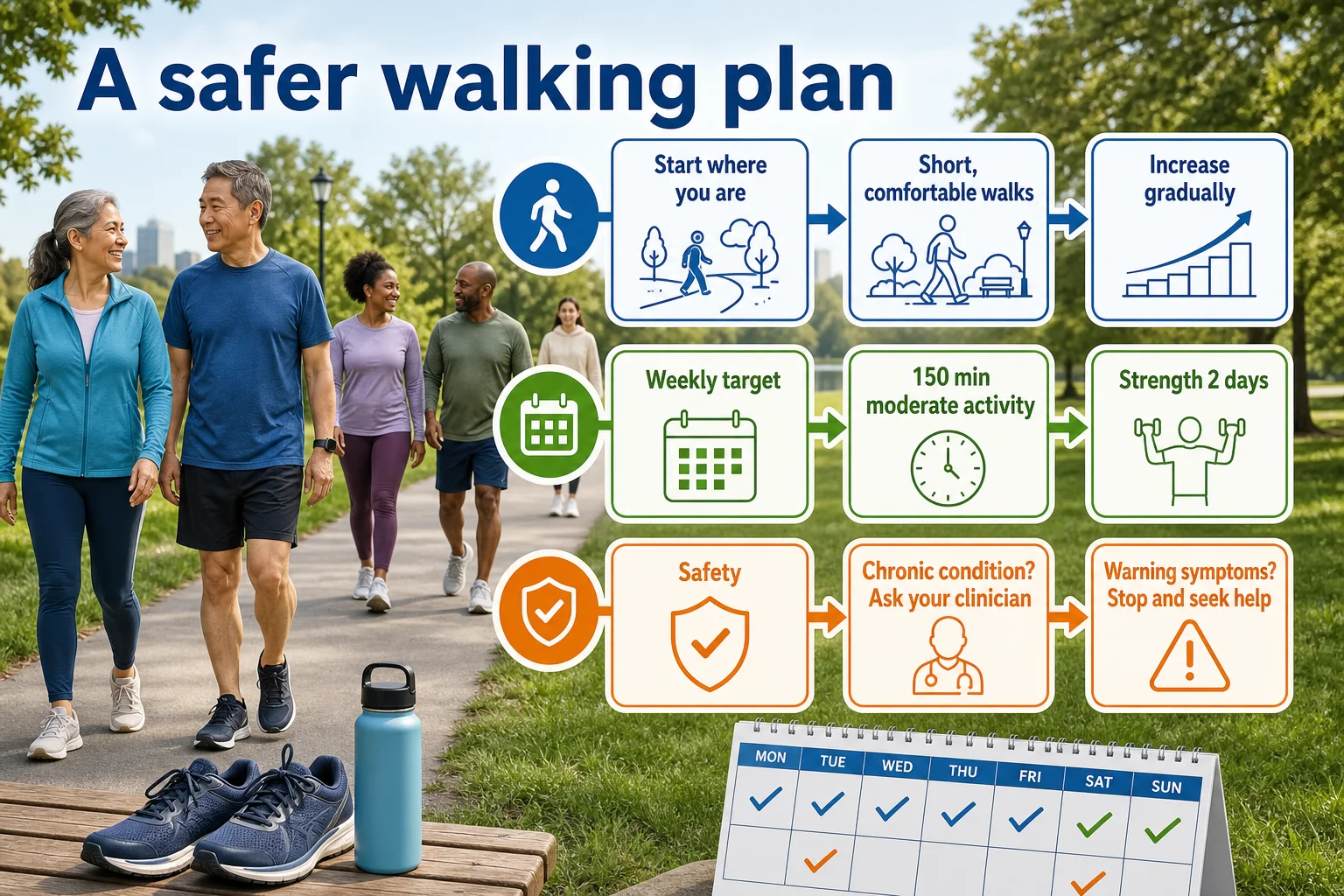
Table of Contents
- ⚡️ Quick Tips and Facts
- 📜 How Daily Walking Changed Over Time
- 🎯 Walking Duration: Use Weekly Guidelines, Not One Magic Number
- 🚶 ♂️ 1. How a 30-Minute Walk Can Fit the Weekly Guideline
- 🚶 ♀️ 2. When a 60-Minute Walk May Fit Your Plan
- 🚶 ♂️ 3. Building Safely Toward a 90-Minute Walk
- 🚶 ♀️ 4. The 120-Minute Challenge: Is Walking 2 Hours a Day Safe?
- 🚶 ♂️ 5. The 50-Mile Myth: Can You Really Walk 50 Miles in a Single Day?
- 🧠 Walking, Cognition, and Mood: What the Evidence Can Show
- 👟 Gear Up: Choosing the Right Shoes and Apparel for Long-Duration Walking
- 🥗 Fueling the Machine: Nutrition and Hydration Strategies for Extended Walks
- 📊 Step Count and Duration: How to Use Both Metrics
- 🛑 Common Pitfalls: Overtraining, Blisters, and When to Stop
- 🏃 ♂️ Walking Pace: Using the Talk Test for Moderate Intensity
- 🌍 Walking in Different Environments: Treadmills, Trails, and Urban Adventures
- 👴👵 Special Considerations: Walking Guidelines for Seniors and Beginners
- 🤰 Walking During Pregnancy: Individualized Safety and Duration
- 📈 Tracking Your Progress: Best Apps and Wearables for Monitoring Daily Walks
- 🏆 Conclusion
- 🔗 Recommended Links
- ❓ FAQ
- 📚 Reference Links
⚡️ Quick Tips and Facts
Before we lace up and hit the pavement, let’s cut through the noise with some hard-hitting truths about walking. You might think you need a marathon training plan to get healthy, but the reality is far more accessible (and fun).
- Step counts are not one-size-fits-all: A meta-analysis found that the step range associated with lower mortality varied by age—about 6,000–8,000 steps for adults 60 and older and 8,000–10,000 for younger adults. These are observational associations, not required daily prescriptions. Review the study.
- Volume and intensity: Both the amount and intensity of activity can matter. Step-count studies are observational, and they do not support a universal claim that one specific slow or fast step total is always better for the heart.
- The 30-Minute Rule: The CDC recommends at least 150 minutes of moderate-intensity aerobic activity per week. That breaks down to just 30 minutes a day, 5 days a week. You can do this in one go or split it into three 10-minute chunks!
- Mental Clarity Boost: A 20-minute walk can increase creativity by up to 60%. If you’re stuck on a problem, your feet are the solution.
- Start from your baseline: There is no single step count that labels every person sedentary. The CDC emphasizes moving more, sitting less, and recognizing that some moderate or vigorous activity is better than none.
For a deep dive into the science behind these numbers, check out our comprehensive guide on How long should you walk a day? right here at Walkathon Benefits™.
📜 How Daily Walking Changed Over Time

Why do we walk? It’s not just because we have legs; it’s because we are built to move.
The Evolutionary Imperative
People historically accumulated walking through transportation, work, and daily tasks. Modern routines vary widely, so use your own current activity, health, schedule, and event goal as the starting point for a walking plan.
The Great Sedentary Shift
Cars, desk work, elevators, and screen-based routines can reduce everyday movement. Adding manageable walks is one practical way to increase activity without treating an uncertain historical mileage estimate as a medical target.
Did you know? The phrase “take a walk” was once a literal necessity for survival. Today, it’s a luxury we often skip. But as we’ll see later, reclaiming that ancient habit is the key to unlocking modern health.
🎯 Walking Duration: Use Weekly Guidelines, Not One Magic Number
So, here’s the million-dollar question: How long should a human walk a day?
The answer isn’t a single number; it depends on your goals, your fitness level, and your lifestyle. People at many fitness levels can benefit from a walking plan tailored to their goals and current ability. Let’s break it down by objective.
The Baseline: General Health
If your goal is simply to stay alive and healthy, the 30-minute mark is your golden ticket.
- Duration: 30 minutes.
- Frequency: 5 days a week.
- Intensity: Brisk (you can talk, but not sing).
- Context: Regular physical activity supports cardiovascular and metabolic health, but an individual 30-minute walk does not guarantee a specific disease-risk reduction.
Longer Walks and Weight Management
Want to shed some pounds? You need to move more.
- Duration: 45 to 60 minutes.
- Frequency: Daily.
- Intensity: Moderate to brisk.
- Context: A longer walk increases total activity. Energy expenditure and weight change vary by the individual and should not be promised from duration alone.
What Observational Step Studies Show
Observational step-count research reports lower mortality risk with more daily steps, with the association leveling at different ranges by age. A 15-cohort meta-analysis reported roughly 6,000–8,000 steps for adults 60 and older and 8,000–10,000 for younger adults; it does not establish a guaranteed benefit for an individual. Read the open-access analysis.
- Duration: Roughly 60 to 75 minutes for the average person.
- Result: Maximum protection against premature death.
Wait, what about 10,000 steps? We’ll get to that myth-busting section later. Spoiler alert: You don’t need to hit 10k to be healthy, but it’s a great goal if you enjoy it!
🚶 ♂️ 1. How a 30-Minute Walk Can Fit the Weekly Guideline
Let’s talk about the 30-minute walk. It’s the “Goldilocks” zone for most people. It’s not too long to be intimidating, but long enough to trigger serious physiological changes.
Why 30 Minutes?
A 30-minute brisk walk can contribute to the weekly moderate-activity target. Fuel use changes continuously with pace, duration, recent meals, and conditioning, so there is no precise 30-minute switch into a universal fuel-use state.
The “Talk Test”
How do you know if you’re walking at the right pace? Use the Talk Test.
- ✅ Too Slow: You can sing a song.
- ✅ Just Right: You can hold a conversation, but you can’t sing.
- ❌ Too Fast: You can only say a few words before gasping for air.
Real-World Application
Imagine you have a lunch break. Instead of scrolling through social media, you take a 30-minute brisk walk.
- Benefit 1: You lower your post-meal blood sugar spike.
- Benefit 2: You clear your mind, boosting afternoon productivity.
- Benefit 3: You accumulate 3,000+ steps effortlessly.
Pro Tip: If 30 minutes feels like a mountain, start with 10 minutes. Do it three times a day. The health benefits are cumulative!
🚶 ♀️ 2. When a 60-Minute Walk May Fit Your Plan
A 60-minute walk can be an appropriate longer session for someone who has built up to it, but it is not a required threshold for weight loss or mental resilience. Choose duration according to current conditioning, recovery, terrain, and total weekly activity.
Why Energy Expenditure Varies
Calories burned during a walk vary substantially with body size, pace, grade, terrain, and efficiency. Avoid treating a generic calorie estimate as a promised weekly deficit or amount of weight loss. The CDC notes that both activity and eating patterns affect weight management.
The Mental Reset
Have you ever noticed that your best ideas come when you’re not staring at a screen? That’s the 60-minute effect.
- Stress Reduction: An hour of rhythmic walking lowers cortisol levels significantly.
- Creativity: A Stanford study found that walking increases creative output by 60%.
- Mood Boost: The release of endorphins after an hour of movement is often described as a “natural high.”
How to Fit It In
- Morning Ritual: Walk before work to set a positive tone for the day.
- Lunch Break: Split it into two 30-minute walks (morning and afternoon).
- Evening Wind-down: A slow, 60-minute stroll after dinner aids digestion and sleep.
🚶 ♂️ 3. Building Safely Toward a 90-Minute Walk
For those with more time and a thirst for endurance, the 90-minute walk is a powerful tool. This isn’t just about burning calories; it’s about building resilience.
Joint Health
Walking is low impact for many people, but joint response varies. Increase duration gradually, and stop or seek clinical guidance if walking causes persistent or worsening foot, knee, hip, or back pain.
Endurance Training
Walking for 90 minutes trains your body to sustain effort over long periods. This is excellent preparation for walkathons or charity events.
- Muscle Tone: Your calves, glutes, and core get a serious workout.
- Mental Grit: Pushing through the “boredom” of a long walk builds mental toughness that translates to other areas of life.
The Risk Factor
Caution: If you are new to exercise, jumping straight to 90 minutes can lead to injury.
- Strategy: Increase your time by 10% per week.
- Listen to your body: If you feel sharp pain, stop. Discomfort is normal; pain is not.
🚶 ♀️ 4. The 120-Minute Challenge: Is Walking 2 Hours a Day Safe?
Can you walk for 2 hours a day? Absolutely. Should you? It depends on your fitness level.
The Benefits
- Long-session context: A two-hour walk is an endurance session for many people. Energy expenditure varies too much to support a universal calorie claim.
- Deep Meditation: Long walks allow for deep introspection and problem-solving.
- Social Connection: It’s a great way to bond with friends or family.
The Risks
- Overuse Injuries: Blisters, shin splints, and tendonitis are real risks if you aren’t conditioned.
- Time Commitment: Finding 2 hours a day is a logistical challenge for many.
Who Should Try It?
- ✅ Experienced walkers looking to train for a 50-mile event.
- ✅ Retires with plenty of time and good health.
- ❌ Beginers should build up to this gradually.
Progression: The CDC recommends starting slowly and working up to more time or more challenging activity. A training increase should be adjusted to the walker’s baseline, symptoms, recovery, and event demands rather than a fixed weekly formula.
🚶 ♂️ 5. The 50-Mile Myth: Can You Really Walk 50 Miles in a Day?
Now, let’s address the elephant in the room. Can you walk 50 miles in a day?
The Math
- Distance: 50 miles.
- Average Speed: 3 mph (brisk walking).
- Time Required: 16.6 hours of non-stop walking.
- With Breaks: Realistically, 18 to 20 hours.
Is It Possible?
Yes, but it’s extreme.
- Ultra-Walkers: There are people who do this. They train for years, have specialized gear, and consume massive amounts of calories.
- For most untrained walkers: Fifty miles is an ultra-distance effort that requires dedicated preparation, fueling, hydration, pacing, route support, and an exit plan. Attempting it without suitable conditioning can cause serious illness or injury.
The Verdict
Unless you are a trained ultra-endurance athlete, do not attempt 50 miles in a day.
- Alternative: Break it up over a week.
- Goal: Aim for 50 miles over a month, or participate in a multi-day event.
Safety check: Treat a 50-mile day as a specialized endurance event, not a daily-health recommendation. People with chronic conditions or uncertainty about vigorous or prolonged activity should discuss an appropriate plan with a clinician.
🧠 Walking, Cognition, and Mood: What the Evidence Can Show
We’ve talked about the body, but what about the mind? Walking is a potent neuro-protective activity.
The Science of Steps and Synapses
- Blood Flow: Walking increases blood flow to the brain by up to 15%, delivering more oxygen and nutrients.
- BDNF Production: Physical activity stimulates the production of Brain-Derived Neurotrophic Factor (BDNF), a protein that helps grow new neurons and protect existing ones.
- Cognition: Some observational studies link greater physical activity with better long-term cognitive outcomes, but a specific step total cannot guarantee dementia prevention.
Mental Health Benefits
- Anxiety: Walking may help some people manage stress and anxiety symptoms, but it should not be presented as equivalent to medication or as a replacement for professional care.
- Depression: Physical activity can support mental well-being and may complement treatment. Anyone with persistent or severe symptoms should seek qualified care.
- Focus: If you have ADHD, walking can help improve concentration and reduce impulsivity.
Fun Fact: Many great thinkers, from Nietzsche to Steve Jobs, were known for their daily walking habits. They knew that movement sparks creativity.
👟 Gear Up: Choosing the Right Shoes and Apparel for Long-Duration Walking
You wouldn’t run a marathon in flip-flops, and you shouldn’t walk for hours in the wrong shoes either. Footwear is your foundation.
What to Look For
- Cushioning: Essential for absorbing impact.
- Support: Good arch support prevents plantar fascitis.
- Breathability: Mesh upers keep feet cool and dry.
- Fit: Your toes should have room to wigle, and your heel should not slip.
Top Brands and Models
Here are some of our top picks based on durability and comfort:
| Brand | Model | Best For | Key Feature |
|---|---|---|---|
| Broks | Ghost 15 | Neutral runners/walkers | Balanced cushioning |
| ASICS | Gel-Nimbus 25 | High arches/Overpronation | Superior shock absorption |
| Hoka | Bondi 8 | Long-distance comfort | Maximum cushioning |
| New Balance | Fresh Foam X 1080 | Wide feet | Roomy toe box |
| Skechers | Arch Fit | All-day wear | Podiatrist-certified support |
👉 Shop
- Broks: Amazon | Broks Official
- ASICS: Amazon | ASICS Official
- Hoka: Amazon | Hoka Official
- New Balance: Amazon | New Balance Official
- Skechers: Amazon | Skechers Official
Apparel Tips
- Moisture-Wicking: Avoid cotton socks. Use merino wool or synthetic blends.
- Layering: Dress in layers so you can adjust to temperature changes.
- Visibility: If walking at night, wear reflective gear.
🥗 Fueling the Machine: Nutrition and Hydration Strategies for Extended Walks
You can’t drive a car on empty, and you can’t walk for hours without fuel.
Hydration is Key
- Before: Drink 16-20 oz of water 2 hours before your walk.
- During: Hydration needs vary with heat, humidity, duration, pace, body size, and medical conditions. Carry water when appropriate and use an event-specific plan for long or hot walks.
- After: Rehydrate with water and electrolytes.
What to Eat
- Pre-Walk (1-2 hours before): Complex carbs like oatmeal or a banana.
- During (for walks > 60 mins): Energy gels, dried fruit, or a small sandwich.
- Post-Walk: Protein and carbs to repair muscles (e.g., Greek yogurt with berries).
Warning: Don’t wait until you’re thirsty to drink. By then, you’re already dehydrated!
📊 Step Count and Duration: How to Use Both Metrics
We’ve been obsessed with 10,000 steps for decades. But is it the best metric?
The Problem with Steps
- Stride Length: A tall person takes fewer steps to cover the same distance as a short person.
- Intensity: A brisk pace can help an activity count as moderate intensity, while total movement also matters. Use the talk test and your current fitness rather than assuming one exact step comparison applies to everyone.
Why Minutes Win
- Standardization: 30 minutes of moderate activity is a universal standard regardless of height or speed.
- Health Guidelines: The CDC and WHO base their recommendations on time, not steps.
- Simplicity: It’s easier to track “30 minutes” on a watch than to count steps.
Takeaway: Aim for 30 minutes of brisk walking daily. If you hit 10,000 steps along the way, great! But don’t stress if you don’t.
🛑 Common Pitfalls: Overtraining, Blisters, and When to Stop
Even the best walkers make mistakes. Here’s how to avoid the common traps.
Overtraining
- Signs: Persistent fatigue, irritability, sleep disturbances, and decreased performance.
- Solution: Take a rest day or a “recovery walk” (slow pace).
Blisters and Foot Pain
- Prevention: Wear proper shoes, use moisture-wicking socks, and tape hot spots before they blister.
- Treatment: Stop immediately if you feel a “hot spot.” Apply a bandage and rest.
When to Stop
- Sharp Pain: Stop immediately.
- Dizziness: Sit down and hydrate.
- Chest Pain: Call emergency services.
Remember: Walking should feel good. If it hurts, you’re doing it wrong.
🏃 ♂️ Walking Pace: Using the Talk Test for Moderate Intensity
Does walking faster burn more calories? Yes.
The Math
- 2.5 mph: Burns ~150 calories/hour (150 lbs person).
- 3.5 mph: Burns ~250 calories/hour.
- 4.5 mph: Burns ~350 calories/hour.
Finding Your Pace
- Leisurely: 2-2.5 mph. Good for recovery.
- Brisk: 3-3.5 mph. The sweet spot for health.
- Faster walking: A pace that raises breathing while still allowing conversation is a practical moderate-intensity check for many adults. Speed should remain comfortable and controlled.
Tip: Cadence varies with height, stride, age, mobility, and terrain. A talk test is usually more useful than prescribing 120 steps per minute to every walker.
🌍 Walking in Different Environments: Treadmills, Trails, and Urban Adventures
Where you walk matters as much as how long you walk.
Treadmills
- Pros: Climate-controlled, safe, consistent pace.
- Cons: Can be boring, less natural movement.
- Tip: Set the incline to 1% to simulate outdoor resistance.
Trails
- Pros: Varied terrain, mental stimulation, nature connection.
- Cons: Uneven surfaces, weather dependent.
- Tip: Wear trail shoes with good grip.
Urban Adventures
- Pros: Convenience, social interaction, sightseeing.
- Cons: Traffic, pollution, distractions.
- Tip: Use headphones to block noise and focus on your stride.
Terrain: Uneven surfaces can challenge balance and ankle control, but they can also increase trip risk. Choose terrain that matches your mobility, footwear, visibility, and experience.
👴👵 Special Considerations: Walking Guidelines for Seniors and Beginners
Walking is the most accessible exercise for everyone, but specific groups need tailored advice.
For Seniors
- Start Slow: Begin with 10-15 minutes.
- Focus on Balance: Incorporate heel-toe walking or single-leg stands.
- Safety: Use a cane or walker if needed. Walk with a friend.
For Beginners
- Consistency: Walk every day, even if it’s just 5 minutes.
- Progression: Add 5 minutes every week.
- Mindset: Celebrate small wins.
Practical Tip: Starting with 15 minutes a day can make a walking habit easier to sustain.
🤰 Walking During Pregnancy: Individualized Safety and Duration
Walking is one of the safest exercises during pregnancy.
Benefits
- Reduces back pain.
- Improves sleep.
- Walking may be appropriate during pregnancy for many people, but activity recommendations should reflect the individual pregnancy and the guidance of the prenatal care team.
- Prepares the body for labor.
Guidelines
- Duration: There is no universal ideal during pregnancy. Ask the prenatal care team about an appropriate type, intensity, and duration.
- Intensity: Moderate (you can talk).
- Precautions: Avoid overheating, stay hydrated, and listen to your body.
Note: Always consult your doctor before starting a new exercise routine during pregnancy.
📈 Tracking Your Progress: Best Apps and Wearables for Monitoring Daily Walks
Want to stay motivated? Track your steps.
Top Wearables
- Fitbit: Great for step counting and sleep tracking.
- Apple Watch: Excellent integration with iPhone and health apps.
- Garmin: Ideal for serious walkers and runners.
- Whop: Focuses on recovery and strain.
Top Apps
- Strava: Social and detailed analytics.
- Google Fit: Simple and free.
- MapMyWalk: Route planning and tracking.
👉 Shop
- Fitbit: Amazon | Fitbit Official
- Apple Watch: Amazon | Apple Official
- Garmin: Amazon | Garmin Official
Tracking: A step counter or calendar can help some people notice patterns and stay consistent, but it does not guarantee a particular improvement in goal completion.
🏆 Conclusion

So, how long should a human walk a day? The answer is as unique as your stride.
- For general health, build toward the weekly activity guideline rather than treating 30 minutes or one step total as a universal daily prescription.
- For weight management, use a sustainable activity plan alongside an appropriate eating pattern; a 60-minute walk does not guarantee weight loss.
- For endurance, challenge yourself with 90 minutes or more.
- For an ultra-distance event, use a dedicated training, support, fueling, hydration, and withdrawal plan.
The most important thing is to start. Whether you’re a beginner taking your first steps or a seasoned walker training for a charity event, every step counts. Walking is the ultimate equalizer—it’s free, accessible, and incredibly powerful.
At Walkathon Benefits™, we believe that walking is more than just exercise; it’s a community builder, a mental reset, and a path to a longer, healthier life. So, lace up those shoes, step out the door, and let’s move together!
Final Thought: Don’t wait for the “perfect” time. The best time to start walking is right now.
🔗 Recommended Links
Affiliate disclosure: Some relevant gear and book links below are Amazon Associate links. If you buy through them, Walkathon Benefits may earn a commission at no extra cost to you. We include them only where they match the surrounding walking task.
Ready to get moving? Here are some resources to help you on your journey.
Essential Gear
- Walking Shoes: Broks Ghost 15 | ASICS Gel-Nimbus | Hoka Bondi 8
- Fitness Trackers: Fitbit Charge 5 | Garmin Forerunner
- Hydration Packs: CamelBak
Books for Inspiration
- “Walk This Way” by [Author Name] – Amazon Link
- “The Power of Walking” by [Author Name] – Amazon Link
Internal Resources
- Health Benefits of Walking
- Fundraising Strategies for Walkathons
- Community Engagement Tips
- Kids Walkathons
- Event Registration Tips
❓ FAQ

What are the health benefits of walking daily?
Regular physical activity supports cardiovascular health, metabolic health, mood, bones, and muscles. Walking can be one part of that activity. The amount appropriate for an individual depends on health, ability, and the rest of the weekly routine.
Read more about “🚶 ♀️ What is the Average Distance of a Walkathon? (2026 Guide)”
What is the recommended daily walking distance to improve mental health and wellbeing?
While distance varies, 30 minutes of brisk walking daily is often sufficient to see improvements in mood and stress levels. Consistency is more important than distance.
Read more about “How Many Steps Should I Walk a Day? The Real 2026 Answer 🚶 ♀️”
How many steps should I take per day for weight loss?
There is no universal step target for weight loss. Increasing activity from a personal baseline can help, while food intake, sleep, medication, health conditions, and consistency also affect weight. See the CDC activity and weight guidance.
Read more about “🚶 ♀️ Recommended Steps Per Day by Age: The 2026 Guide to Longevity”
What are some tips for incorporating more walking into my daily routine to improve overall fitness?
- Park further away from your destination.
- Take the stairs instead of the elevator.
- Walk during phone calls.
- Schedule a “walking meeting” with colleagues.
- Get off public transport one stop early.
Is walking 1 mile a day enough exercise?
A one-mile walk still adds useful activity. Build from your current baseline toward a sustainable weekly total instead of labeling a single distance as inadequate for everyone.
Read more about “🚶 ♀️ What is a Good Distance for a Beginner’s Walkathon? (2026)”
How long should a healthy person walk?
A healthy person should aim for 30 to 60 minutes of brisk walking most days of the week. This aligns with CDC guidelines for moderate-intensity aerobic activity.
Read more about “🚶 ♀️ Walking 30 Minutes a Day for a Month Results: The 2026 Truth”
What are the health benefits of walking for charity events?
Charity walkathons combine the physical benefits of walking with the psychological boost of contributing to a cause. They foster community spirit, reduce stress, and provide a sense of purpose.
Read more about “🏆 12 Most Profitable Fundraisers (2026): The Ultimate Guide”
How many steps should I aim for during a walkathon?
It depends on the event distance. For a 5K walkathon, aim for 6,000 to 7,000 steps. For a 10K, aim for 12,000 to 14,000 steps. Train gradually to avoid injury.
Read more about “🚶 ♀️ How to Raise Money for a Walk: The Ultimate 2026 Guide”
Can walking daily improve mental health and community spirit?
Absolutely! Walking releases endorphins that improve mood. Participating in group walks or charity events strengthens social bonds and fosters a sense of belonging.
Read more about “🚶 ♂️ What is the Point of a Walkathon? 12 Reasons (2026)”
What is the recommended daily walking distance for beginners training for a walkathon?
Beginners can start with a comfortable duration and increase gradually as tolerated. The CDC advises starting slowly and working toward more time or more challenging activity.
Read more about “🚶 ♀️ How to Train for a Walkathon: The Ultimate 12-Week Plan (2026)”
📚 Reference Links
- CDC Physical Activity Guidelines: Physical Activity Basics
- Mayo Clinic: Walking: A step in the right direction
- Harvard Health: The benefits of walking
- American Heart Association: Develop a physical activity plan and recognize warning signs
- Medical News Today: How many steps should you take a day?
- JAMA Internal Medicine: Association of Step Count With All-Cause Mortality
- American Heart Association: Walking for Heart Health
- Brands:
- Broks Running
- ASICS
- Hoka
- New Balance
- Skechers
- Fitbit
- Garmin
- Apple