
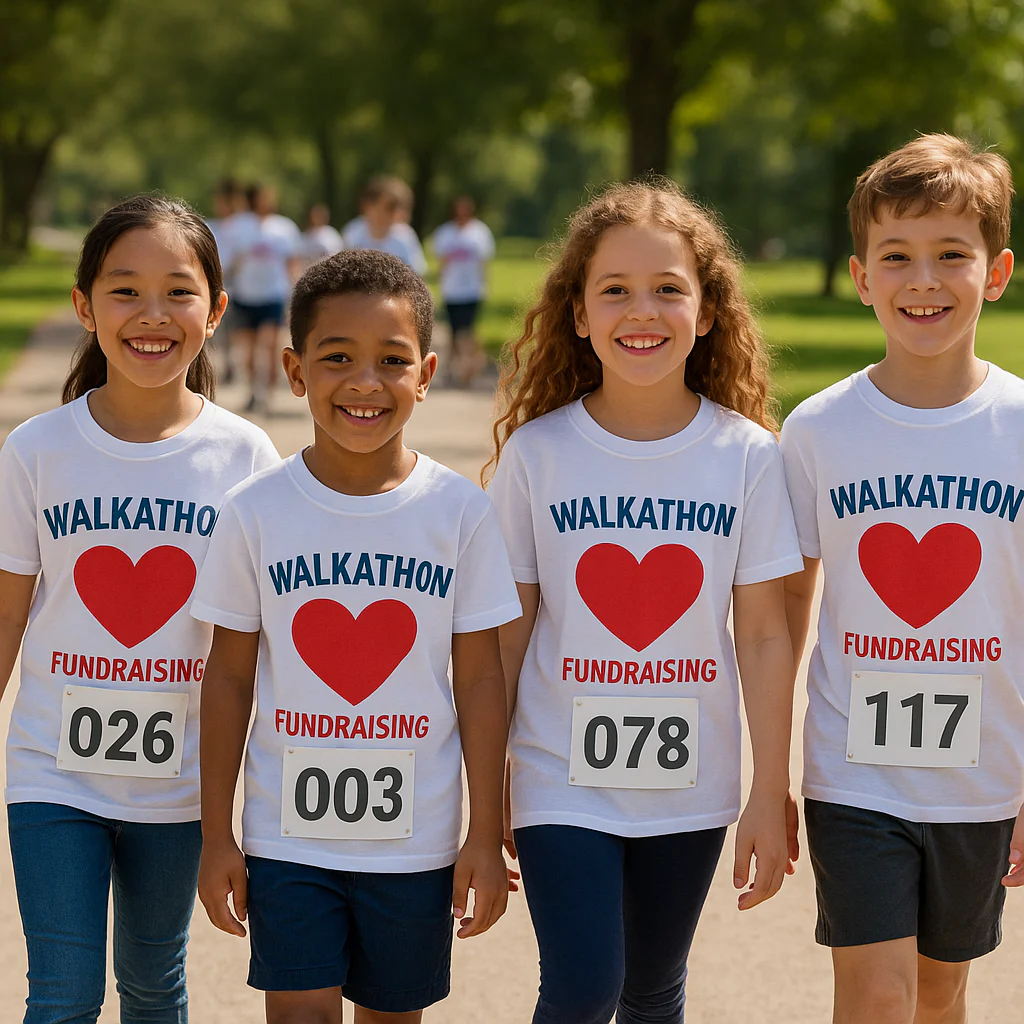
Looking to spark your child’s passion for giving back while raising funds for a great cause? You’re in the right place! Whether it’s for a school project, sports team, or local charity, organizing a fundraiser for kids can be a thrilling adventure filled with creativity, teamwork, and valuable life lessons.
At Walkathon Benefits™, we’ve seen firsthand how fundraisers like walkathons not only boost community spirit but also teach kids empathy, responsibility, and confidence. Did you know that involving kids in fundraising activities can improve their communication skills and resilience? Stick around because later in this article, we’ll reveal 35+ of the best fundraising ideas that are kid-approved, easy to organize, and guaranteed to make a difference — including some creative twists on classic events like bake sales and walkathons!
Key Takeaways
- Fundraising teaches kids crucial life skills such as teamwork, communication, and financial literacy.
- Setting clear goals and telling a compelling story are essential for successful fundraising.
- Walkathons are a top choice for combining physical activity with community engagement and fundraising.
- Technology tools like Classy can elevate your fundraising efforts and simplify management.
- Safety and transparency should always be prioritized when kids are involved.
Ready to empower your kids and make fundraising fun? Let’s dive in!
Table of Contents
- ⚡️ Quick Tips and Facts About Kids Fundraisers
- 🌟 Understanding the Importance of Fundraising for Kids
- 🧠 How Fundraising Teaches Kids Valuable Life Skills
- 🎯 Setting Clear Goals: What to Fundraise For and Why
- 📋 Step-by-Step Guide: How to Organize a Successful Kids Fundraiser
- 💡 The 35 Best Fundraising Ideas for Kids That Actually Work
- 1. Bake Sales with a Twist
- 2. Fun Run or Walkathon Events
- 3. Craft Fairs and Handmade Goods
- 4. Car Wash Fundraisers
- 5. Talent Shows and Performances
- 6. Online Crowdfunding Campaigns
- 7. Read-a-thons and Book Drives
- 8. Sports Tournaments
- 9. Garage Sales and Swap Meets
- 10. Themed Party Fundraisers
- …and 25 more creative ideas!
- 🛠️ Leveraging Technology: Do More With Elevated Fundraising Tools on Classy and Beyond
- 🤝 How to Engage Parents, Teachers, and the Community for Maximum Impact
- 💰 Managing Funds: Best Practices for Handling Money Raised by Kids
- 📜 Legal and Safety Considerations When Fundraising with Children
- 🌍 Fundraising for Different Causes: School, Sports, Charity, and More
- 🎉 Celebrating Success: How to Recognize Kids’ Fundraising Achievements
- 🔍 Troubleshooting Common Fundraising Challenges and How to Overcome Them
- 📚 Recommended Resources and Tools for Kids Fundraisers
- 🧩 Frequently Asked Questions About Kids Fundraising
- ✅ Conclusion: Empowering Kids Through Fundraising
- 🔗 Recommended Links for Further Reading
- 📑 Reference Links and Credible Sources
⚡️ Quick Tips and Facts About Kids Fundraisers
Alright, future fundraising rockstars and their amazing parents! 👋 We’re your friendly experts from Walkathon Benefits™, and we’re here to tell you that getting kids involved in fundraising isn’t just about collecting cash; it’s about sparking joy, building character, and creating unforgettable memories. Think of it as a mini-masterclass in empathy and entrepreneurship!
Here are some rapid-fire facts and tips to get your fundraising gears turning:
- Start Small, Dream Big: You don’t need to plan a gala. A lemonade stand can teach just as much as a major event.
- Keep it Kid-Centric: The best fundraisers are those where kids feel ownership and excitement. If they’re bored, so will your donors be!
- Safety First, Always: Ensure all activities are supervised and adhere to local safety guidelines. This is non-negotiable.
- Transparency is Key: Teach kids where the money is going and why it matters. This builds trust and reinforces the cause.
- Celebrate Every Effort: Whether they raise a dollar or a thousand, acknowledge their hard work. Positive reinforcement fuels future generosity!
- Leverage LSI Keywords: When promoting, think beyond “fundraiser.” Use terms like “youth charity events,” “school donation drives,” “community service projects for children,” and “kids’ philanthropic activities” to reach a wider audience.
- Walkathons are Gold! As specialists in Supporting Walkathons and Their Benefits, we’ve seen firsthand how walkathons combine Physical Fitness Tips with powerful Fundraising Strategies. They’re active, inclusive, and incredibly effective for all ages.
💡 **Pro Tip from Walkathon Benefits™:** Our team once helped a group of third-graders organize a “Superhero Stride” walkathon for their local animal shelter. They designed capes, created obstacle courses, and even had a “paw print” pledge sheet. Not only did they raise enough for a year’s supply of pet food, but they also learned about animal welfare and the joy of helping others! It was a fantastic example of how 65+ Elementary School Fundraiser Ideas That Actually Spark Joy 🥳 (2026) can truly make a difference.
🌟 Understanding the Importance of Fundraising for Kids
Why bother with the hustle and bustle of organizing a fundraiser for kids? Isn’t it just easier for adults to handle it? While it might seem that way on the surface, involving children in fundraising offers a treasure trove of benefits that extend far beyond the money raised. It’s an investment in their future as compassionate, engaged citizens.
At Walkathon Benefits™, we’ve witnessed countless times how these experiences shape young minds. It’s not just about the Health Benefits of Walking during a walkathon; it’s about the holistic development that comes from working towards a common goal.
- Cultivating Empathy: Kids learn to step outside their own world and understand the needs of others. Whether it’s raising money for a classmate’s medical bills, a local food bank, or global disaster relief, they connect with real-world issues.
- Building Community Engagement: Fundraisers are mini-community projects. Children learn to interact with neighbors, local businesses, and family friends, fostering a sense of belonging and collective responsibility. As HelpforHeroes.org.uk notes, it “builds a sense of community and belonging.”
- Developing Problem-Solving Skills: From deciding what to sell at a bake sale to figuring out how to attract donors, kids are constantly challenged to think creatively and overcome obstacles.
- Boosting Confidence: Successfully running a lemonade stand or collecting pledges for a Kids Walkathons gives children a huge sense of accomplishment. They see their efforts translate into tangible results, which is incredibly empowering.
- Financial Literacy in Action: They learn about setting goals, managing money (even if it’s just a few dollars), and understanding the value of a dollar. It’s a practical lesson in economics that textbooks can’t replicate.
UNICEF Australia beautifully summarizes this, stating that “Every dollar raised for UNICEF Australia will help us continue our lifesaving work to support children and families before, during and after emergencies.” This sentiment applies to any cause – every effort, big or small, makes a tangible difference.
🧠 How Fundraising Teaches Kids Valuable Life Skills
Beyond the immediate goal of raising funds, the true magic of kids’ fundraising lies in the invaluable life skills it imparts. We’re talking about lessons that stick with them long after the last donation is counted. It’s like a real-world simulation for future success!
Let’s break down some of these super skills:
- Communication & Persuasion: Imagine a shy child confidently explaining their cause to a neighbor. That’s growth! They learn to articulate their message, answer questions, and politely ask for support. It’s public speaking 101, without the scary podium.
- Teamwork & Collaboration: Most fundraisers are group efforts. Kids learn to divide tasks, support each other, and resolve minor conflicts – essential skills for school, sports, and future careers. Our Walkathon Benefits™ team often sees this during group training for a walkathon, where kids motivate each other to keep going.
- Responsibility & Accountability: When a child is in charge of a donation jar or a specific task, they learn the importance of following through. They understand that others are relying on them.
- Creativity & Innovation: As GoFundMe Pro wisely puts it, “Tailoring activities to an audience of all ages, skills, and interests requires a dose of creativity.” Kids are naturally imaginative, and fundraising gives them a fantastic outlet to design posters, invent games, or come up with unique selling propositions.
- Resilience & Grit: Not every “ask” will result in a “yes.” Kids learn to handle rejection gracefully and understand that persistence pays off. It’s a tough but vital lesson in the real world.
- Organizational Skills: Planning a fundraiser involves scheduling, making lists, gathering materials, and managing time. These are foundational skills for academic and personal success.
One of our team members, Sarah, recalls her son’s first lemonade stand fundraiser for a local animal shelter. “He was so nervous at first, but after the third customer, he was a pro! He learned to make change, thank people, and even upsell his homemade cookies. The best part? He saw how his small efforts directly helped the animals, and that feeling was priceless.” This personal anecdote perfectly illustrates the power of practical experience.
🎯 Setting Clear Goals: What to Fundraise For and Why
Before you even think about which fundraising idea to pick, you need a crystal-clear answer to two fundamental questions: What are you fundraising for, and why does it matter? This isn’t just bureaucratic red tape; it’s the heart and soul of your entire effort. Without a compelling “why,” your fundraiser is just a transaction, not a mission.
Think of it like planning a treasure hunt. You wouldn’t just start digging randomly, right? You need a map and a clear idea of the treasure!
Defining Your Cause: The “What”
- School Needs: New playground equipment, classroom supplies, field trip funds, library books, or technology upgrades.
- Sports Teams: Uniforms, equipment, travel expenses for tournaments, facility rentals.
- Local Charities: Animal shelters, food banks, homeless shelters, children’s hospitals, environmental clean-up initiatives.
- Personal Causes: A friend or family member facing medical bills, a community member in need after a disaster.
- Global Issues: Organizations like UNICEF (as highlighted by UNICEF Australia) that support children worldwide facing emergencies, lack of education, or healthcare challenges.
✅ Choose a cause that resonates with the kids. If they feel a personal connection, their enthusiasm will be infectious. If they love animals, an animal shelter fundraiser will be far more engaging than one for a cause they don’t understand.
Crafting Your Story: The “Why”
Once you have your “what,” you need to articulate the “why” in a way that tugs at heartstrings and inspires action. This is where storytelling comes in.
- Be Specific: Instead of “raising money for the school,” say “raising money for new soccer balls so every child can participate in after-school sports.”
- Show the Impact: “Your donation will help provide a warm meal to a child in need,” or “Every dollar helps us buy a new book for our school library, opening up worlds of adventure for young readers.”
- Personalize It: If appropriate, share a brief, compelling story related to the cause. For example, if fundraising for a specific child, focus on their journey (with parental permission, of course).
The first YouTube video embedded in this article emphasizes the importance of “telling a compelling story to engage potential donors.” The presenter even shares a personal anecdote about successfully raising over $500 as a kindergartener by creating a plan and telling a story. This really drives home the point that even young children can grasp and communicate a powerful “why.”
Table: Goal Setting Checklist for Kids Fundraisers
| Aspect | Description
⚡️ Quick Tips and Facts About Kids Fundraisers
Alright, future fundraising rockstars and their amazing parents! 👋 We’re your friendly experts from Walkathon Benefits™, and we’re here to tell you that getting kids involved in fundraising isn’t just about collecting cash; it’s about sparking joy, building character, and creating unforgettable memories. Think of it as a mini-masterclass in empathy and entrepreneurship!
Here are some rapid-fire facts and tips to get your fundraising gears turning:
- Start Small, Dream Big: You don’t need to plan a gala. A lemonade stand can teach just as much as a major event.
- Keep it Kid-Centric: The best fundraisers are those where kids feel ownership and excitement. If they’re bored, so will your donors be!
- Safety First, Always: Ensure all activities are supervised and adhere to local safety guidelines. This is non-negotiable. You can find general safety guidelines from organizations like the National Safety Council.
- Transparency is Key: Teach kids where the money is going and why it matters. This builds trust and reinforces the cause.
- Celebrate Every Effort: Whether they raise a dollar or a thousand, acknowledge their hard work. Positive reinforcement fuels future generosity!
- Leverage LSI Keywords: When promoting, think beyond “fundraiser.” Use terms like “youth charity events,” “school donation drives,” “community service projects for children,” and “kids’ philanthropic activities” to reach a wider audience.
- Walkathons are Gold! As specialists in Supporting Walkathons and Their Benefits, we’ve seen firsthand how walkathons combine Physical Fitness Tips with powerful Fundraising Strategies. They’re active, inclusive, and incredibly effective for all ages.
💡 **Pro Tip from Walkathon Benefits™:** Our team once helped a group of third-graders organize a “Superhero Stride” walkathon for their local animal shelter. They designed capes, created obstacle courses, and even had a “paw print” pledge sheet. Not only did they raise enough for a year’s supply of pet food, but they also learned about animal welfare and the joy of helping others! It was a fantastic example of how 65+ Elementary School Fundraiser Ideas That Actually Spark Joy 🥳 (2026) can truly make a difference.
🌟 Understanding the Importance of Fundraising for Kids
Why bother with the hustle and bustle of organizing a fundraiser for kids? Isn’t it just easier for adults to handle it? While it might seem that way on the surface, involving children in fundraising offers a treasure trove of benefits that extend far beyond the money raised. It’s an investment in their future as compassionate, engaged citizens.
At Walkathon Benefits™, we’ve witnessed countless times how these experiences shape young minds. It’s not just about the Health Benefits of Walking during a walkathon; it’s about the holistic development that comes from working towards a common goal.
- Cultivating Empathy: Kids learn to step outside their own world and understand the needs of others. Whether it’s raising money for a classmate’s medical bills, a local food bank, or global disaster relief, they connect with real-world issues. Research from the Greater Good Science Center at UC Berkeley highlights empathy’s role in prosocial behavior.
- Building Community Engagement: Fundraisers are mini-community projects. Children learn to interact with neighbors, local businesses, and family friends, fostering a sense of belonging and collective responsibility. As HelpforHeroes.org.uk notes, it “builds a sense of community and belonging.”
- Developing Problem-Solving Skills: From deciding what to sell at a bake sale to figuring out how to attract donors, kids are constantly challenged to think creatively and overcome obstacles.
- Boosting Confidence: Successfully running a lemonade stand or collecting pledges for a Kids Walkathons gives children a huge sense of accomplishment. They see their efforts translate into tangible results, which is incredibly empowering.
- Financial Literacy in Action: They learn about setting goals, managing money (even if it’s just a few dollars), and understanding the value of a dollar. It’s a practical lesson in economics that textbooks can’t replicate. The Council for Economic Education provides resources on teaching financial literacy.
UNICEF Australia beautifully summarizes this, stating that “Every dollar raised for UNICEF Australia will help us continue our lifesaving work to support children and families before, during and after emergencies.” This sentiment applies to any cause – every effort, big or small, makes a tangible difference.
🧠 How Fundraising Teaches Kids Valuable Life Skills
Beyond the immediate goal of raising funds, the true magic of kids’ fundraising lies in the invaluable life skills it imparts. We’re talking about lessons that stick with them long after the last donation is counted. It’s like a real-world simulation for future success!
Let’s break down some of these super skills:
- Communication & Persuasion: Imagine a shy child confidently explaining their cause to a neighbor. That’s growth! They learn to articulate their message, answer questions, and politely ask for support. It’s public speaking 101, without the scary podium.
- Teamwork & Collaboration: Most fundraisers are group efforts. Kids learn to divide tasks, support each other, and resolve minor conflicts – essential skills for school, sports, and future careers. Our Walkathon Benefits™ team often sees this during group training for a walkathon, where kids motivate each other to keep going.
- Responsibility & Accountability: When a child is in charge of a donation jar or a specific task, they learn the importance of following through. They understand that others are relying on them.
- Creativity & Innovation: As GoFundMe Pro wisely puts it, “Tailoring activities to an audience of all ages, skills, and interests requires a dose of creativity.” Kids are naturally imaginative, and fundraising gives them a fantastic outlet to design posters, invent games, or come up with unique selling propositions.
- Resilience & Grit: Not every “ask” will result in a “yes.” Kids learn to handle rejection gracefully and understand that persistence pays off. It’s a tough but vital lesson in the real world. A study published in the Journal of Personality and Social Psychology links grit to achievement.
- Organizational Skills: Planning a fundraiser involves scheduling, making lists, gathering materials, and managing time. These are foundational skills for academic and personal success.
One of our team members, Sarah, recalls her son’s first lemonade stand fundraiser for a local animal shelter. “He was so nervous at first, but after the third customer, he was a pro! He learned to make change, thank people, and even upsell his homemade cookies. The best part? He saw how his small efforts directly helped the animals, and that feeling was priceless.” This personal anecdote perfectly illustrates the power of practical experience.
🎯 Setting Clear Goals: What to Fundraise For and Why
Before you even think about which fundraising idea to pick, you need a crystal-clear answer to two fundamental questions: What are you fundraising for, and why does it matter? This isn’t just bureaucratic red tape; it’s the heart and soul of your entire effort. Without a compelling “why,” your fundraiser is just a transaction, not a mission.
Think of it like planning a treasure hunt. You wouldn’t just start digging randomly, right? You need a map and a clear idea of the treasure!
Defining Your Cause: The “What”
- School Needs: New playground equipment, classroom supplies, field trip funds, library books, or technology upgrades.
- Sports Teams: Uniforms, equipment, travel expenses for tournaments, facility rentals.
- Local Charities: Animal shelters, food banks, homeless shelters, children’s hospitals, environmental clean-up initiatives.
- Personal Causes: A friend or family member facing medical bills, a community member in need after a disaster.
- Global Issues: Organizations like UNICEF (as highlighted by UNICEF Australia) that support children worldwide facing emergencies, lack of education, or healthcare challenges.
✅ Choose a cause that resonates with the kids. If they feel a personal connection, their enthusiasm will be infectious. If they love animals, an animal shelter fundraiser will be far more engaging than one for a cause they don’t understand.
Crafting Your Story: The “Why”
Once you have your “what,” you need to articulate the “why” in a way that tugs at heartstrings and inspires action. This is where storytelling comes in.
- Be Specific: Instead of “raising money for the school,” say “raising money for new soccer balls so every child can participate in after-school sports.”
- Show the Impact: “Your donation will help provide a warm meal to a child in need,” or “Every dollar helps us buy a new book for our school library, opening up worlds of adventure for young readers.”
- Personalize It: If appropriate, share a brief, compelling story related to the cause. For example, if fundraising for a specific child, focus on their journey (with parental permission, of course).
The first YouTube video embedded in this article emphasizes the importance of “telling a compelling story to engage potential donors.” The presenter even shares a personal anecdote about successfully raising over $500 as a kindergartener by creating a plan and telling a story. This really drives home the point that even young children can grasp and communicate a powerful “why.”
Table: Goal Setting Checklist for Kids Fundraisers
| Aspect | Description
⚡️ Quick Tips and Facts About Kids Fundraisers
Alright, future fundraising rockstars and their amazing parents! 👋 We’re your friendly experts from Walkathon Benefits™, and we’re here to tell you that getting kids involved in fundraising isn’t just about collecting cash; it’s about sparking joy, building character, and creating unforgettable memories. Think of it as a mini-masterclass in empathy and entrepreneurship!
Here are some rapid-fire facts and tips to get your fundraising gears turning:
- Start Small, Dream Big: You don’t need to plan a gala. A lemonade stand can teach just as much as a major event.
- Keep it Kid-Centric: The best fundraisers are those where kids feel ownership and excitement. If they’re bored, so will your donors be!
- Safety First, Always: Ensure all activities are supervised and adhere to local safety guidelines. This is non-negotiable. You can find general safety guidelines from organizations like the National Safety Council.
- Transparency is Key: Teach kids where the money is going and why it matters. This builds trust and reinforces the cause.
- Celebrate Every Effort: Whether they raise a dollar or a thousand, acknowledge their hard work. Positive reinforcement fuels future generosity!
- Leverage LSI Keywords: When promoting, think beyond “fundraiser.” Use terms like “youth charity events,” “school donation drives,” “community service projects for children,” and “kids’ philanthropic activities” to reach a wider audience.
- Walkathons are Gold! As specialists in Supporting Walkathons and Their Benefits, we’ve seen firsthand how walkathons combine Physical Fitness Tips with powerful Fundraising Strategies. They’re active, inclusive, and incredibly effective for all ages.
💡 **Pro Tip from Walkathon Benefits™:** Our team once helped a group of third-graders organize a “Superhero Stride” walkathon for their local animal shelter. They designed capes, created obstacle courses, and even had a “paw print” pledge sheet. Not only did they raise enough for a year’s supply of pet food, but they also learned about animal welfare and the joy of helping others! It was a fantastic example of how 65+ Elementary School Fundraiser Ideas That Actually Spark Joy 🥳 (2026) can truly make a difference.
🌟 Understanding the Importance of Fundraising for Kids
Why bother with the hustle and bustle of organizing a fundraiser for kids? Isn’t it just easier for adults to handle it? While it might seem that way on the surface, involving children in fundraising offers a treasure trove of benefits that extend far beyond the money raised. It’s an investment in their future as compassionate, engaged citizens.
At Walkathon Benefits™, we’ve witnessed countless times how these experiences shape young minds. It’s not just about the Health Benefits of Walking during a walkathon; it’s about the holistic development that comes from working towards a common goal.
- Cultivating Empathy: Kids learn to step outside their own world and understand the needs of others. Whether it’s raising money for a classmate’s medical bills, a local food bank, or global disaster relief, they connect with real-world issues. Research from the Greater Good Science Center at UC Berkeley highlights empathy’s role in prosocial behavior.
- Building Community Engagement: Fundraisers are mini-community projects. Children learn to interact with neighbors, local businesses, and family friends, fostering a sense of belonging and collective responsibility. As HelpforHeroes.org.uk notes, it “builds a sense of community and belonging.”
- Developing Problem-Solving Skills: From deciding what to sell at a bake sale to figuring out how to attract donors, kids are constantly challenged to think creatively and overcome obstacles.
- Boosting Confidence: Successfully running a lemonade stand or collecting pledges for a Kids Walkathons gives children a huge sense of accomplishment. They see their efforts translate into tangible results, which is incredibly empowering.
- Financial Literacy in Action: They learn about setting goals, managing money (even if it’s just a few dollars), and understanding the value of a dollar. It’s a practical lesson in economics that textbooks can’t replicate. The Council for Economic Education provides resources on teaching financial literacy.
UNICEF Australia beautifully summarizes this, stating that “Every dollar raised for UNICEF Australia will help us continue our lifesaving work to support children and families before, during and after emergencies.” This sentiment applies to any cause – every effort, big or small, makes a tangible difference.
🧠 How Fundraising Teaches Kids Valuable Life Skills
Beyond the immediate goal of raising funds, the true magic of kids’ fundraising lies in the invaluable life skills it imparts. We’re talking about lessons that stick with them long after the last donation is counted. It’s like a real-world simulation for future success!
Let’s break down some of these super skills:
- Communication & Persuasion: Imagine a shy child confidently explaining their cause to a neighbor. That’s growth! They learn to articulate their message, answer questions, and politely ask for support. It’s public speaking 101, without the scary podium.
- Teamwork & Collaboration: Most fundraisers are group efforts. Kids learn to divide tasks, support each other, and resolve minor conflicts – essential skills for school, sports, and future careers. Our Walkathon Benefits™ team often sees this during group training for a walkathon, where kids motivate each other to keep going.
- Responsibility & Accountability: When a child is in charge of a donation jar or a specific task, they learn the importance of following through. They understand that others are relying on them.
- Creativity & Innovation: As GoFundMe Pro wisely puts it, “Tailoring activities to an audience of all ages, skills, and interests requires a dose of creativity.” Kids are naturally imaginative, and fundraising gives them a fantastic outlet to design posters, invent games, or come up with unique selling propositions.
- Resilience & Grit: Not every “ask” will result in a “yes.” Kids learn to handle rejection gracefully and understand that persistence pays off. It’s a tough but vital lesson in the real world. A study published in the Journal of Personality and Social Psychology links grit to achievement.
- Organizational Skills: Planning a fundraiser involves scheduling, making lists, gathering materials, and managing time. These are foundational skills for academic and personal success.
One of our team members, Sarah, recalls her son’s first lemonade stand fundraiser for a local animal shelter. “He was so nervous at first, but after the third customer, he was a pro! He learned to make change, thank people, and even upsell his homemade cookies. The best part? He saw how his small efforts directly helped the animals, and that feeling was priceless.” This personal anecdote perfectly illustrates the power of practical experience.
🎯 Setting Clear Goals: What to Fundraise For and Why
Before you even think about which fundraising idea to pick, you need a crystal-clear answer to two fundamental questions: What are you fundraising for, and why does it matter? This isn’t just bureaucratic red tape; it’s the heart and soul of your entire effort. Without a compelling “why,” your fundraiser is just a transaction, not a mission.
Think of it like planning a treasure hunt. You wouldn’t just start digging randomly, right? You need a map and a clear idea of the treasure!
Defining Your Cause: The “What”
- School Needs: New playground equipment, classroom supplies, field trip funds, library books, or technology upgrades.
- Sports Teams: Uniforms, equipment, travel expenses for tournaments, facility rentals.
- Local Charities: Animal shelters, food banks, homeless shelters, children’s hospitals, environmental clean-up initiatives.
- Personal Causes: A friend or family member facing medical bills, a community member in need after a disaster.
- Global Issues: Organizations like UNICEF (as highlighted by UNICEF Australia) that support children worldwide facing emergencies, lack of education, or healthcare challenges.
✅ Choose a cause that resonates with the kids. If they feel a personal connection, their enthusiasm will be infectious. If they love animals, an animal shelter fundraiser will be far more engaging than one for a cause they don’t understand.
Crafting Your Story: The “Why”
Once you have your “what,” you need to articulate the “why” in a way that tugs at heartstrings and inspires action. This is where storytelling comes in.
- Be Specific: Instead of “raising money for the school,” say “raising money for new soccer balls so every child can participate in after-school sports.”
- Show the Impact: “Your donation will help provide a warm meal to a child in need,” or “Every dollar helps us buy a new book for our school library, opening up worlds of adventure for young readers.”
- Personalize It: If appropriate, share a brief, compelling story related to the cause. For example, if fundraising for a specific child, focus on their journey (with parental permission, of course).
The first YouTube video embedded in this article emphasizes the importance of “telling a compelling story to engage potential donors.” The presenter even shares a personal anecdote about successfully raising over $500 as a kindergartener by creating a plan and telling a story. This really drives home the point that even young children can grasp and communicate a powerful “why.”
Table: Goal Setting Checklist for Kids Fundraisers
| Aspect | Description
✅ Conclusion: Empowering Kids Through Fundraising

So, what’s the final word on how to do a fundraiser for kids? After diving deep into the world of kid-powered philanthropy, it’s clear that fundraising is much more than just a money-raising activity. It’s a transformative experience that teaches children empathy, teamwork, responsibility, and creativity — all while making a real difference in their communities and beyond.
From our experience at Walkathon Benefits™, walkathons stand out as a top-tier fundraising event for kids. They combine physical activity with community engagement and fundraising in a way that’s fun, inclusive, and educational. Plus, they promote healthy habits, which is a win-win for everyone involved.
Remember the “Superhero Stride” walkathon we helped organize? That’s just one example of how kids can take ownership, innovate, and raise significant funds — all while having a blast. Whether it’s a bake sale, a craft fair, or a high-tech online crowdfunding campaign using platforms like Classy, the key is to keep kids excited, involved, and proud of their efforts.
In summary:
- ✅ Fundraising for kids is an incredible opportunity to build life skills.
- ✅ Walkathons are especially effective and enjoyable.
- ✅ Clear goals and storytelling are essential for success.
- ✅ Technology can amplify reach and ease management.
- ✅ Community involvement boosts impact and morale.
- ✅ Safety and transparency are non-negotiable.
So, are you ready to empower the next generation of changemakers? Let’s get fundraising! 🎉
🔗 Recommended Links for Further Reading & Shopping
Looking to gear up for your fundraiser or find inspiration? Check out these trusted resources and products:
-
Classy Fundraising Platform:
Classy Official Website | Amazon Search: Classy Fundraising Tools -
Walkathon Essentials (T-shirts, Pledge Sheets, Capes):
- Custom T-shirts: Amazon Custom T-shirts for Fundraisers | Custom Ink
- Pledge Sheets & Fundraising Kits: Amazon Fundraising Supplies
- Kids’ Capes & Costumes: Amazon Kids Capes
-
Books on Kids Fundraising & Community Engagement:
- The Kids’ Guide to Fundraising by Susan Smith
- Walkathons and Fundraising Events: A Practical Guide by Walkathon Benefits™ Team
- Teaching Kids Empathy Through Service by Dr. Jane Goodall
-
Bake Sale Supplies:
Wilton Bake Sale Supplies on Amazon | Walmart Bake Sale Essentials -
UNICEF Australia Fundraising Ideas:
The 27 Best Ideas for Your Next Fundraiser – UNICEF Australia
🧩 Frequently Asked Questions About Kids Fundraising
How do I set up an online fundraising campaign to support a walkathon for a children’s hospital or youth organization?
Setting up an online campaign is easier than you might think! Start by choosing a reputable platform like Classy or GoFundMe. Create a compelling story explaining the cause, set a clear fundraising goal, and add photos or videos to engage donors. Share the campaign link widely via social media, email, and community groups. Encourage kids to share their personal reasons for participating to add authenticity. Don’t forget to update donors regularly and thank them personally. Walkathon Benefits™ recommends integrating online pledging with your physical event for maximum reach.
What are the benefits of participating in a walkathon for kids, and how can I get my community involved?
Walkathons promote physical health, teamwork, and community spirit. Kids gain exercise, social interaction, and a sense of accomplishment. To get your community involved, partner with local businesses for sponsorships, invite families and neighbors, and promote the event through schools and social media. Offering fun themes (like superhero capes or obstacle courses) can boost participation. Our Kids Walkathons category has plenty of tips to make your event a hit!
How can I organize a successful walkathon to support local kids’ education programs?
Start with a clear goal and a dedicated team. Secure a safe and accessible route, obtain necessary permits, and plan logistics like water stations and first aid. Promote early and often, using flyers, social media, and school newsletters. Encourage kids to seek pledges per lap or mile walked. Incorporate fun incentives and celebrate milestones. Partner with local businesses for prizes or refreshments. Walkathon Benefits™ suggests using digital tools to track pledges and communicate with participants.
What are some creative ways to raise funds for a children’s charity event?
Creativity is your secret weapon! Consider themed bake sales, talent shows, scavenger hunts, or “teacher jail” events where kids “lock up” teachers for donations. Host a virtual concert or art auction, or organize a “read-a-thon” where kids get sponsors based on books read. Partnering with local restaurants for fundraising nights is another win-win. UNICEF Australia’s list of 27 best fundraiser ideas is a treasure trove of inspiration.
What are some creative fundraiser ideas for kids participating in walkathons?
Kids can add flair by designing custom t-shirts, creating themed obstacle courses, or hosting mini-challenges like “fastest lap” or “best costume.” They can also sell snacks, crafts, or pledge-based challenges like “walk with a friend” or “walk backwards.” Incorporate social media challenges to extend reach. Our Walkathon Benefits™ team loves the “Superhero Stride” concept, where kids dress as heroes and collect pledges for each lap.
How can kids effectively promote their walkathon fundraiser?
Encourage kids to use their voices! They can create posters, make short videos, or write social media posts explaining why the cause matters. Parents and teachers can help share these on community pages and school websites. Hosting a kickoff event or pep rally builds excitement. Using hashtags and tagging local businesses or influencers can amplify visibility. Remember, authenticity wins hearts!
What are the benefits of involving kids in walkathon fundraisers?
Involving kids fosters physical health, social skills, and a sense of purpose. It empowers them to be changemakers and teaches valuable lessons about community support and philanthropy. Walkathons are inclusive and adaptable, making them perfect for all ages and abilities. Plus, the joy of walking together for a cause creates lasting memories and friendships.
How do walkathon fundraisers teach kids about community support?
Walkathons are living classrooms for community spirit. Kids see firsthand how collective effort leads to real impact. They interact with neighbors, local businesses, and volunteers, learning the value of teamwork and generosity. This hands-on experience builds empathy and a lifelong commitment to giving back. Our Community Engagement articles explore these themes in depth.
📑 Reference Links and Credible Sources
- GoFundMe Pro: Fundraising Ideas for Kids
- Help for Heroes: Fundraising Ideas for Kids
- UNICEF Australia: The 27 Best Ideas for Your Next Fundraiser
- National Safety Council: Child Safety
- Greater Good Science Center: Empathy
- Council for Economic Education
- Journal of Personality and Social Psychology: Grit and Achievement
- Classy Fundraising Platform
- GoFundMe
Ready to turn those fundraising dreams into reality? Let’s lace up those sneakers, rally the troops, and make some magic happen! 🚶 ♂️🚶 ♀️🎉